Unauthorized indoor smoking or vaping leaves lingering odors that can ruin your next turnover and trigger guest refunds. Installing a smart vape detector rental setup alerts you to airborne contaminants the exact moment a guest exhales.
Much like automating your home for vacation security, setting up autonomous environmental tracking safeguards your investment properties even when you manage them from a distance.
Traditional optical smoke alarms completely miss vape clouds or constantly false-alarm on bathroom steam. You need dual-sensor monitoring that cross-correlates optical PM2.5 particle counters with metal-oxide semiconductor VOC sensors to create dispute-proof evidence for platform damage claims.
This guide reveals how pairing particulate and chemical telemetry lets you catch vaping smart home sensor events instantly while keeping guest privacy intact.
The Short-Term Rental Smoking Dilemma and Platform Privacy Rules
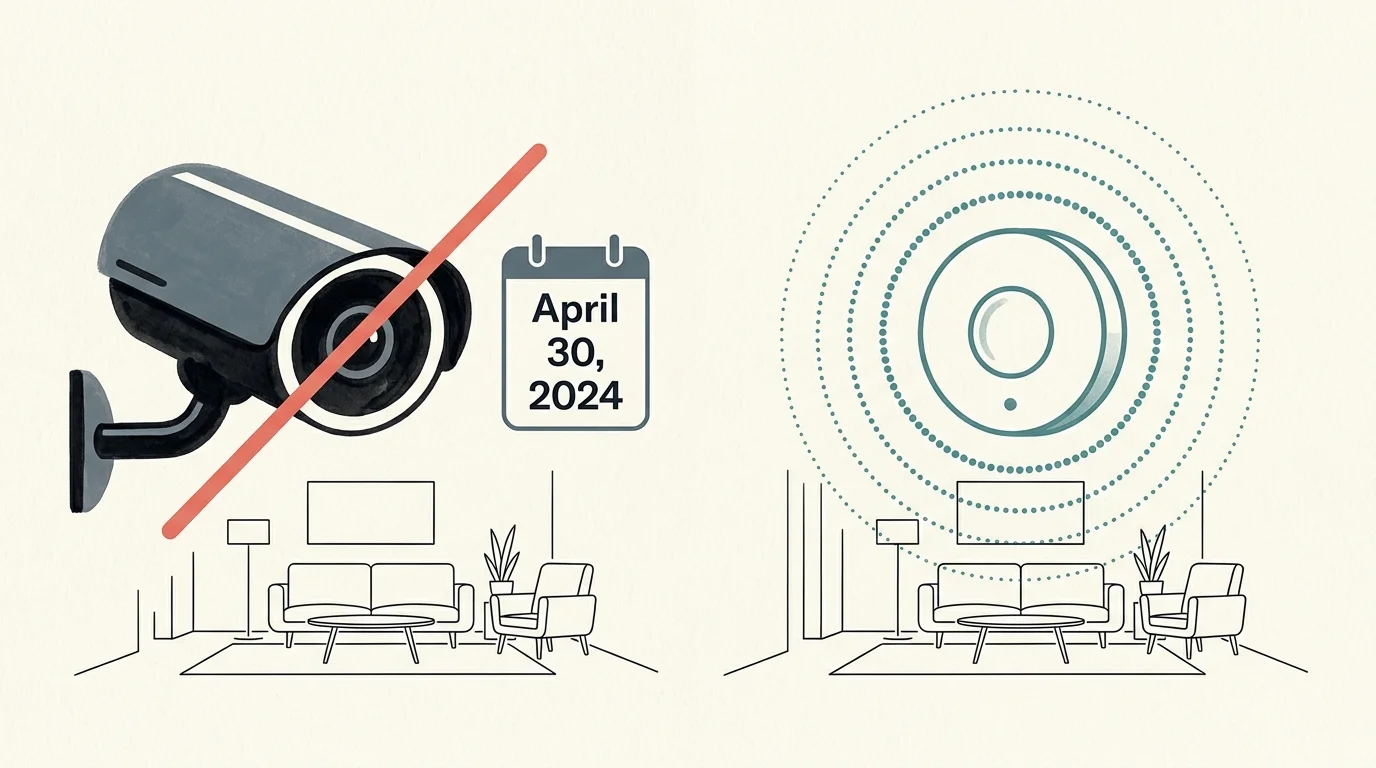
As of April 30, 2024, Airbnb enacted a comprehensive global ban on all indoor security cameras. You can no longer place a lens in an entryway, living room, or hallway to verify unauthorized indoor smoking.
Alongside deploying smart locks for Airbnb guests to manage contactless check-ins securely, hosts must rely on privacy-compliant hardware to supervise interior rule adherence.
While exterior entryways can still be monitored with peephole smart cameras and compliant doorbells, interior spaces strictly require non-camera sensor hardware to maintain platform compliance.
That policy leaves property managers vulnerable to surreptitious tobacco and cannabis smoking. Guests often assume that exhaling into a bathroom fan or cracking a window conceals their behavior.
Fortunately, platform guidelines explicitly permit privacy-safe environmental monitors indoors. Devices that measure decibels, temperature, humidity, and air quality remain fully authorized if you disclose them in your listing.
According to smart home privacy analysis from Wirecutter Smart Home, non-camera sensors provide the ideal balance between guest confidentiality and asset security. They record zero audio or visual imagery, making them immune to privacy complaints.
Deploying a smoke detector air quality sensor indoor unit gives you real-time visibility into indoor air without invading guest boundaries. You protect your furniture, rugs, and HVAC coils while remaining completely compliant with major booking channels.
Optical PM2.5 vs. Chemical TVOC: The Physics of Vapor and Smoke
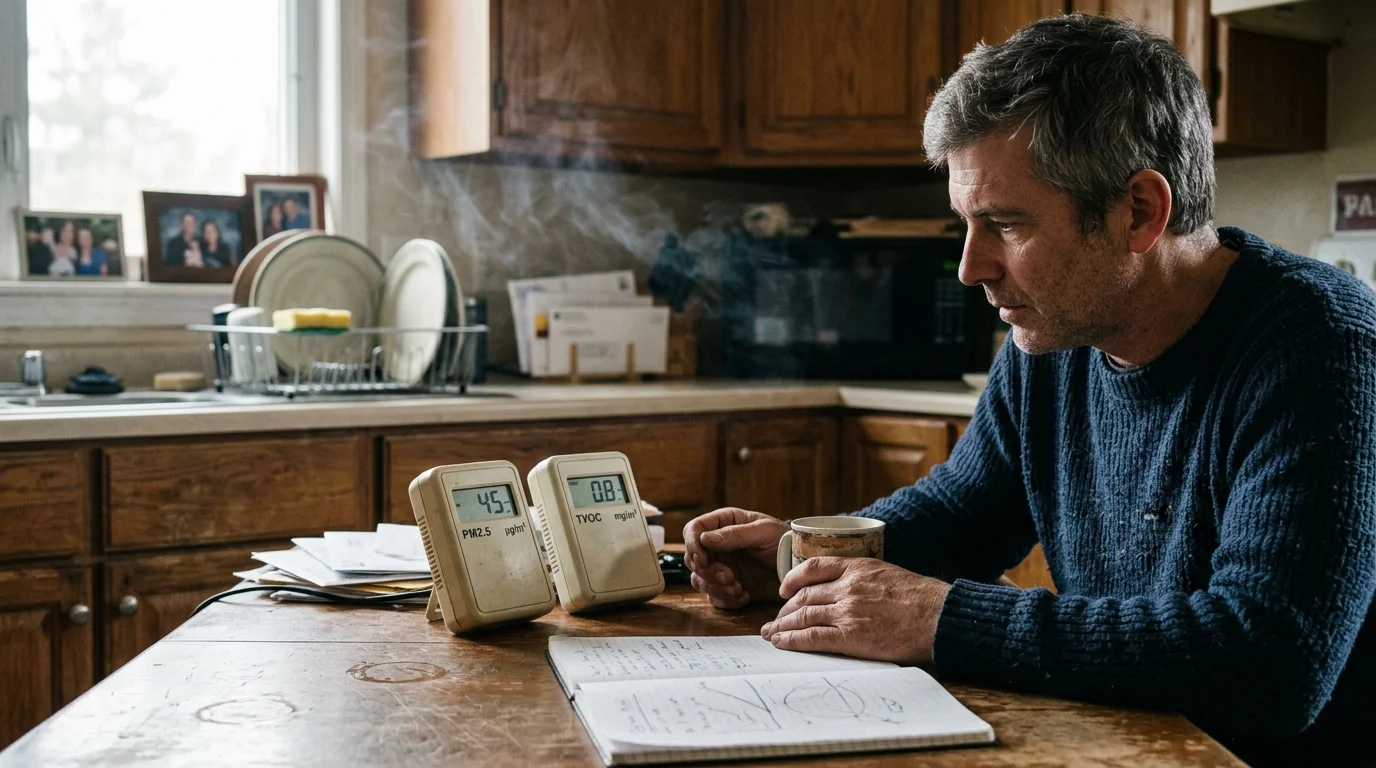
Detecting tobacco smoke requires understanding particulate matter, whereas catching modern vape clouds requires chemical detection. Tobacco combustion creates tiny solid carbon particles, ash, and dense particulate clouds that linger in indoor air.
Similar to positioning room sensors for temperature control, monitoring air contaminants requires understanding microclimates and airflow patterns within each living zone.
E-cigarettes do not burn plant material. Instead, they heat an e-liquid composed of vegetable glycerin, propylene glycol, synthetic flavorings, and liquid nicotine into an aerosolized plume.
Optical PM2.5 sensors work by directing a tiny infrared or laser beam through an internal sampling chamber. When airborne particles pass through that beam, they scatter light onto a photodiode receiver.
Normal indoor air registers PM2.5 concentrations below 15 micrograms per cubic meter (µg/m³). When an e-cigarette cloud reaches the sensor, PM2.5 readings spike rapidly to 150–350 µg/m³ within seconds.
However, aerosolized e-cigarette droplets disperse much faster than heavy cigarette smoke. A standard optical sensor may register a rapid spike and then drop back to baseline within two minutes.
That is where Total Volatile Organic Compound (TVOC) sensors become critical. TVOC sensors use a heated metal-oxide semiconductor (MOS) chip that changes electrical conductivity when chemical gases pass over its surface.
Vaporized propylene glycol and vegetable glycerin produce massive, persistent TVOC spikes in the surrounding air. When your monitoring software observes high PM2.5 alongside elevated TVOCs, it confirms active chemical vaping rather than inert dust.

Distinguishing Cooking Steam from Tobacco and Vape Aerosols
The biggest headache for short-term rental hosts is the dreaded false alarm. If an air quality sensor alerts your phone every time a guest boils pasta or takes a hot shower, you will quickly ignore it.
Many hosts cross-reference air quality readings with window and door sensors to confirm whether guests suddenly opened balcony sashes to ventilate smoke.
Accurately filtering out false positives is critical when building a reliable smart home emergency alert system, ensuring hosts only receive urgent push notifications during verified air contamination events.
Steam consists of pure microscopic water droplets that scatter optical light in a manner similar to smoke particles. An entry-level particulate sensor cannot tell the difference between hot shower vapor and vape exhaust on its own.
To eliminate false positives, modern hospitality sensors use multi-sensor correlation algorithms. The sensor measures humidity, temperature, optical scattering, and TVOCs simultaneously.
Research published by Consumer Reports Smart Home emphasizes that reliable air sensors must cross-reference multiple data points to deliver actionable warnings. The distinct behavioral signatures of indoor airborne events include:
- Hot Shower Steam: Optical PM2.5 spikes moderately; relative humidity spikes by 25% or more; TVOC levels remain completely flat; rapid dissipation occurs once airflow returns.
- Cooking Grease Splatter: PM2.5 climbs high; TVOCs climb moderately; indoor ambient temperature near the kitchen rises; particulate dissipation takes 45 to 90 minutes.
- E-Cigarette / Nicotine Vaping: PM2.5 spikes instantaneously (often over 200 µg/m³); humidity remains unchanged; TVOC readings jump sharply due to propylene glycol and flavorings.
- Combustible Cigarette or Marijuana Smoke: PM2.5 climbs steeply and stays elevated; TVOC readings surge; particulate decay is slow; carbon monoxide (CO) levels often register a measurable bump.
By evaluating the ratio of particulate matter to chemical VOCs, smart vape detector rental units isolate smoking events with pinpoint accuracy. You get real alerts instead of nuisance notifications caused by boiling water.
Hardware Showdown: Dedicated STR Monitors vs. Smart Air Sensors
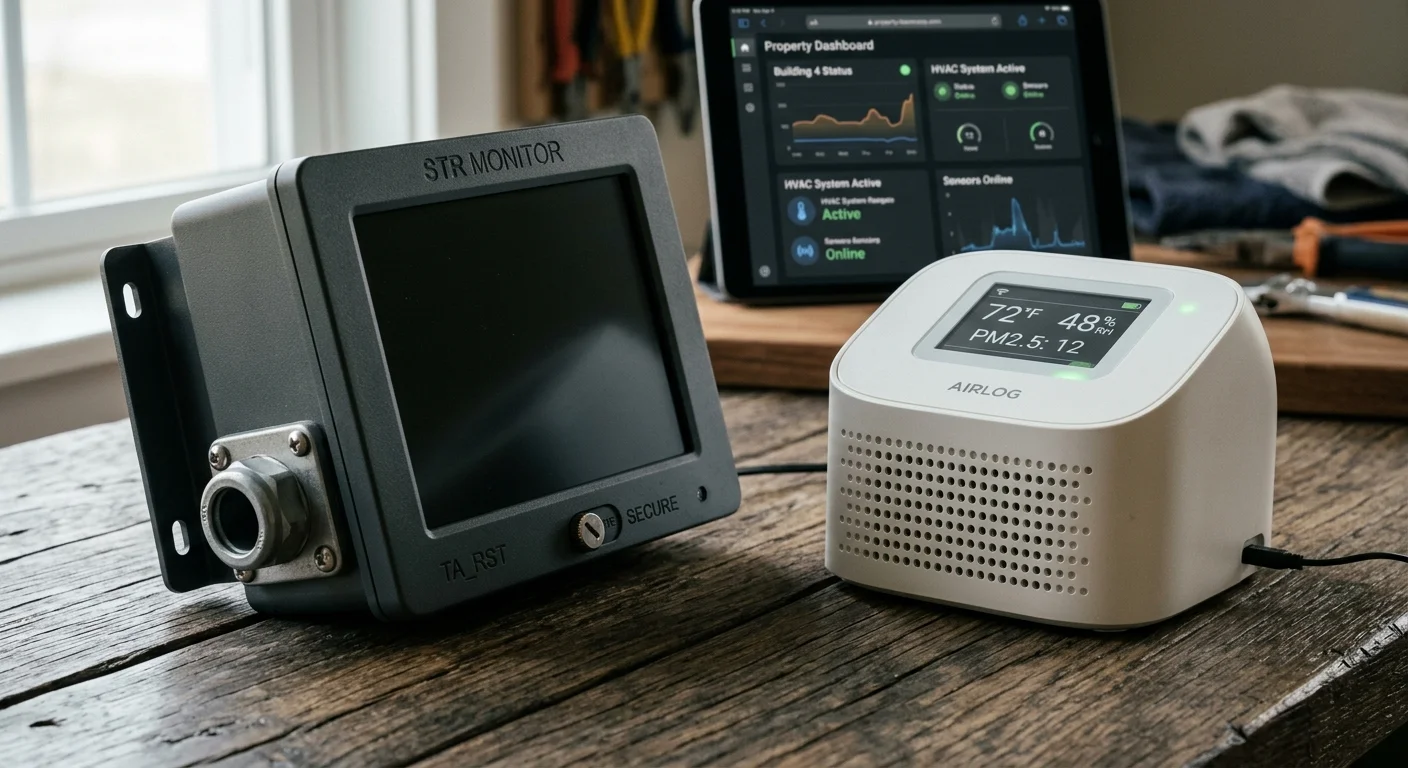
You can monitor your rental property using purpose-built hospitality sensors or high-end residential air quality monitors. Dedicated hospitality hardware includes automated dispute logging, while general smart home sensors offer broader ecosystem automations.
Choosing non-permanent, renter-friendly smart home devices allows arbitrage hosts to easily unmount and relocate their monitoring setup if they move to a new property.
If you deploy residential monitors like Airthings, configuring a dedicated smart home guest mode prevents visitors from altering your alert parameters or muting notification sirens.
Specialized devices like the WYND Sentry and Minut M3 are engineered specifically for vacation rentals. Consumer devices like the Airthings View Plus monitor everyday indoor health but require custom platform automations.
| Device Model | Sensing Technologies | Coverage Per Unit | Hardware & Subscription Cost | Anti-Tamper Features | Dispute Evidence Export |
|---|---|---|---|---|---|
| WYND Sentry | Laser PM2.5 optical counter, MOS TVOC sensor, airID™ AI engine | 400 sq. ft. | Hardware included with $15/mo ($180/yr) plan, or $19/mo | Screw-locked wall mount, continuous power alert, peel detection | One-click PDF incident log with timestamped particulate/VOC graphs |
| Minut M3 | Optical particulate sensor, acoustic decibel tracker, motion, humidity | 450 sq. ft. | Hardware approx. $100; subscriptions $5, $10, or $15/mo | Magnetic tamper baseplate, detachment sensor, battery backup | Audit-ready smoke and noise timeline logs formatted for booking channels |
| Airthings View Plus | Laser PM2.5, VOC, Radon, CO2, Humidity, Temperature, Barometric pressure | 500 sq. ft. | Hardware approx. $299; $0 mandatory monthly subscription | Desktop or standard wall screw mount; no active physical tamper alert | Raw CSV spreadsheet export; manual data charting required for disputes |
WYND Sentry excels if you need turn-key smoke classification that directly breaks down cigarette smoke, marijuana, and vape clouds. The device is designed to catch vaping smart home sensor events without requiring you to decipher raw line charts.
Minut M3 integrates noise decibel monitoring alongside cigarette and marijuana smoke detection. If your local municipality enforces strict short-term rental noise ordinances, combining noise and smoke tracking in one unit saves ceiling space.
Airthings View Plus offers unmatched environmental data without recurring subscription fees. However, you must establish custom thresholds through IFTTT or Home Assistant to separate cooking grease from unauthorized smoking.
Step-by-Step Installation and Sensor Placement Protocol
Poor sensor placement leads to delayed alerts, missed vaping incidents, and chronic false alarms from normal kitchen activity. Follow this proven protocol to maximize detection efficiency across your rental layout.
Integrating your detection platform with smart thermostats for renters enables automated HVAC fan cutoffs the moment contaminants are detected, stopping smoke from circulating through every room.
For rental arbitrage operators who cannot drill holes into walls, leveraging proven damage-free mounting tactics for rental drywall keeps brackets firmly locked without risking security deposit deductions.
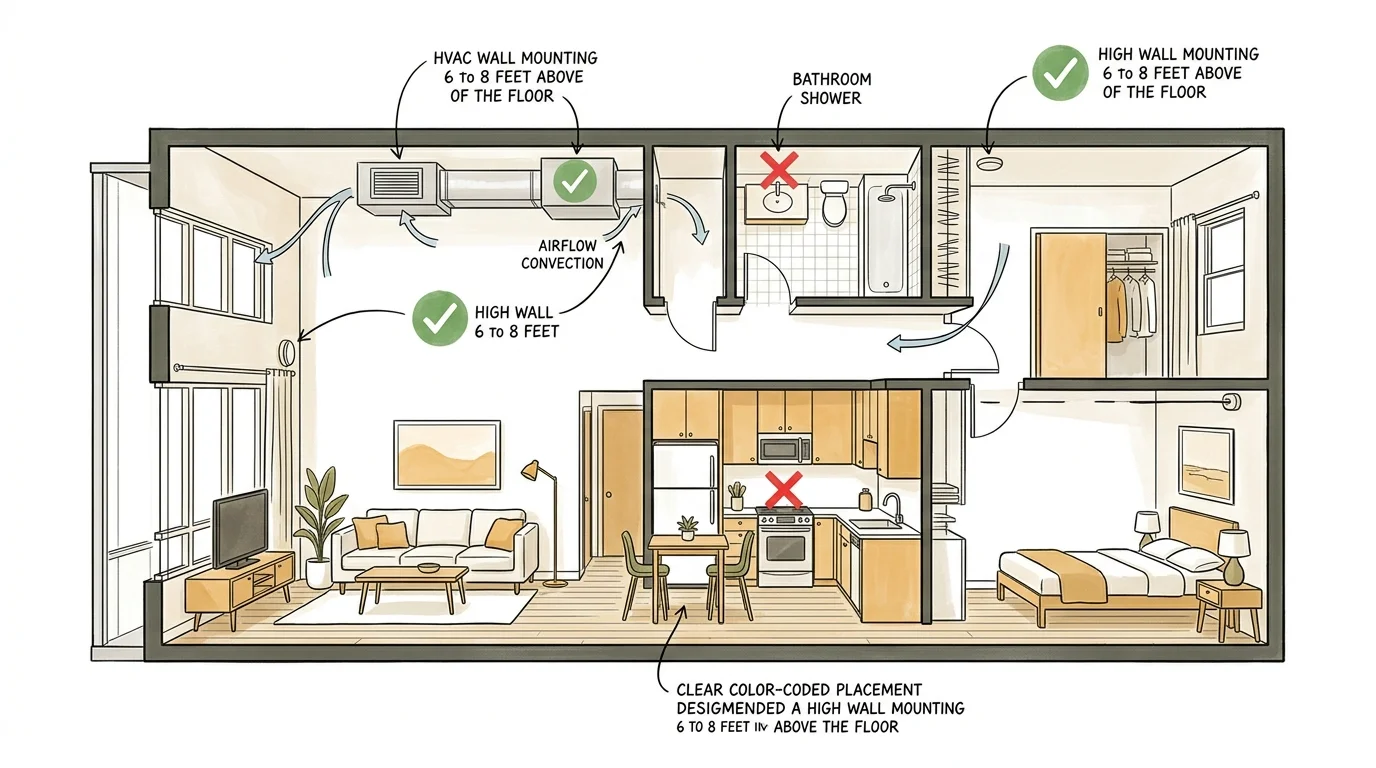
- Measure Room Ceiling Heights: Mount your sensors between 5 and 7 feet from the finished floor on an interior wall. Mounting too close to a 10-foot ceiling delays detection because exhaled vape aerosol cools and sinks before reaching the intake.
- Map Airflow and HVAC Registers: Place sensors at least 10 feet away from central HVAC supply vents. Direct drafts from your air conditioner will blow clean air across the intake grille and dilute tobacco particles.
- Maintain Kitchen Buffer Zones: Position living area sensors at least 15 to 20 feet away from stovetops, ovens, and toasters. This buffer allows cooking particulates to settle before reaching your detection threshold.
- Secure the Hardware Baseplate: Use the manufacturer-provided security screws or heavy-duty anchors rather than adhesive strips. Guests who plan to smoke often attempt to unclip or disconnect sensors upon arrival.
- Establish Constant Power: Plug the device into an unswitched wall outlet and secure the power cable with a wire track. If using battery-powered models, set low-battery notifications to ping your property management software at 20% remaining capacity.
Prioritize your installation locations based on historical smoking trends in vacation properties. Certain areas carry substantially higher violation risks than others:
- Primary Living Area: The main gathering space adjacent to outdoor balconies or patios where guests slip inside to smoke with the door cracked.
- Master Bedroom: The most common indoor space for late-night vaping, especially on cold or rainy evenings.
- En-Suite Bathrooms: Guests frequently turn on the exhaust fan believing it clears smoke; mount a sensor just outside the bathroom door to capture escaping vapor.
- Basement Game Rooms: Isolated entertainment spaces where guests let their guard down during large group gatherings.
Smart Automation Workflows: From Instant Alert to HVAC Protection
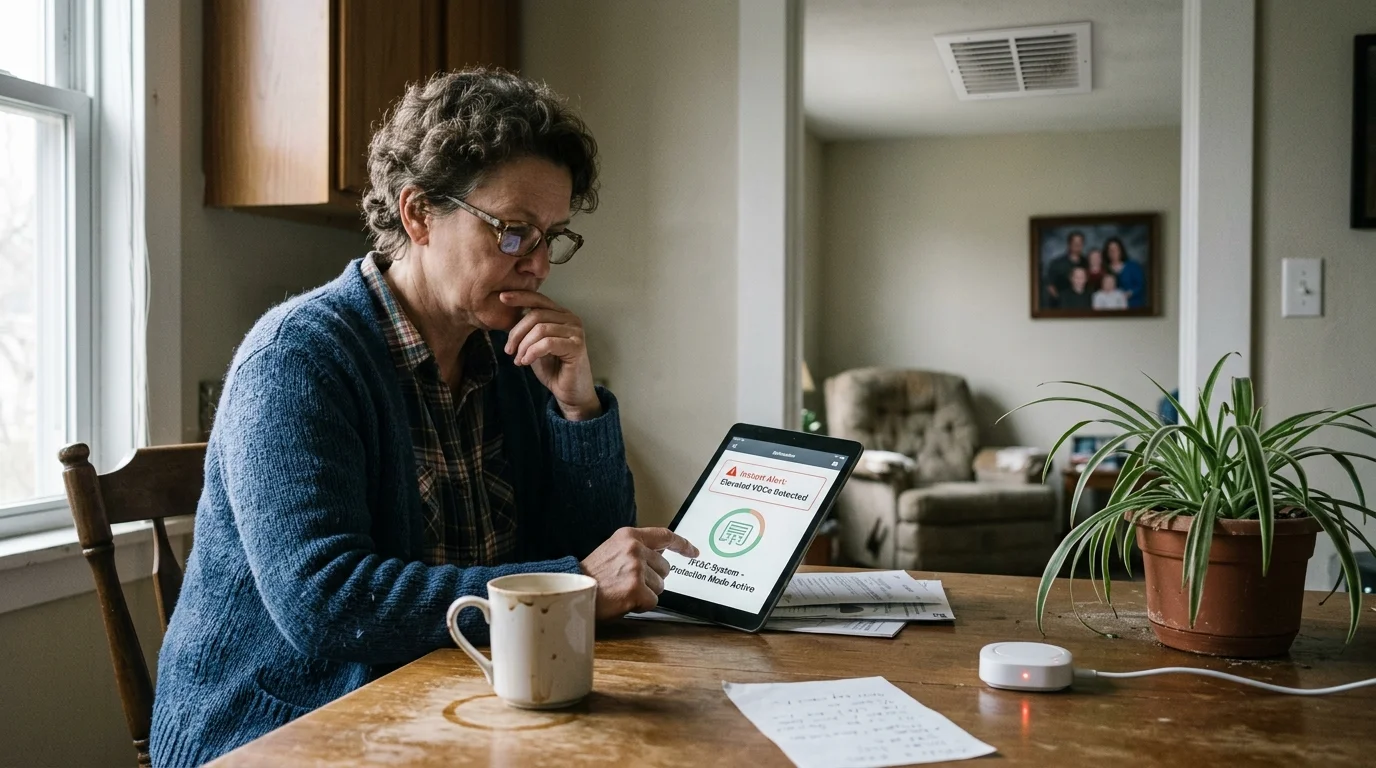
Installing hardware is only half the battle; real value comes from building reactive smart home automations. When a guest begins smoking or vaping, your home automation system should act immediately to protect your property.
Using platforms like Home Assistant, Hubitat, or smart hospitality hubs reviewed by PCMag Smart Home, you can trigger specific routines based on sensor telemetry. These workflows safeguard your equipment and gather concrete timestamp data.
Here is an automated defensive sequence you can deploy when particulate and VOC levels breach critical thresholds:
- Breach Detection: The sensor detects PM2.5 above 180 µg/m³ and TVOCs above 1,500 parts per billion (ppb) for longer than 60 consecutive seconds.
- HVAC Shutdown: A smart thermostat command immediately cuts power to the central air blower fan. Shutting down the fan prevents volatile nicotine oils and sticky glycerin from coating the evaporator coil and duct liners.
- Smart Lock Timestamp Sync: The automation platform records the exact entry and exit state from your smart lock. This establishes whether registered guests or unauthorized visitors were inside the property at the moment of the violation.
- Air Purifier Overdrive: Dedicated smart HEPA and carbon air purifiers in the living area and bedrooms switch immediately to maximum fan speed to capture airborne particulates before they settle.
- Automated Guest Notification: Your property management system transmits an automated SMS message to the guest: “Notice: Our environmental sensors have detected indoor smoke or vape aerosols. Please remember this property is strictly 100% non-smoking.”
This automated sequence frequently stops smoking behavior on the first night of a reservation. Guests realize the home actively monitors its air, preventing several days of compounded odor accumulation.
Financial Impact: A Worked Remediation and Damage Claim Scenario
When an unauthorized smoking event occurs, the remediation costs can eliminate an entire month of rental revenue. Having concrete, timestamped sensor graphs is the difference between recovering costs from platform guarantees and absorbing the bill yourself.
Consider this real-world turnaround scenario involving a 1,200-square-foot, two-bedroom vacation condominium in Scottsdale, Arizona. A guest booked a four-night reservation with a strict no-smoking policy clearly listed in the house rules.
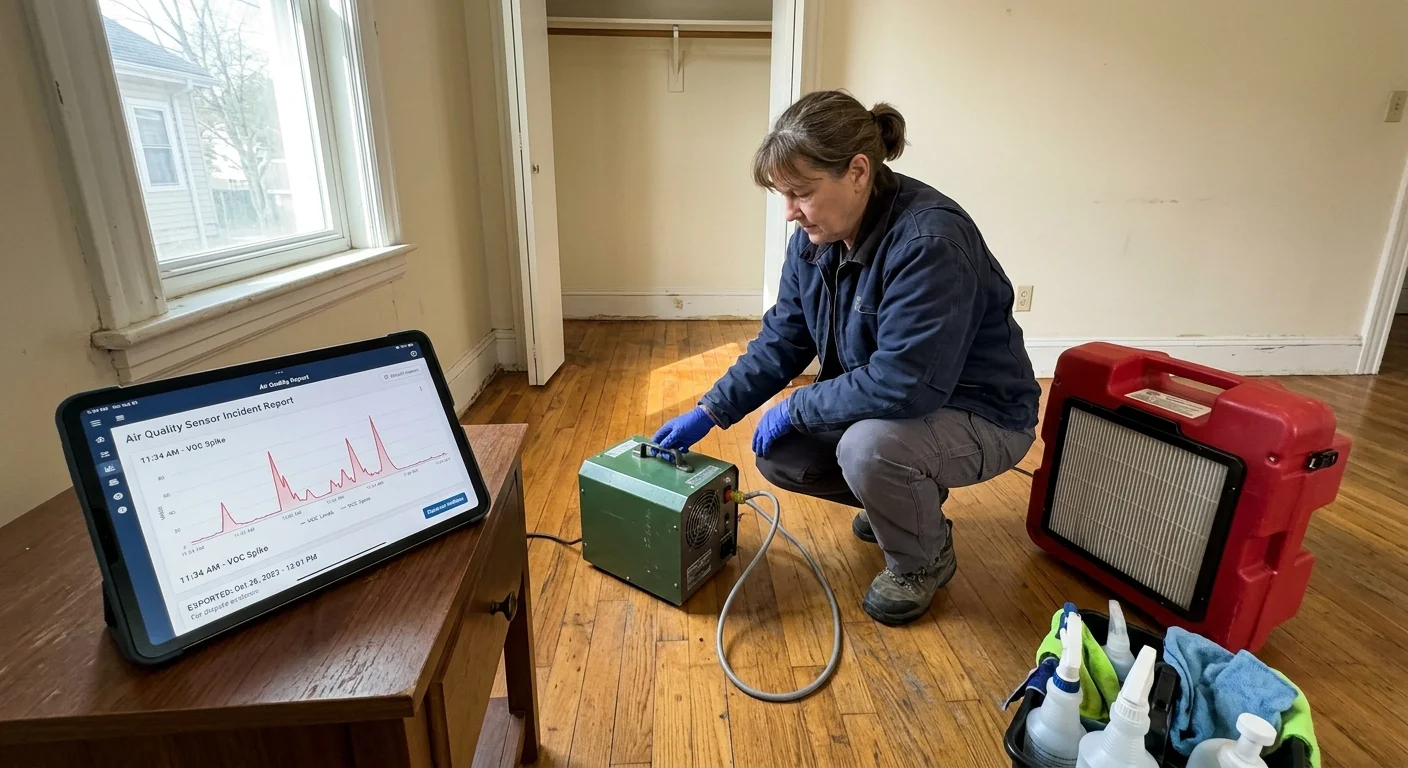
At 11:14 PM on Friday, the unit’s WYND Sentry registered an ambient PM2.5 spike from an 8 µg/m³ baseline to 312 µg/m³. Concurrently, TVOC levels surged from 140 ppb to 2,850 ppb, maintaining elevated readings for three hours.
The host received an automated alert, followed by a second breach on Saturday afternoon. When the cleaners arrived for turnover on Sunday morning, heavy cigarette ash and stale e-cigarette residue permeated the drapery and living room drywall.
Because the next guests were arriving in 48 hours, standard laundering was insufficient. The host dispatched an emergency odor mitigation team to complete specialized restorative treatments:
- 24-Hour Ozone and Hydroxyl Treatment: $350 for continuous commercial ozone generation while the property sat empty.
- HVAC Duct Sanitization and High-MERV Filter Swap: $550 to scrub the return plenum and replace air filters clogged with nicotine residue.
- Upholstery and Area Rug Steam Extraction: $400 for hot-water extraction on the living room sofa, accent chairs, and bedroom area rugs.
- Shellac Primer and Wall Repainting: $1,450 for two painters to apply Zinsser B-I-N odor-blocking shellac primer and fresh paint over the stained master bedroom drywall.
- Total Remediation Expense: $2,750 out-of-pocket restoration cost.
When submitting a $2,750 claim through Airbnb AirCover or standard short-term rental damage insurance, subjective statements like “the unit smelled like smoke” are routinely disputed by guests. Guests claim the odor drifted in from a neighbor’s patio or originated from cooking fish.
In this scenario, the host attached the sensor’s timestamped PDF report showing identical, sustained spikes at 11:14 PM and 2:30 PM. The data proved the particulate spikes were accompanied by elevated chemical VOCs, ruling out simple steam or outdoor drafts.
Faced with irrefutable, objective environmental evidence alongside cleaning invoices, the platform approved the full $2,750 reimbursement within five business days. The sensor array paid for itself more than ten times over in a single weekend.
Frequently Asked Questions
Can a smart air quality sensor tell the difference between vaping and marijuana?
Yes, dedicated hospitality sensors like the WYND Sentry can differentiate between vaping and combustible marijuana. Cannabis combustion produces large carbon ash particulates alongside characteristic terpenes, whereas e-cigarettes generate fine liquid droplets dominated by propylene glycol and vegetable glycerin.
Do guests frequently unplug or tamper with indoor air sensors?
Guests occasionally try to unplug sensors or cover them with towels. Choose hardware with built-in power-loss alerts, battery backups, and screw-fastened baseplates so your phone receives an immediate notification the moment someone disconnects the device.
How quickly does a particulate sensor register vaping in a room?
Most optical laser sensors register elevated PM2.5 readings within 15 to 45 seconds of an exhale if placed within 15 feet of the source. Airflow currents generated by ceiling fans or open doorways carry the aerosol plume directly into the intake vents almost immediately.
Will a hot shower trigger a false vaping alert on my phone?
Not if you use a dual-sensor system that evaluates both PM2.5 and TVOCs. While bathroom steam causes a temporary rise in optical particle scattering, it produces zero increase in volatile organic chemicals, allowing the sensor algorithm to ignore the event.
Disclaimer: This article is for informational purposes only. Smart home devices involve electrical connections and data privacy. Always follow manufacturer instructions for installation. For complex wiring or HVAC work, consult a licensed professional.