
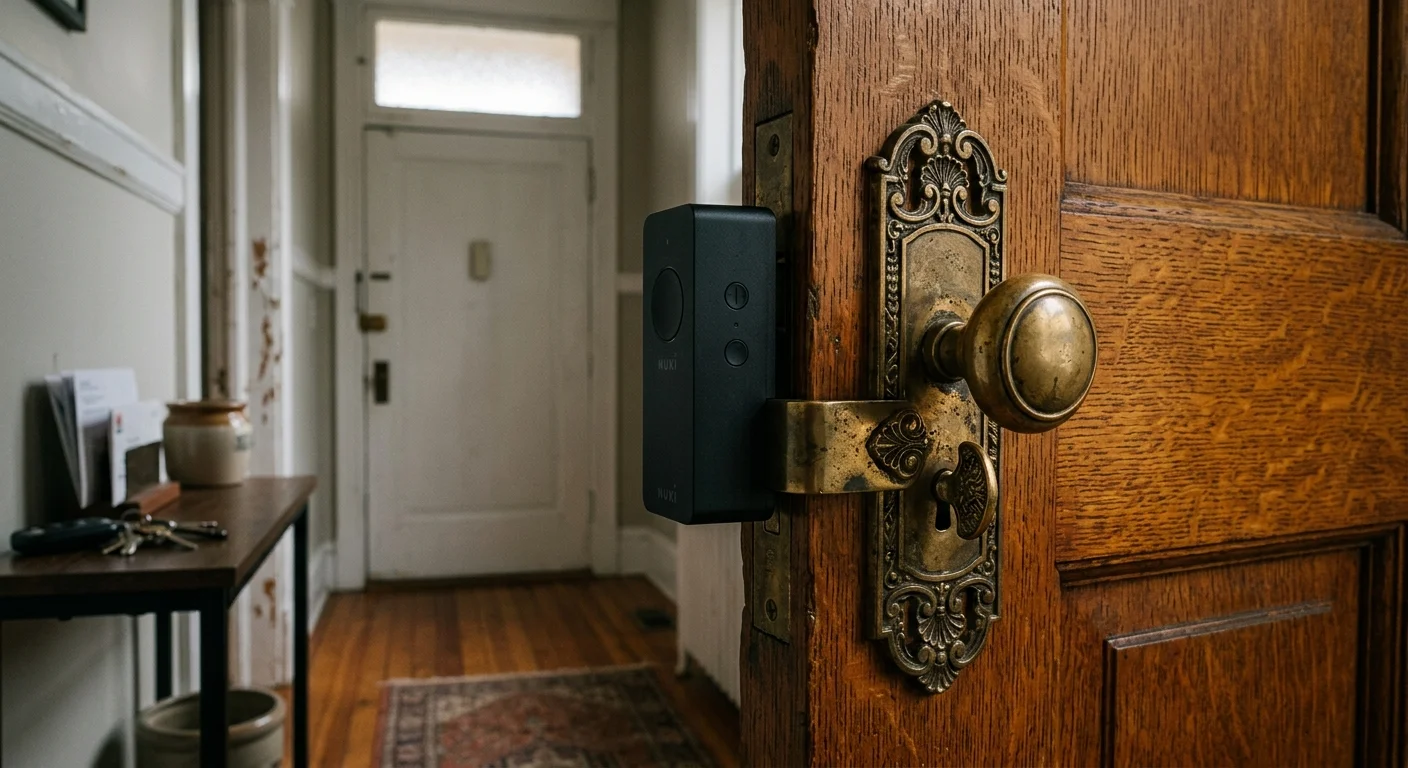
You can automate your apartment’s antique mortise lock without drilling into historic wood or forfeiting your rental deposit. Clamping an external motor directly over your existing interior thumbturn preserves landlord key access while delivering modern keyless entry.
Most smart locks fail on historic doors because heavy cast-iron internal mechanisms require far more rotational force than standard tubular deadbolts. High-torque clamp motors delivering at least 8 kgf·cm load torque overcome this mechanical resistance without marring antique brass trim.
This guide evaluates non-destructive retrofit motors to modernize your vintage door without violating strict lease agreements or preservation guidelines.
The Mortise Problem: Why Standard Smart Deadbolts Fail Renters
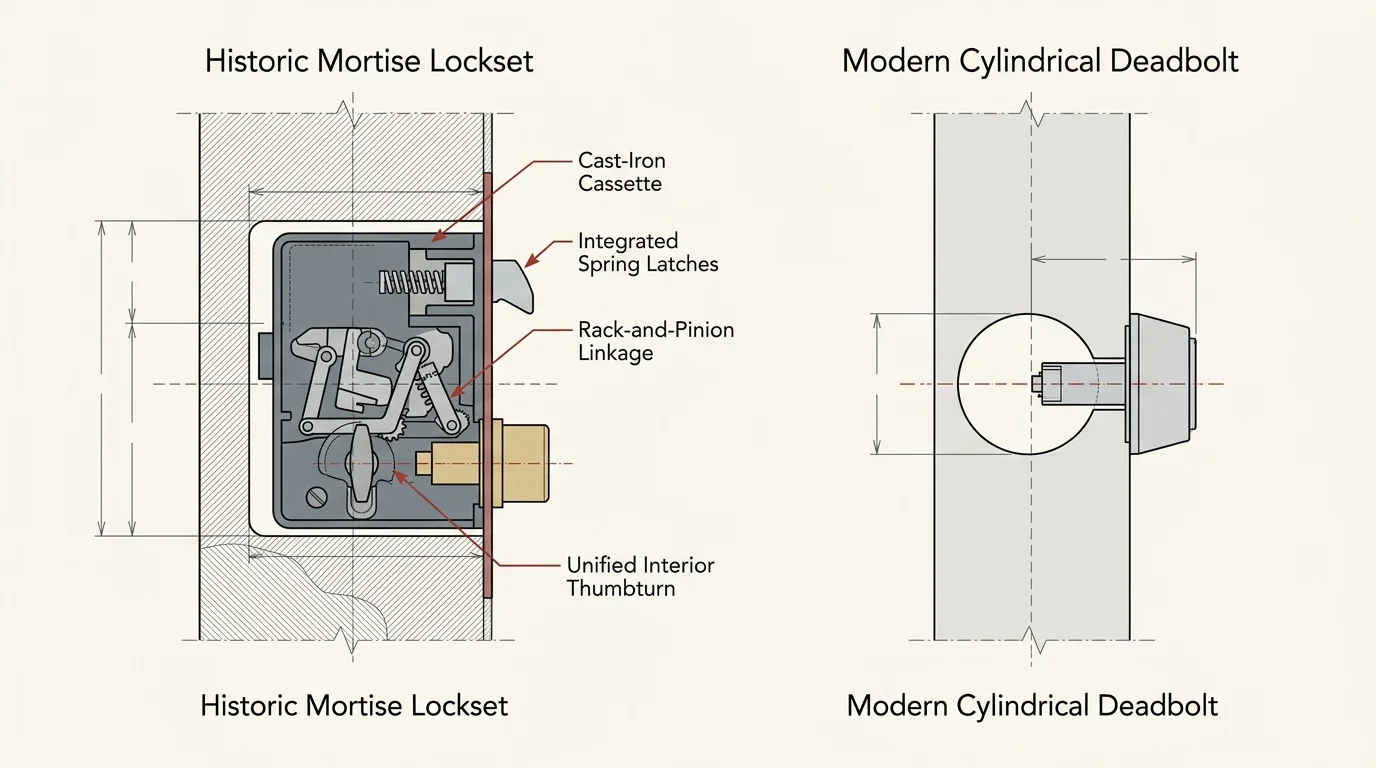
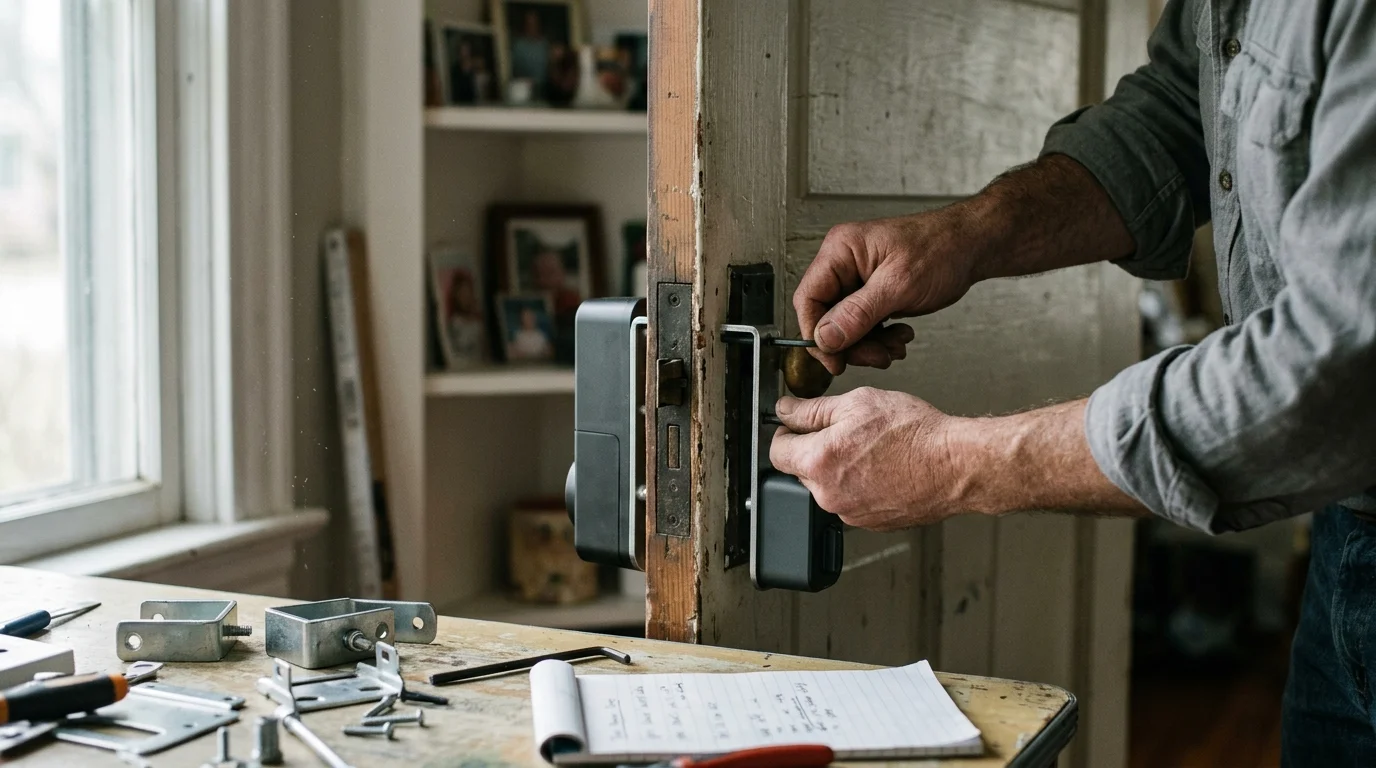
Historic mortise locksets combine the entry latch and deadbolt inside a single cast-iron cassette. This heavy internal box rests recessed within an expansive pocket routed into your door edge.
Navigating mechanical incompatibility is a frequent challenge when adding smart devices to an older home that features vintage architectural craftsmanship.
Standard consumer smart locks expect a modern bored cylindrical hole with separate tubular deadbolts. Replacing a historic mortise mechanism with a standard deadbolt requires cutting, patching, and drilling original architectural woodwork.
Finding an antique door smart lock means accommodating complex internal lever tumblers and heavy steel springs. These components operate with distinct rotational resistance unlike modern, low-friction deadbolts.
The lockset’s exterior keyway and interior thumbturn connect directly to this unified internal gearbox. When you turn the thumbturn, you drive a rack-and-pinion linkage that slides a solid brass bolt.
Standard replacement locks demand that you discard these original components entirely. For apartment dwellers, altering these historic assemblies damages original craftsmanship and breaks strict property management rules.
Preservation Laws and Lease Clauses: The Zero-Drill Imperative
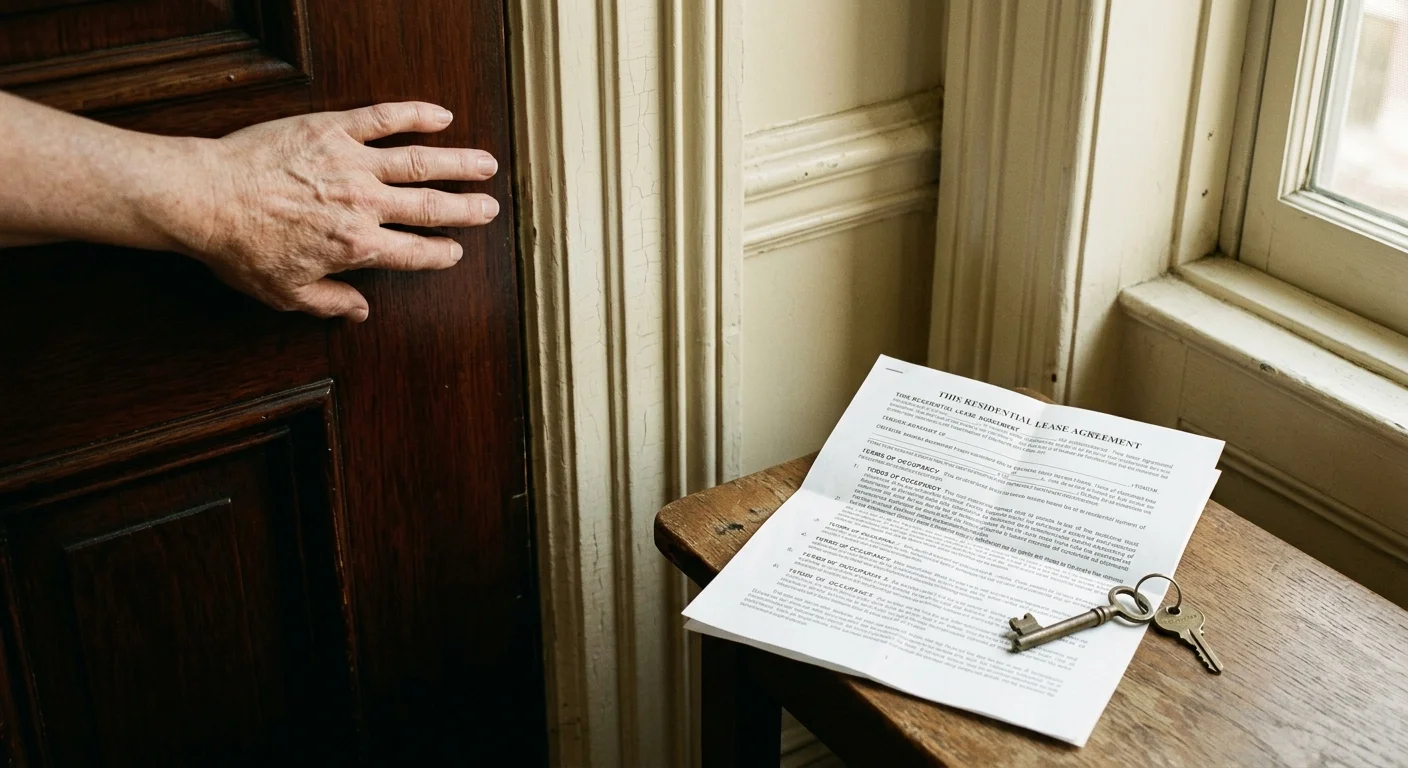
Most standard residential leases legally prohibit tenants from altering, drilling, or replacing physical door hardware. Modifying an exterior lock destroys master key access, exposing tenants to financial penalties or lease termination.
If you plan to monitor your entrance alongside lock automation, consider apartment hallway code compliance for peephole cameras before installing exterior hardware.
If you live in a protected historic district, federal guidelines impose additional structural restrictions. The Secretary of the Interior’s Standards for Rehabilitation require that all modern alterations remain completely reversible.
Rehabilitation standard ten mandates that new additions and alterations shall be undertaken in such a manner that, if removed in the future, the essential form and integrity of the historic property and its environment would be unimpaired.
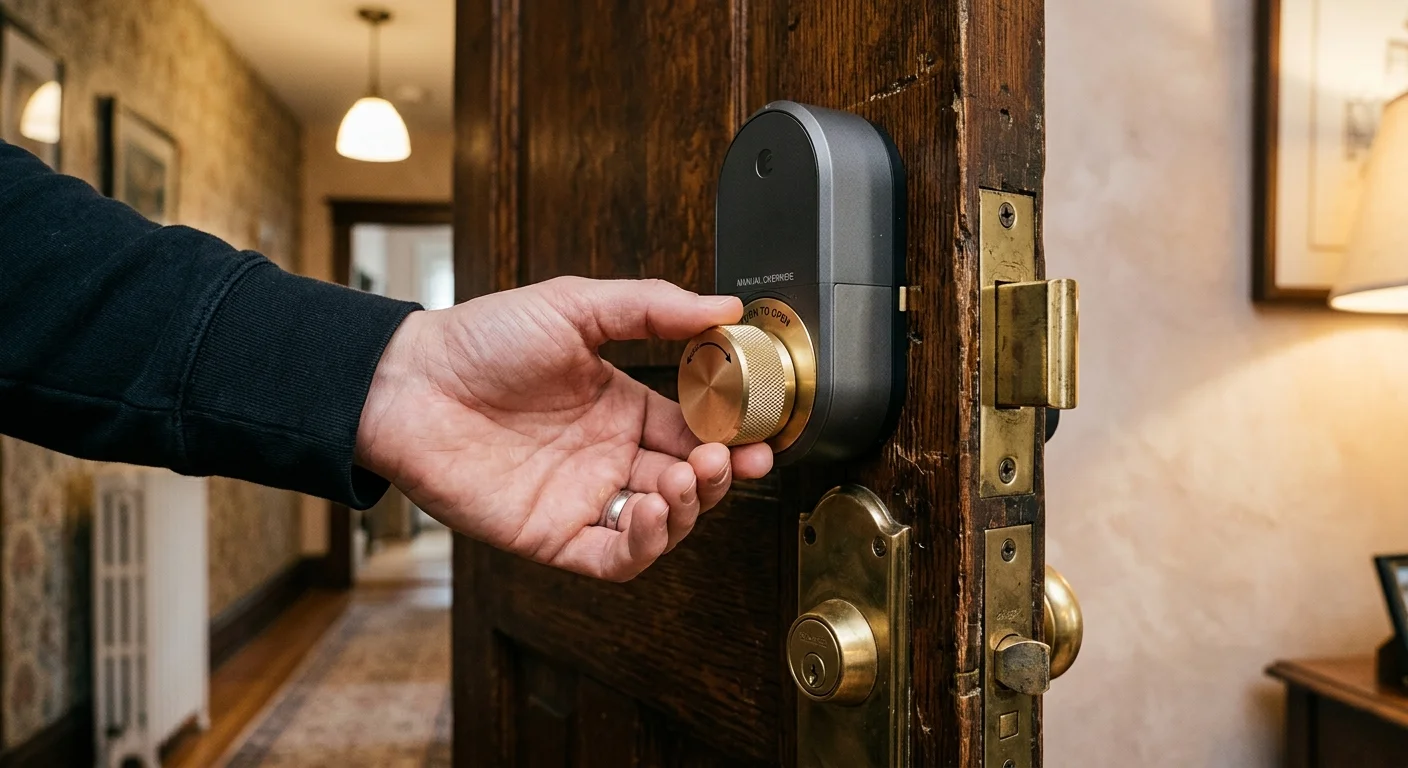
A renter retrofit smart lock avoids permanent alterations by attaching directly onto the surface of existing trim. The exterior keyway remains entirely untouched, ensuring your landlord’s physical key operates normally during emergencies.
Clamp-based motorized adapters attach over the interior thumbturn or key without set screws that tap into wood. When your lease concludes, you unclamp the unit without leaving holes, gouges, or stripped threads.
Torque Thresholds: Sizing Motors for Heavy Internal Spring Latches
Standard tubular deadbolts adhere to ANSI/BHMA A156.36 standards, operating smoothly with minimal rotational force. In contrast, commercial-grade historic mortise systems governed by ANSI/BHMA A156.13 incorporate heavy counter-springs and multi-lever locks.
Over decades, internal graphite dries out, factory grease hardens, and building settling shifts strike plates. These factors cause sticky deadlatches that require substantial operational force to rotate smoothly.
According to smart home hardware coverage from The Verge, entry-level motorized turners frequently jam when paired with misaligned or high-resistance locks. Basic retrofits outputting under 4 kgf·cm will stall mid-rotation.
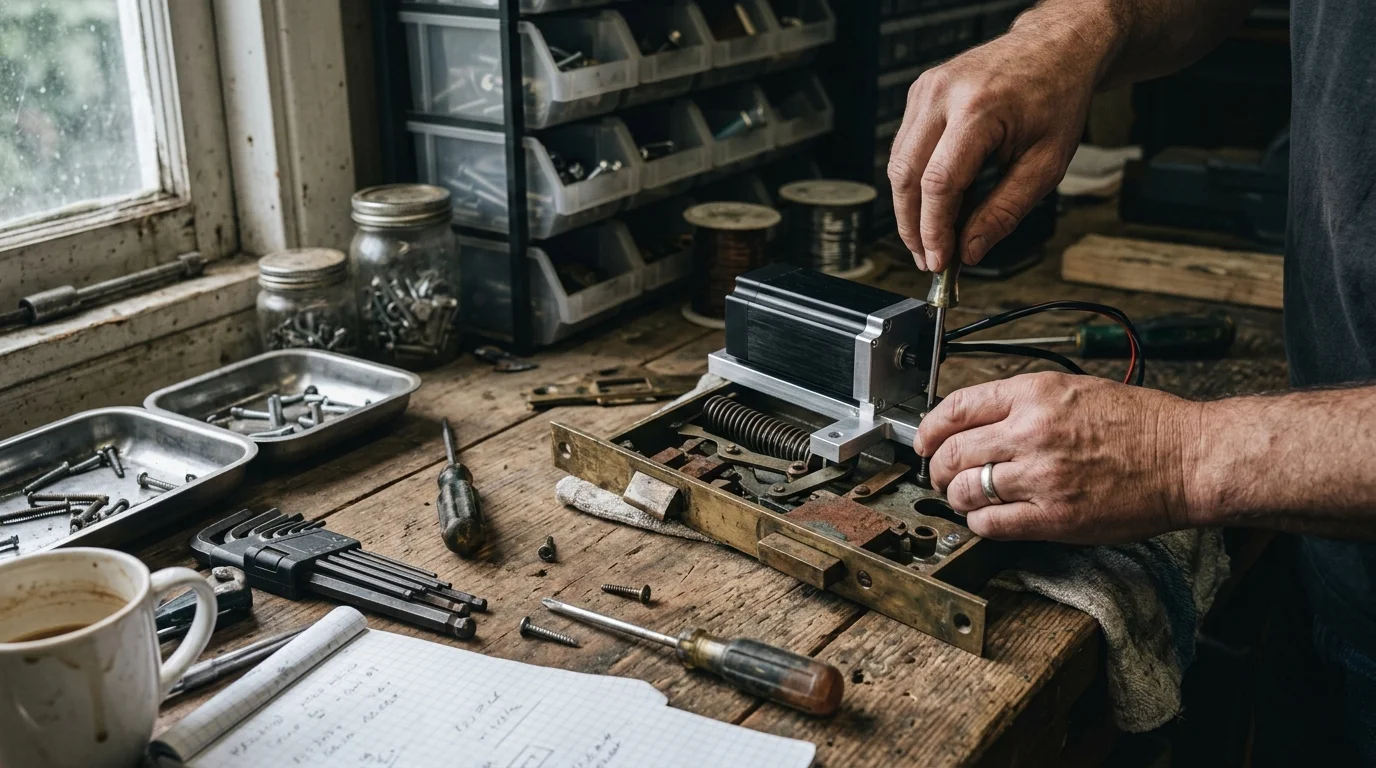
To turn an antique mortise mechanism reliably, a smart motor must deliver continuous load torque. Motor specifications must meet precise physical benchmarks to operate consistently without throwing mechanical obstruction errors:
- Continuous Load Torque: Minimum 8.0 kgf·cm (0.78 Nm) of sustained turning power to overcome internal friction.
- Stall Torque: At least 22.5 kgf·cm (2.2 Nm) to power through stubborn strike-plate resistance.
- Gear Construction: Reinforced metal planetary gearing rather than nylon gears to prevent stripped teeth during resistance spikes.
- Adaptive Motor Profiling: Current-sensing controllers that automatically increase motor drive when encountering tight mechanical thresholds.
Motors lacking these force ratings cannot throw the full length of a historic bolt. Using undersized turners drains batteries rapidly and risks leaving your door unlocked unexpectedly.
Top Clamp-Style Retrofit Solutions Compared
Selecting a smart lock for mortise lock applications requires analyzing motor torque, jaw clearance, and mounting plates. The following table compares dedicated non-destructive clamp solutions capable of driving heavy mechanisms.
| Device Model | Retail Price | Stall / Load Torque | Mounting Method | Connectivity Standard | Emergency Manual Turn |
|---|---|---|---|---|---|
| SwitchBot Lock Pro | $119.99–$139.99 | 18.0 kgf·cm / 6.0 kgf·cm | Adjustable Clamp / Removable Tape | Bluetooth / Matter via Hub | Physical Knob with Slip Clutch |
| SwitchBot Lock Ultra | $160.00–$170.00 | 22.5 kgf·cm / 8.0 kgf·cm | Multi-Jaw Clamp / Industrial Base | Bluetooth / Matter via Hub | Electronic Button + Manual Edge |
| Nuki Smart Lock Pro (4th Gen) | $279.00–$289.00 | 15.0 kgf·cm / 5.5 kgf·cm | Plate A (Clamp) / Plate B (Adhesive) | Native Matter over Thread / Wi-Fi | Direct Physical Knob Override |
| Tedee GO | $199.00 | 16.0 kgf·cm / 5.0 kgf·cm | Direct Key Clamp / Adhesive Ring | Bluetooth / Thread via Bridge | Manual Wheel Rotation |
As documented in Wirecutter’s smart lock testing and reviews, non-destructive retrofit motors let tenants modernize access without modifying external hardware. Evaluating each mechanism ensures you match your physical lock resistance with the proper drive unit:
- SwitchBot Lock Ultra provides the highest torque output, making it ideal for deeply recessed or stiff deadbolts.
- SwitchBot Lock Pro features versatile thumbturn clamp jaws that adjust across non-standard vintage dimensions.
- Nuki Smart Lock Pro offers native Matter over Thread connectivity, eliminating the need for manufacturer bridge hardware.
- Tedee GO excels on doors using an interior key rather than an integrated thumbturn spindle.
Mounting Over Antique Hardware: Escutcheon Clearance and Adhesive Geometry
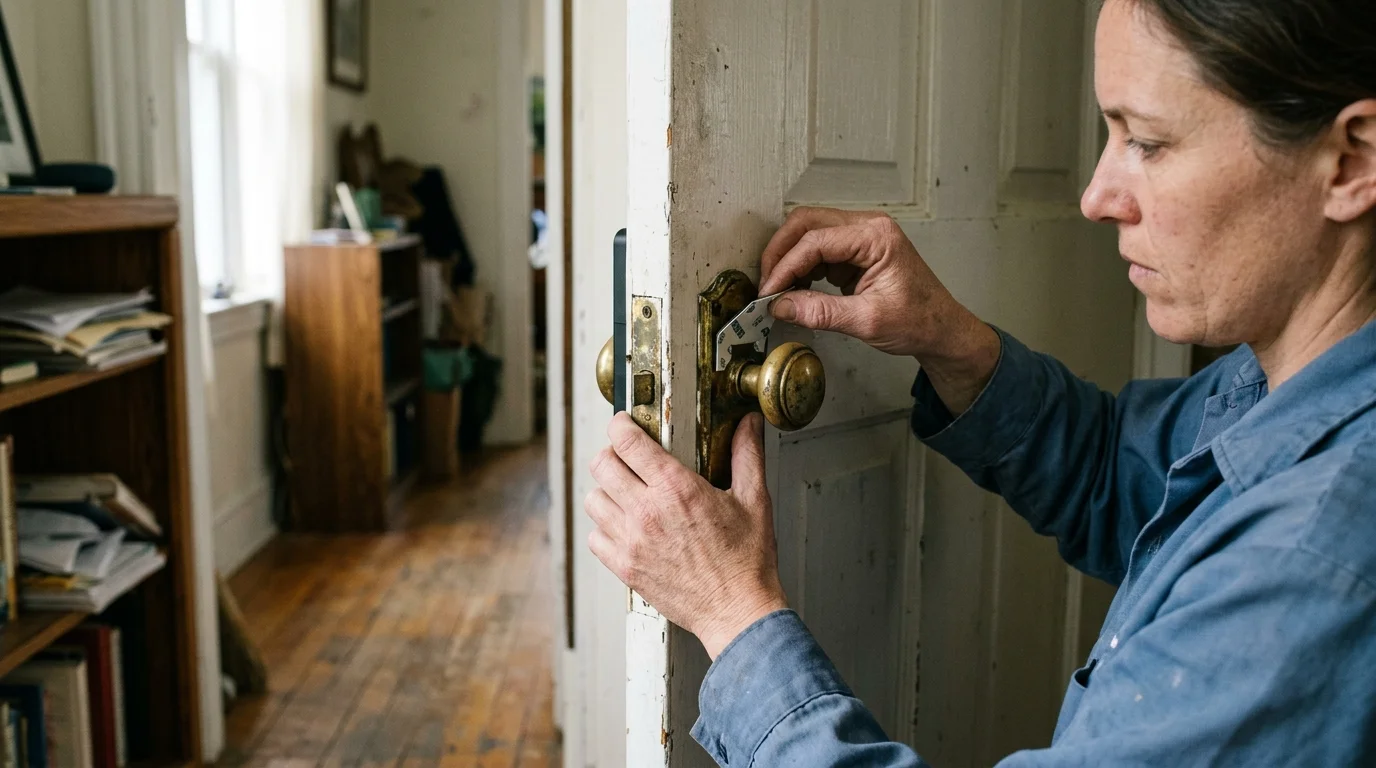
Historic doors rarely present flat, uniform mounting surfaces. Cast brass escutcheon plates often feature decorative scrollwork, raised borders, or prominent cylinder collars that interfere with standard brackets.
Similar to utilizing damage-free mounting tactics for rental walls, selecting the right removable adhesive ensures high holding strength without leaving stubborn residue.
Clamp mechanisms require specific physical clearances to anchor securely against your door. For example, Nuki’s clamping baseplate requires the cylinder or turn collar to protrude at least 3 mm past the door face.
If your mortise thumbturn sits flush or protrudes less than 3 mm, mechanical clamping jaws cannot grip the collar. You must use an industrial adhesive bracket designed for non-porous surfaces instead.
Adhesive brackets distribute motor rotational recoil across a wide surface area. High-bond acrylic adhesive pads secure the motor housing without interacting chemically with antique brass patinas.
When installing adhesive baseplates over historic hardware, follow these non-destructive surface preparation rules:
- Clean the escutcheon plate using 70% isopropyl alcohol to lift residual oils without stripping underlying brass lacquer.
- Measure the clearance between the thumbturn center and the door frame stop, ensuring at least 35 mm to prevent frame collisions.
- Align the baseplate so motor rotational torque drives parallel to the thumbturn throw angle.
- Apply firm, uniform pressure to the adhesive bracket for 60 seconds to initiate acrylic bonding.
- Allow the adhesive assembly to cure undisturbed for at least four hours before running motor calibration cycles.
To remove adhesive brackets upon moving out, warm the plate using a household hairdryer. Slide unflavored dental floss behind the bracket to slice through the softened foam without marring the metal.
Worked Example: Automating a 1920s Mortise Lockset
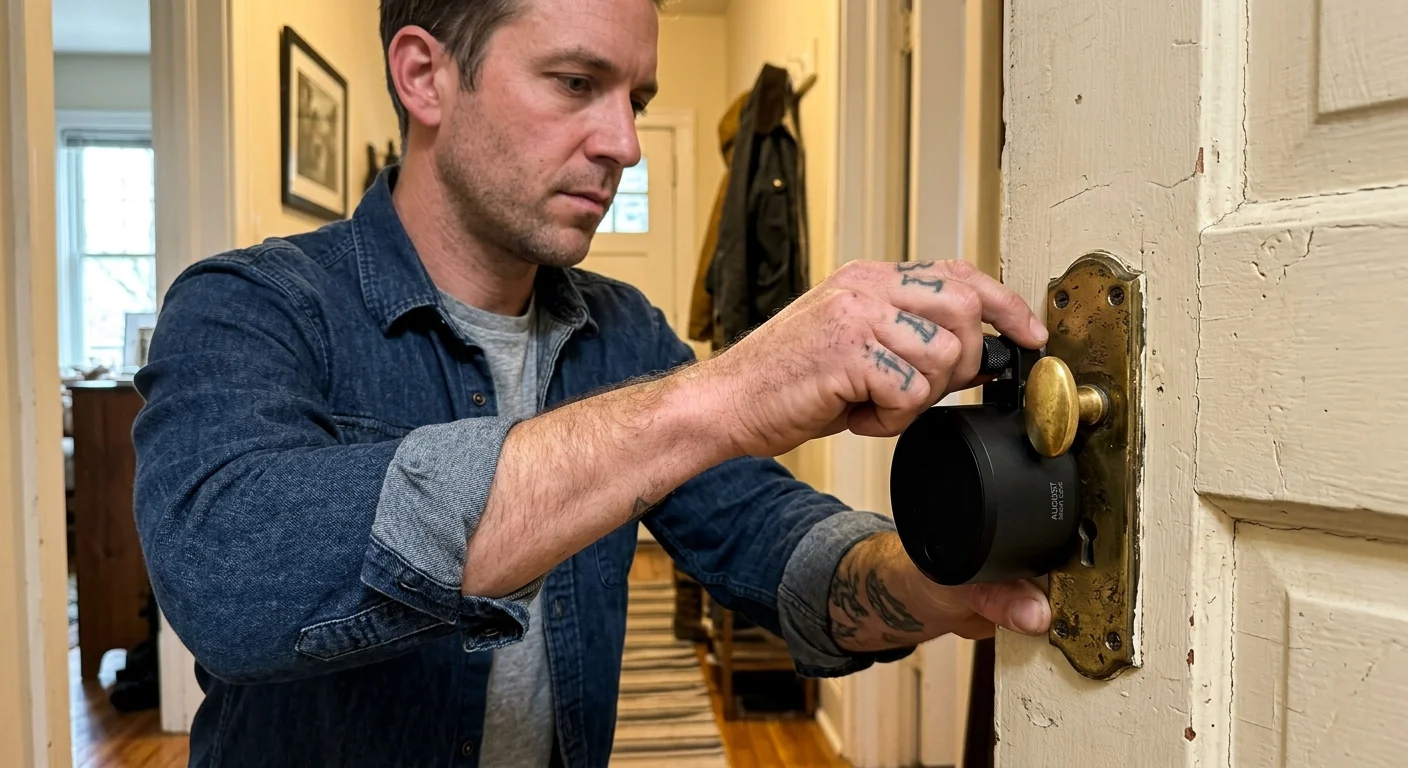
Consider this practical installation scenario: an apartment renter living in an intact 1924 apartment with a vintage Corbin mortise lockset. The landlord prohibits drilling, replacing components, or altering the ornate brass trim.
Initial inspection reveals a teardrop-shaped interior thumbturn that requires high manual effort to throw. The thumbturn measures 7 mm wide, 18 mm deep, and sits 42 mm from the door jamb on a raised escutcheon.
A handheld luggage scale measures the rotational force required to turn the latch. Hooking the scale to the thumbturn indicates an operational resistance of 11.0 kgf·cm, which exceeds low-torque smart turners.
To reduce internal friction before installing the motor, the tenant uses targeted lubrication:
- Insert a precision straw into the mortise edge seam and apply two short bursts of dry PTFE spray ($8.50).
- Rotate the interior thumbturn manually 15 times to distribute the dry lubricant through the cast-iron linkage.
- Retest the turning force with the scale; the required rotational torque drops to 6.2 kgf·cm.
The tenant selects the SwitchBot Lock Ultra ($165.00), utilizing its multi-jaw clamp adapter and 8.0 kgf·cm continuous load capacity. Because the escutcheon relief is 2.5 mm, the tenant employs the high-bond adhesive mounting plate.
After a 4-hour cure, the tenant launches calibration in the mobile app. The motor maps a 90-degree clockwise deadbolt throw, completing full engagement in 2.8 seconds without motor stalling or chassis deflection.
The total upgrade takes 25 minutes of active labor, costs under $175, and restores to original condition in 10 minutes upon lease completion.
Smart Ecosystem Integration: Matter, Thread, and Automated Routines
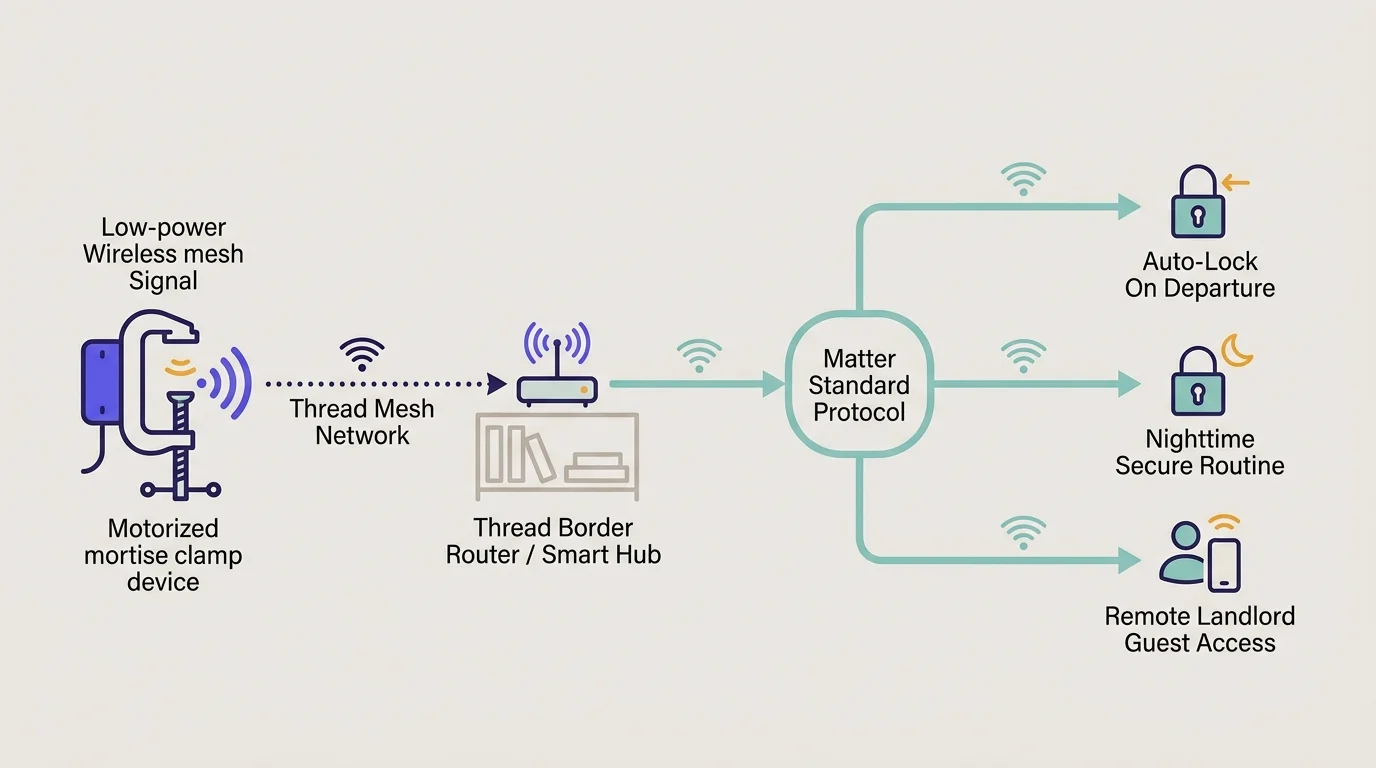
High-torque clamp locks now support the Matter smart home standard specifications, enabling direct local control. Connecting through Matter over Thread eliminates reliance on proprietary cloud services and external vendor bridges.
Thread creates an energy-efficient mesh network across compatible border routers such as an Apple TV 4K, HomePod Mini, or Google Nest Hub. This local architecture cuts command latency down to milliseconds while significantly extending lock battery life.
Local communication ensures your smart lock functions seamlessly even during internet service outages. Your home automation controller executes security routines locally across your home network.
Automations turn historic doors into active participants in modern home security workflows. You can configure useful automations to simplify daily routines:
- Departure Routine: Turning off living room lights and arming indoor motion sensors automatically locks the mortise deadbolt.
- Arrival Automation: Unlocking the mortise mechanism turns on the entryway lamp and sets the smart thermostat to comfort mode.
- Nighttime Lock Check: A scheduled 10:00 PM routine verifies deadbolt closure and sends an alert if the latch remains unthrown.
- Door-Ajar Integration: Contact sensors on the door jamb notify your smart speaker if the door remains ajar for more than two minutes.
These local automations eliminate key fumbling while ensuring historic hardware never compromises security consistency.
Life Safety and Single-Motion Egress Compliance
Automating an apartment entry door requires strict adherence to residential life safety standards. Section 1010.2 of the International Building Code (IBC) and NFPA 101 Life Safety regulations govern door hardware egress.
Residential codes require that building occupants can unlatch egress doors from the inside with a single releasing motion. This egress action must never require keys, specialized tools, or excessive physical effort.
External clamp locks can create entrapment hazards if an internal gearbox binds or jams over your thumbturn. If the motor stalls during an emergency, building occupants must still retain manual mechanical override.
Verify that your chosen retrofit hardware satisfies essential egress safety standards before mounting it to your door:
- Internal Slip Clutch: The motor gearing must decouple automatically, letting you turn the knob manually even during battery failure.
- Mechanical Manual Knob: The outer face of the retrofit motor must retain an ergonomic physical turn knob or textured grip.
- Low Manual Resistance: Internal motor resistance must remain low enough that children or elderly residents can throw the latch manually.
- Low-Battery Position Lock: The firmware must prevent auto-locking when battery power drops below operational thresholds.
Never install a non-clutch smart turner that locks its drive gears when depowered. Always test your ability to manually overpower the motor unit before depending on it for daily residential security.
Frequently Asked Questions
Can a smart lock work if my antique mortise thumbturn is loose or stiff?
Clamp-on smart locks require that the mechanical thumbturn can complete its rotational throw without binding. If your lock binds, apply a dry PTFE spray lubricant inside the mortise pocket to restore smooth movement before mounting a motor.
Will the adhesive mounting bracket damage historic brass escutcheon plates?
High-bond acrylic adhesive pads do not strip stable lacquer or react chemically with antique brass. Softening the adhesive bond with warm air and slicing it with dental floss lets you remove the bracket without leaving residue.
How do clamp-on retrofit locks maintain landlord emergency access?
Because the smart motor clamps solely to the interior thumbturn, the exterior keyed cylinder remains untouched. Your landlord’s existing physical key continues to operate the lock mechanism normally from the hallway.
What happens if the smart lock battery dies while I am away?
You can unlock the door using your original exterior physical key because the internal mechanism retains direct mechanical control. Most retrofit units also feature external USB-C emergency power terminals to jumpstart a depleted unit.
Disclaimer: This article is for informational purposes only. Smart home devices involve electrical connections and data privacy. Always follow manufacturer instructions for installation. For complex wiring or HVAC work, consult a licensed professional.




1 Comment