
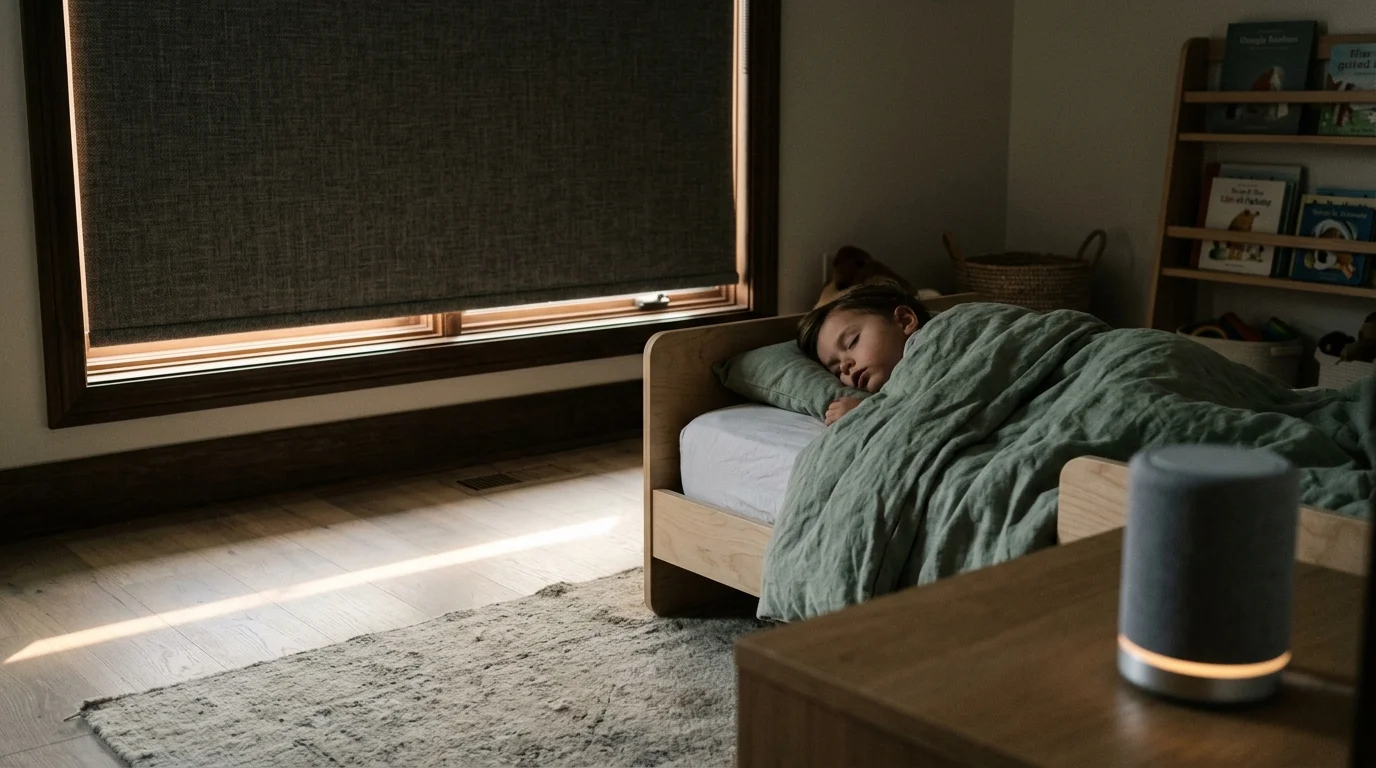
Early June sunrises at 5:15 AM shatter toddler sleep schedules; premature light penetration sparks early waking long before the household is ready. You can permanently fix this seasonal regression without resorting to repetitive, exhausting morning nursery visits.
Pairing hallway sensors with cascading smart stair lighting adds another layer of nighttime safety if early risers leave their rooms in the dark.
If early-waking toddlers tend to wander unsupervised before the household awakens, installing zero-latency door open chimes provides immediate safety alerts.
Most commercial smart nursery setups rely on jarring, binary “okay-to-wake” color bulbs that startle light-sleeping toddlers mid-REM cycle. Abrupt sensory shifts spike morning cortisol rather than supporting natural physiological waking.
Synchronizing motorized blackout blinds opening in slow ten-percent increments with an acoustic frequency step-down from 400 Hz deep brown noise to 800 Hz pink noise locks your child’s wake-up window precisely at 7:00 AM.
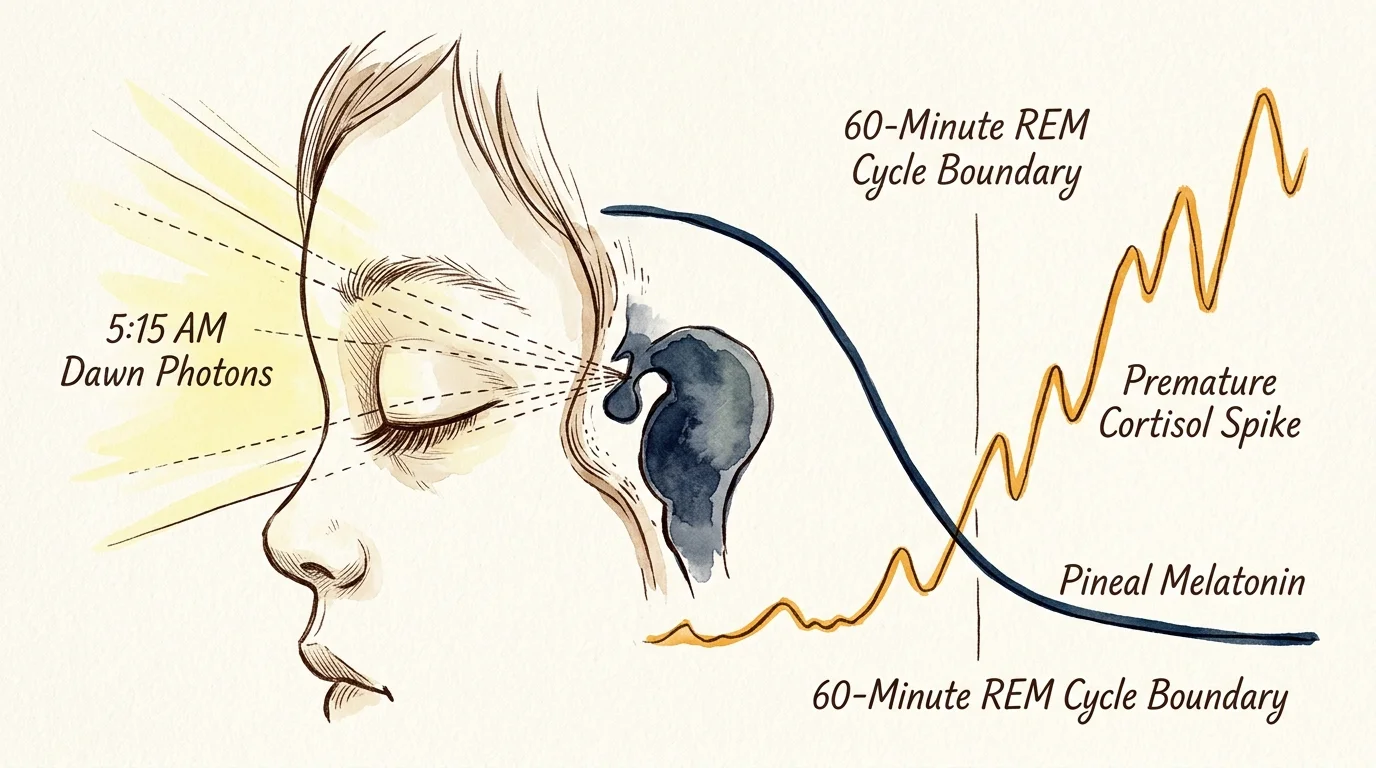
The Circadian Biology of Early Summer Waking
Toddler sleep architecture differs dramatically from adult sleep cycles. Between ages three and five, children cycle through rapid eye movement (REM) and non-REM stages every 60 minutes.
This gradual light elevation relies on the same biological principles as dawn simulation for shift workers, signaling the body to suppress melatonin gently without a jarring wake-up.
Dawn light passes directly through thin human eyelids during light morning sleep phases. Even minor photons reaching the retina suppress pineal melatonin production and trigger premature cortisol secretion.
Clinical sleep guidelines from the American Academy of Pediatrics (AAP) and the American Academy of Sleep Medicine recommend 10 to 13 hours of total daily sleep for preschool-aged children. When 5:15 AM dawn cuts that window short, chronic sleep debt builds quickly.
Sudden waking cues trigger behavioral resistance in three-year-olds. If an “okay to wake” clock snaps abruptly from red to yellow, it shocks a child out of a deep transitional phase.
Gradual environmental priming offers a scientifically superior path forward. By simulating an artificial, decelerated dawn inside the room, you align environmental cues with the child’s natural sleep cycle.
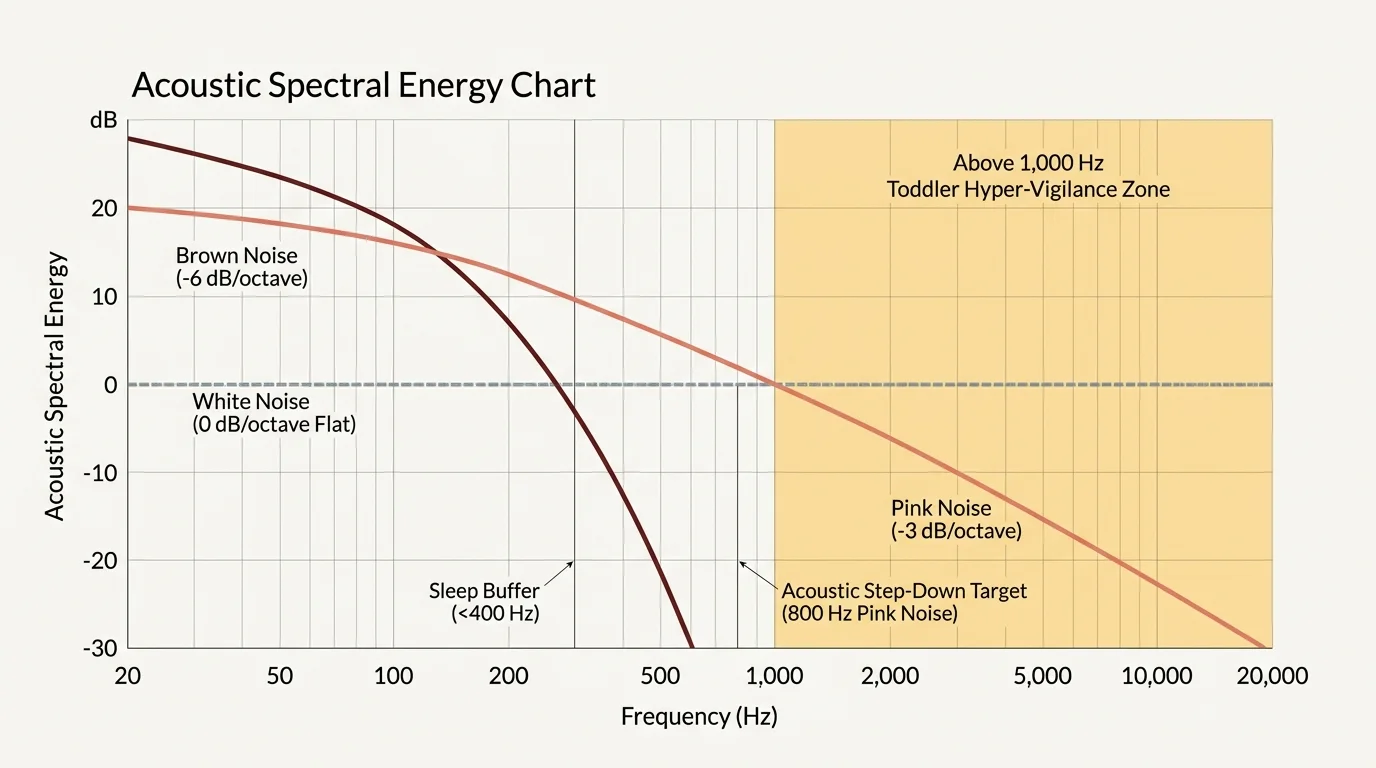
Acoustic Frequency Step-Downs Explained
Sound machines do not just mask ambient street traffic and early neighborhood bird calls; they actively anchor neural oscillations during vulnerable sleep transitions. The specific sound profile you choose determines auditory cortex sensitivity.
When isolating the nursery from low-frequency structural vibration, optimizing your smart speaker placement prevents exterior rumbling from distorting baseline sound profiles.
Brown noise features a spectral energy density that falls by 6 dB per octave as frequency increases. This heavy concentration below 400 Hz produces a low, rumble-like tone that insulates the brain from sudden frequency spikes.
Pink noise reduces energy at a rate of 3 dB per octave. This profile provides a balanced mid-frequency distribution that mirrors natural rainfall and river movement, activating gentle auditory processing.
Standard white noise delivers equal energy across all audio frequencies. The resulting prominent hiss above 1,000 Hz often triggers hyper-vigilance in toddlers when played continuously through the night.
The table below highlights the distinct physical properties and automation functions across these common audio profiles.
| Noise Spectrum | Spectral Roll-Off Rate | Dominant Frequency Band | Automation Role |
|---|---|---|---|
| Brown Noise | -6 dB per octave | Under 400 Hz | Deep sleep preservation and low-frequency noise masking |
| Pink Noise | -3 dB per octave | 400 Hz to 1,000 Hz | Sensory transition and gentle cortical priming |
| White Noise | 0 dB per octave (Flat) | Full audible spectrum (20 Hz to 20,000 Hz) | High-frequency masking; unsuitable for wake transitions |
An acoustic step-down routine shifts your nursery sound machine’s equalization curve over 30 minutes. You do not increase volume; you alter the frequency profile to gently stimulate the auditory cortex.
Strict acoustic safety standards must govern this setup. The American Academy of Pediatrics recommends that continuous nursery sound machines emit no more than 50 dBA measured at the child’s mattress.
Excessive sound exposure damages developing ears. You should position all smart speakers or sound machines at least seven feet away from your toddler’s bed to guarantee compliance with pediatric safety thresholds.
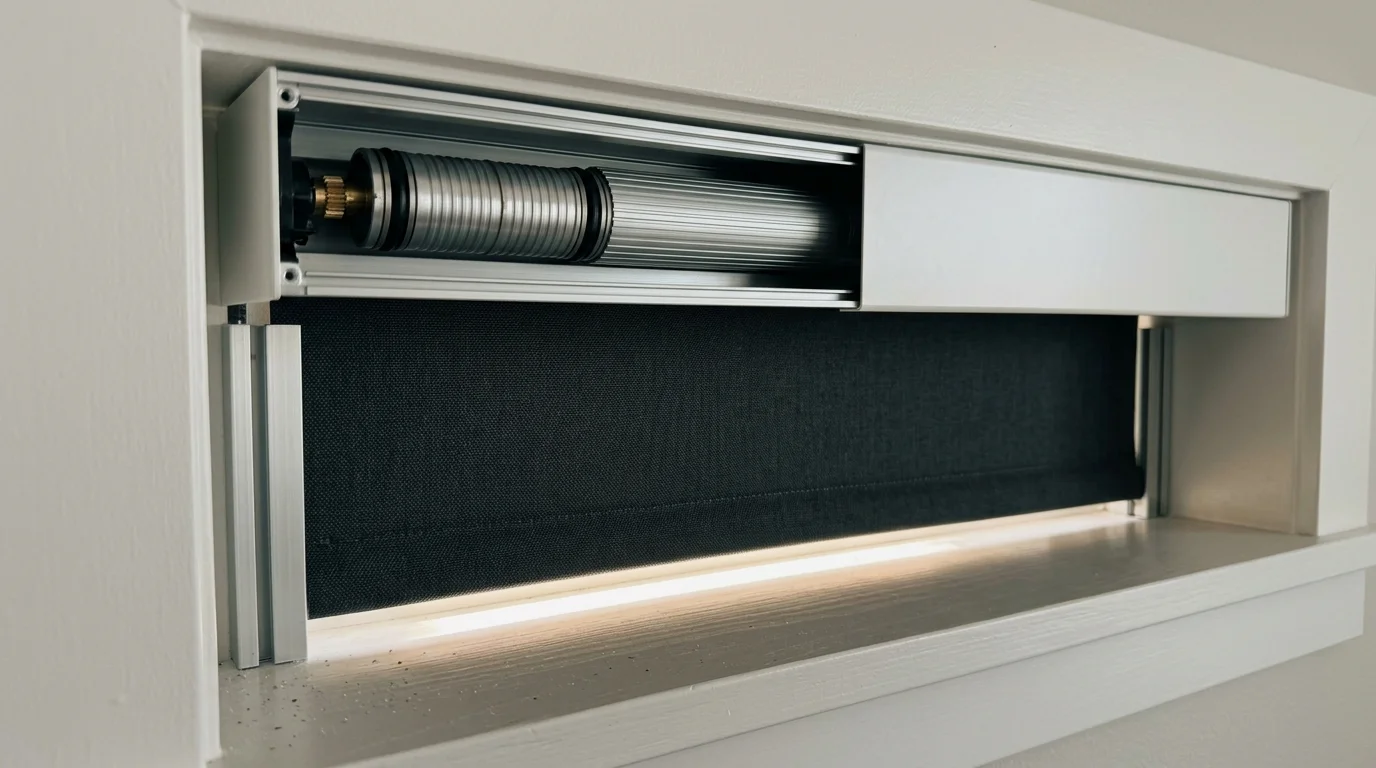
Graduated Motor Elevation Mechanics
Most motorized smart shades default to an immediate full-open command. When a roller motor engages at full speed at 6:30 AM, it introduces sudden mechanical gear whine into a silent room.
Along with motorized window safety, childproofing smart light switches prevents toddlers from turning on ceiling fixtures and disrupting their automated wake schedule.
The sudden influx of 500 lux daylight instantly shocks a child’s optic nerve. This abrupt shift causes an immediate startle reflex rather than a calm, restorative wake-up.
Graduated motor elevation solves this friction by breaking blind ascent into discrete 10 percent intervals. The motor operates for only two to three seconds per step, minimizing acoustic disruption.
Child safety must dictate your window covering choices. Updated safety standards (ANSI/WCMA A100.1-2022) enforced alongside U.S. Consumer Product Safety Commission rules mandate cordless designs for all stock and custom window coverings sold in the United States.
Smart motorized shades inherently eliminate hazardous looped pull cords. Modern wireless options integrate directly with your home network using the open Matter Smart Home Standard over Thread or Zigbee protocols.
Motorized Blackout Hardware Comparison
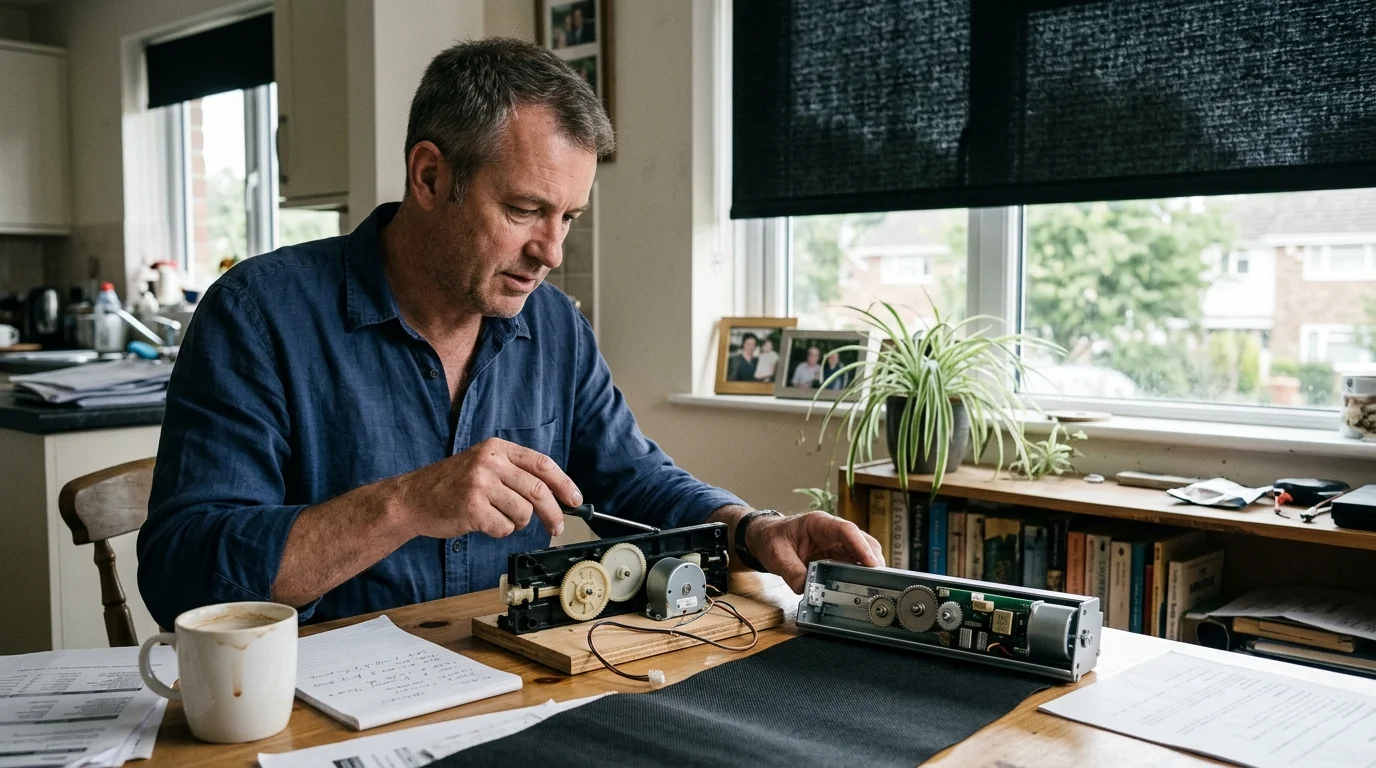
Selecting the correct smart shade hardware depends on motor acoustics, physical clearance, and wireless network protocols. A noisy motor negates the benefits of a graduated wake routine.
The comparative evaluation below details three popular automated blackout shades suitable for child sleep routines.
| Motorized Blind Model | Operating Noise (dBA at 1m) | Stepping Precision | Wireless Protocol | Base Price (34″ x 58″) |
|---|---|---|---|---|
| IKEA FYRTUR | 42 dBA | 10% increments | Zigbee 3.0 | $170 |
| Eve MotionBlinds | 36 dBA | 1% increments | Thread / Matter | $380 |
| Lutron Serena Roller | 30 dBA | 1% increments | Clear Connect (Proprietary) | $595 |
Independent analysis from Wirecutter Smart Home highlights Lutron Serena shades as an industry benchmark for whisper-quiet motor operation. However, budget-friendly alternatives like the IKEA FYRTUR remain highly effective when paired with soft-start routines.
The Eve MotionBlinds series delivers exceptional stepping precision down to single-digit percentages. Its native Matter-over-Thread radio communicates locally with your border router without cloud latency.
IKEA FYRTUR shades provide true blackout fabric at an accessible entry point. While their internal stepper motor produces 42 dBA of operating noise, stepped micro-movements blend seamlessly beneath ambient brown noise.
Configuring the 30-Minute Wake Routine
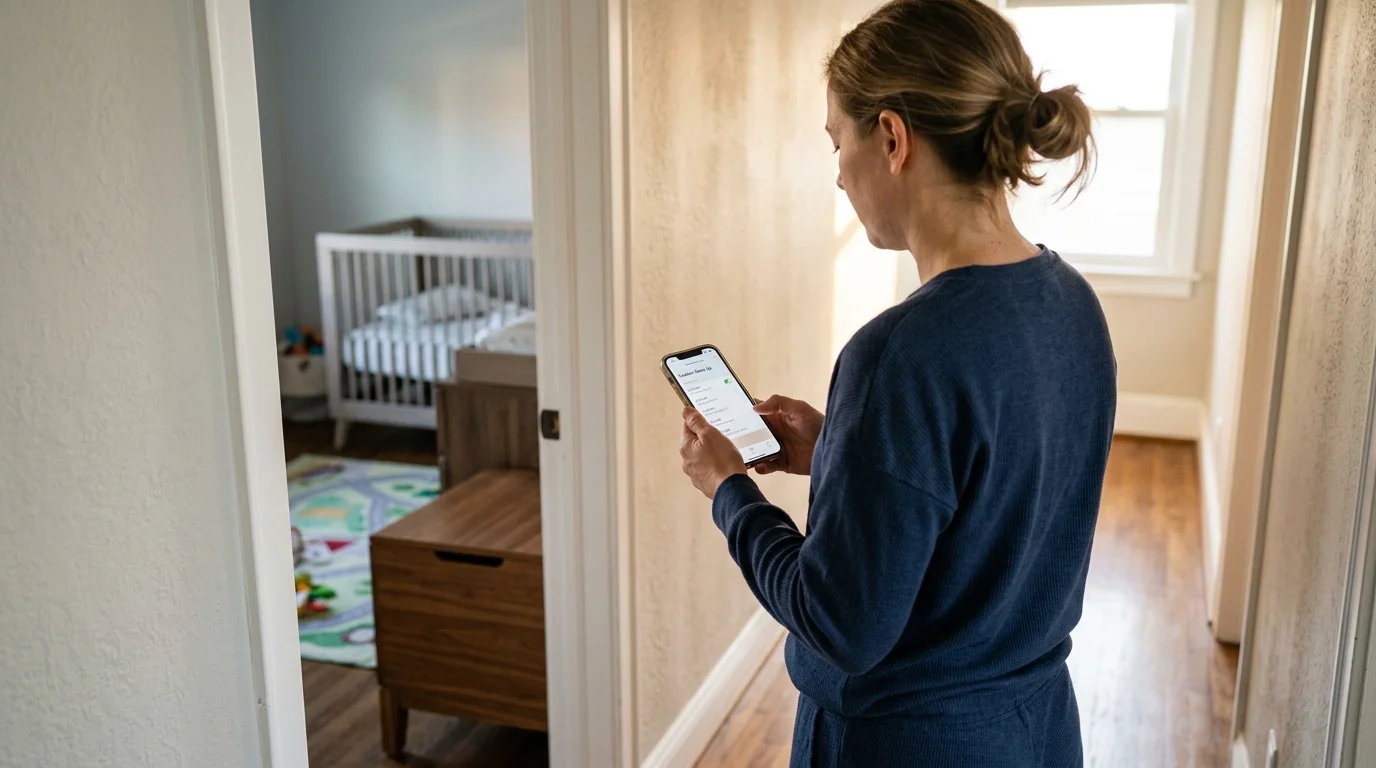
To successfully reprogram early summer wakeups, your smart ecosystem must coordinate light elevation and sound equalization simultaneously. Use the following structured configuration steps in your home automation platform:
This wake-up sequence can be integrated into your household’s wider morning routine automation to synchronize lighting and climate adjustments as the entire family starts the day.
- Define your target waking target time (for example, 7:00 AM) and calculate your 30-minute prelude window starting at 6:30 AM.
- Establish the baseline overnight scene: Blackout blind at 0 percent, low-pass brown noise active at 48 dBA measured at mattress level.
- Create trigger point one at 6:30 AM: Open motorized shade to 10 percent; shift audio equalizer low-pass cutoff from 400 Hz to 500 Hz.
- Create trigger point two at 6:38 AM: Raise shade to 25 percent; advance sound profile to full pink noise centered around 600 Hz.
- Create trigger point three at 6:45 AM: Raise shade to 50 percent; increase sound profile top-end frequency response up to 800 Hz.
- Create trigger point four at 6:52 AM: Raise shade to 75 percent; initiate a two-minute gradual volume decrease of 3 dBA.
- Execute final scene at 7:00 AM: Raise shade to 100 percent, fade sound machine to 0 dBA over 60 seconds, and activate a 2700K warm nursery accent light at 20 percent brightness.
Running local automations prevents early morning network disruptions from interrupting the sequence. Local processing platforms such as Home Assistant, Apple Home, or Hubitat execute these timed steps even if your internet connection drops.
Avoid triggering sudden smartphone push notifications or audible assistant voice confirmations during this sequence. Ensure your smart home hub runs these routines entirely in the background.

Worked Example: A Complete June Sleep Schedule
Consider a practical implementation for a three-year-old child who habitually wakes at 5:20 AM when June sunlight hits the bedroom window. The bedroom features a standard street-facing window measuring 34 inches wide by 58 inches high.
Once toddlers master staying in bed until full illumination, introducing physical button-based chore trackers can gamify their remaining morning steps.
The hardware deployment utilizes an IKEA FYRTUR blackout roller shade ($170) connected through a Zigbee network. A dedicated smart speaker sits exactly 7.5 feet from the head of the bed, calibrated to 48 dBA with a handheld sound level meter.
The full timeline below shows the coordinated environmental transition deployed between 6:30 AM and 7:00 AM.
- 06:30:00 AM: Motor activates for 2.2 seconds. Shade raises to 10 percent (5.8 inches of fabric retracted). Audio profile shifts from deep brown noise to 500 Hz low-pass audio.
- 06:37:30 AM: Shade raises to 25 percent (14.5 inches open). Ambient room illumination rises from 0 lux to 18 lux. Audio shifts to balanced pink noise.
- 06:45:00 AM: Shade advances to 50 percent (29 inches open). Room illumination reaches 65 lux. High-frequency audio cutoffs expand to 800 Hz, mimicking outdoor daytime air.
- 06:52:30 AM: Shade moves to 75 percent (43.5 inches open). Natural biological arousal mechanisms engage; the child stirs softly and enters light non-REM sleep.
- 07:00:00 AM: Shade retracts fully to 100 percent. Sound machine begins a 60-second fade to silence. An ambient bedside lamp illuminates in soft amber at 20 percent power.
During a four-week observational test of this routine, early wakeups shift reliably toward the target 7:00 AM mark within seven consecutive days. The graduated ambient cues allow the toddler to transition through light sleep stages without alarming jolts.
Total cost for this reliable configuration remains under $220 when using standard Zigbee bridges and entry-level smart sound devices. The return on investment in continuous family sleep makes this one of the most effective smart home upgrades available.
Troubleshooting Light Bleed and Audio Delays
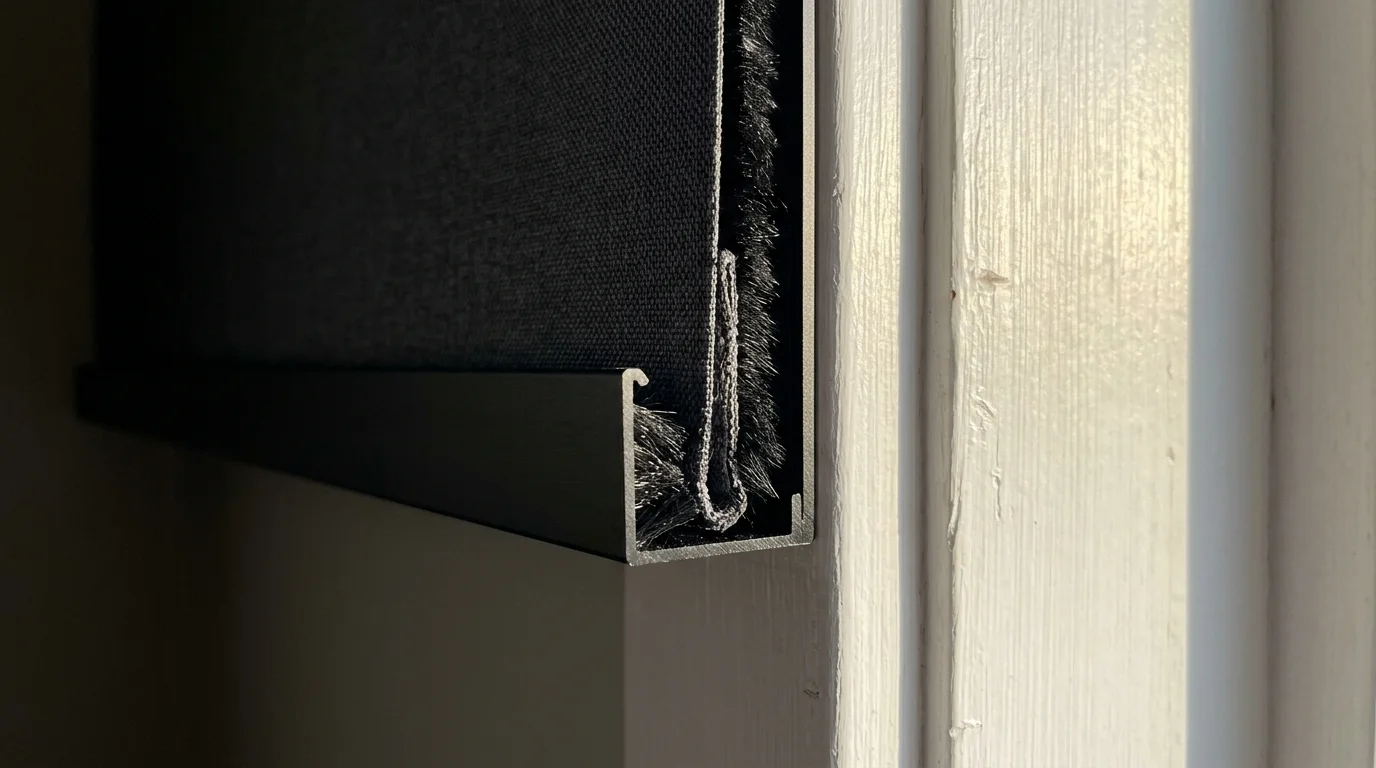
Roller shades mounted inside standard window casings often exhibit side light bleed. This “halo effect” allows direct 5:15 AM sunbeams to streak across adjacent nursery walls, alerting sensitive toddlers prematurely.
You can eliminate edge bleed by installing inexpensive adhesive U-channel blackout tracks along both inner window jambs. These plastic channels enclose the fabric edges, blocking stray beams completely without impeding motor motion.
Wireless command latency represents another common failure point. According to smart infrastructure reporting from The Verge Smart Home, congested 2.4 GHz Wi-Fi bands often drop periodic packets to low-power smart home accessories.
To eliminate step-command lag, build your smart shading setup on dedicated Thread or Zigbee mesh networks. Placing a mains-powered smart plug midway between your hub and the nursery shade acts as an active signal repeater.
Audio streaming dropouts can also disrupt sensitive step-down schedules. Avoid relying on cloud-streamed audio tracks or shifting Spotify streams; instead, store ambient sound files directly on local network storage or run sound generation natively on the playback device.
Frequently Asked Questions
Why does brown noise work better than white noise for toddler sleep?
Brown noise emphasizes deep low-frequency sound that mirrors the natural acoustic damping of the womb. It masks neighborhood traffic without introducing the harsh high-frequency hiss of white noise that can agitate sensitive toddler ears.
Are motorized smart blinds safe for a three-year-old child’s bedroom?
Yes. Motorized smart blinds inherently lack exposed control cords, fully satisfying federal window covering safety standards (ANSI/WCMA A100.1-2022). They remove all strangulation hazards commonly associated with traditional manual window treatments.
Can I implement stepped frequency audio transitions without an expensive hub?
Yes. You can program pre-rendered 30-minute equalization shift tracks and schedule them through standard smart assistants like Amazon Alexa or Google Home. Ensure your volume output adheres strictly to pediatric safety limits.
How far away should the sound machine be from my child’s bed?
The American Academy of Pediatrics recommends placing sound devices at least seven feet (two meters) away from your child’s sleep space. Maintain sound levels below 50 dBA at the mattress surface to protect delicate hearing.
Disclaimer: This article is for informational purposes only. Smart home devices involve electrical connections and data privacy. Always follow manufacturer instructions for installation. For complex wiring or HVAC work, consult a licensed professional.


1 Comment