
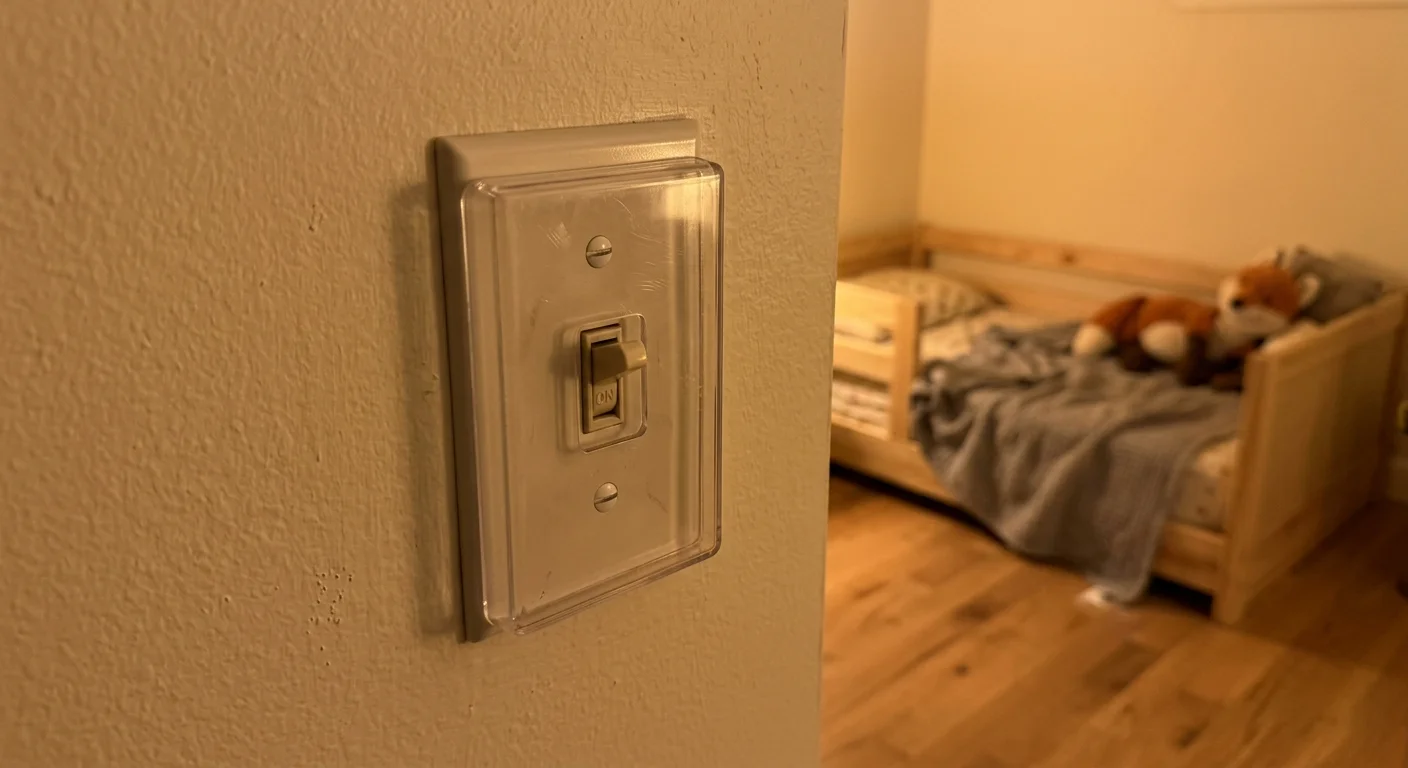
Transitioning your toddler to a floor bed unlocks newfound mobility, turning standard toggle light switches into irresistible midnight toys. When a newly mobile child flips overhead fixtures on at 2:00 a.m., it shatters restorative sleep cycles instantly.
You do not need an expensive in-wall smart switch rewrite to solve this bedroom disruption. Pairing a six-dollar physical switch guard with a low-lumen smart bulb cutoff delivers more reliable sleep protection than software child-locks alone.
While digital app lockouts frequently fail during network drops or accidental overrides, physical guards mechanically secure power while maintaining automated night routines. This practical guide walks you through building an escape-proof toddler lighting system.
The Floor Bed Transition: Why Toddlers Target Wall Switches
The shift from a contained crib to an open floor bed represents a major developmental milestone. Between 18 and 30 months of age, children gain unassisted access to every physical fixture in their room.
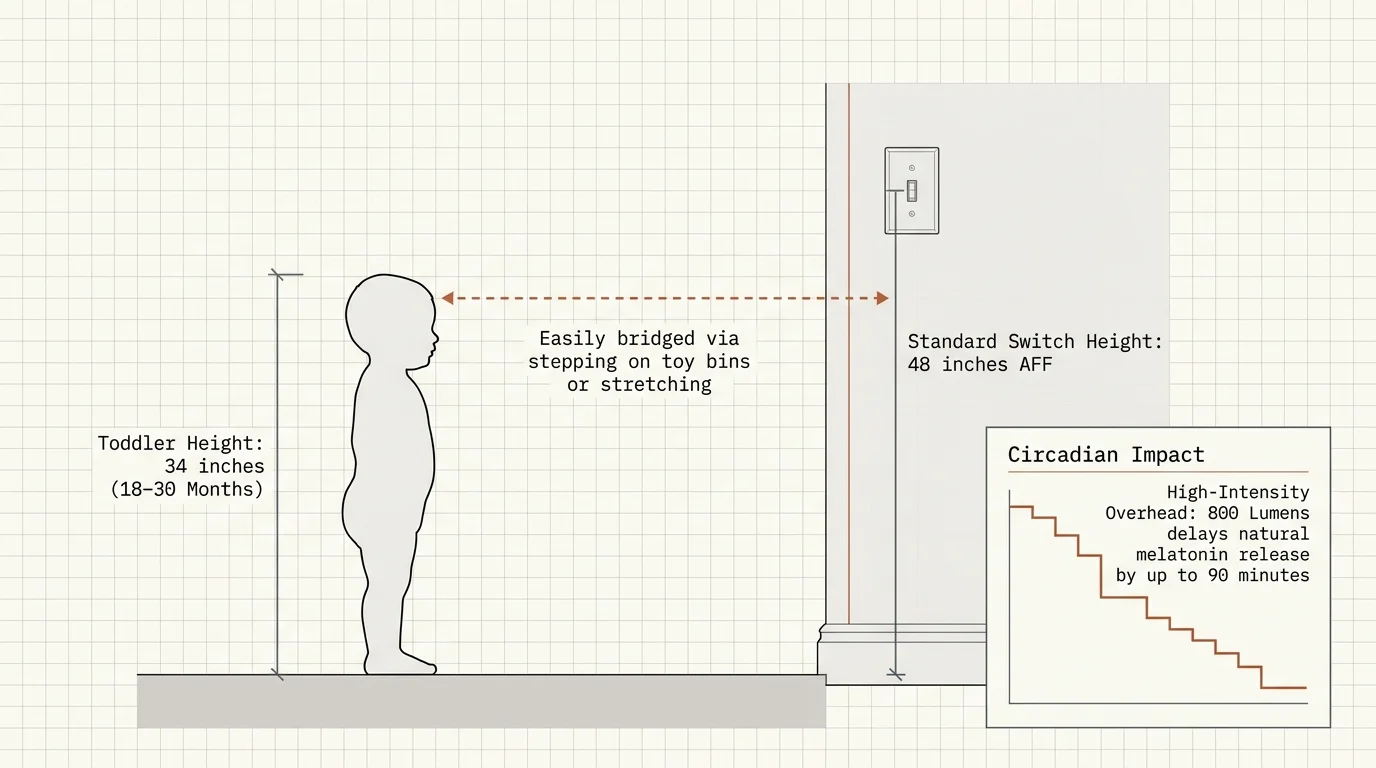
Standard residential toggle switches sit exactly 48 inches above the finished floor level. A toddler standing 34 inches tall can easily bridge that gap by standing on a toy bin or stretching upward.
Physical toggle switches provide immediate sensory gratification. The tactile snap of the plastic arm and the blinding overhead illumination deliver a powerful dopamine feedback loop that encourages repetitive flipping.
The most effective home automation is invisible and cannot be dismantled by a curious two-year-old in the dark.
Sudden exposure to overhead illumination halts the body’s natural sleep mechanics. High-intensity lighting rapidly suppresses salivary melatonin production, resetting your child’s circadian rhythm within minutes.
- Circadian Phase Shifting: Exposure to standard 800-lumen overhead lights delays natural melatonin release by up to 90 minutes.
- Motor Skill Reinforcement: The audible mechanical click reinforces trial-and-error play when the room should remain quiet.
- Night-Waking Perpetuation: Once children learn they control room lighting, bedtime stalling behaviors escalate dramatically.
- Hardware Wear: Aggressive, rapid flicking causes premature mechanical failure in basic builder-grade switches.
Telling a two-year-old not to touch the wall switch rarely succeeds at 3:00 a.m. Your nursery environment requires structural friction that prevents switch manipulation without introducing safety hazards.
Physical Switch Guards: Clear Shields vs. Dual-Sided Magnetic Latches
A physical switch guard physically encloses or blocks the switch toggle, preventing tiny fingers from altering the physical circuit. These devices mount directly to your wall plate using existing screw holes.
Standard North American toggle plates use standard 6-32 thread oval-head screws spaced exactly 2.375 inches apart. Physical guards take advantage of this standardized spacing to provide secure anchor points.
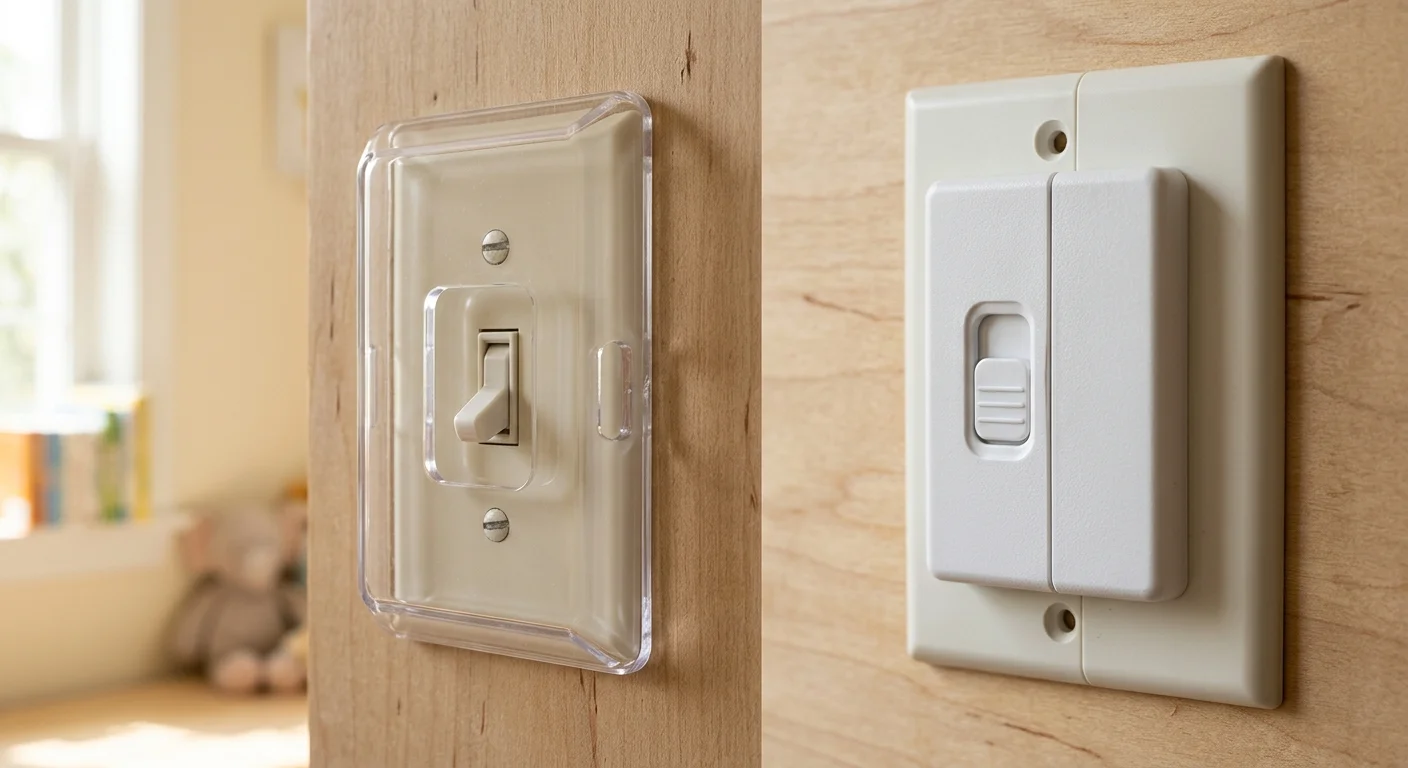
Clear polycarbonate shields enclose the toggle switch entirely. They feature narrow side apertures that allow adult fingers or a pen tip to reach the toggle while completely blocking broad toddler hands.
Dual-sided latching guards clamp around the toggle lever itself. They require simultaneous pressure from two opposing fingers to release the mechanism, exceeding the motor coordination of children under four years old.
- Full-Enclosure Screw-In Shields: Polycarbonate covers that fasten behind the original plate screws. They offer maximum tamper resistance and zero mechanical moving parts to break.
- Single-Side Access Guards: Semi-open hoods that keep one side open for quick adult access. Toddlers can occasionally bypass them using small toys or pencils.
- Magnetic Switch Overlays: Snap-on covers utilizing rare-earth magnets attached to screw heads. They install in seconds but fail against persistent, forceful pulling.
- Rocker-Plate Child Locks: Sliding shields engineered specifically for modern Decora-style paddle switches rather than legacy toggles.
For standard toggle switches, clear polycarbonate screw-in guards offer the best balance of safety and durability. They maintain continuous physical power to the light fixture without presenting sharp edges.
Maintaining uninterrupted continuous power is the critical prerequisite for connected lighting. If a toddler kills power at the switch, smart automations fail completely.
Decoupling Power and Control: Smart Bulb Mode vs. In-Wall Relays
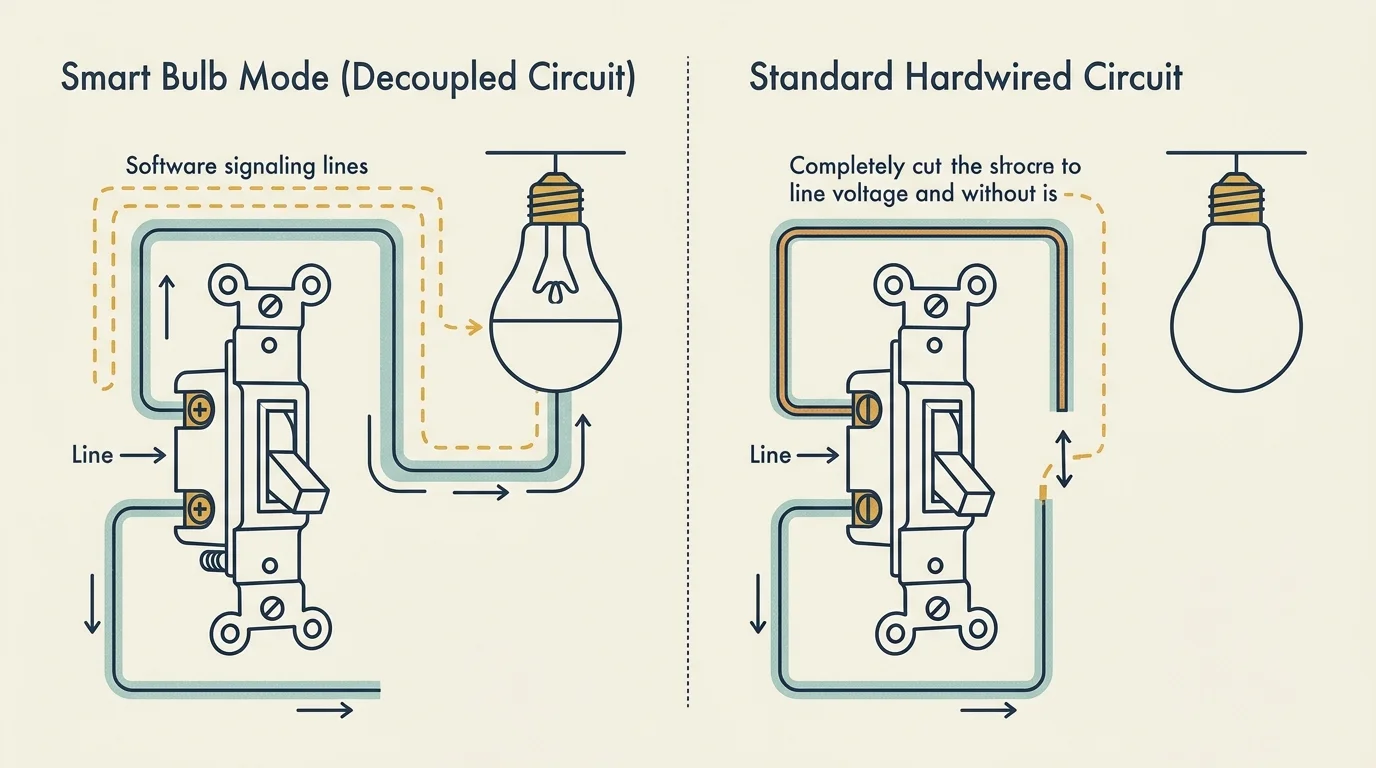
Smart lighting technology offers an alternative approach: separating the physical switch mechanism from the electrical circuit. In smart home engineering, this separation is known as decoupling.
In a decoupled setup, the physical switch no longer cuts electrical current to the ceiling socket. Instead, the wall switch acts strictly as an input trigger that sends wireless digital commands.
You can achieve decoupling using in-wall smart switches or specialized micro-relays behind your existing switch plates. Devices like the Shelly 1 Gen3 relay support detached switch mode natively.
According to smart home analyses by The Verge Smart Home, local wireless communication protocols ensure automations trigger even when internet connectivity drops. Local network processing prevents bedtime lighting delays.
Many smart switch manufacturers also include software-level child lock modes inside their companion apps. Enabling child lock instructs the switch microcontroller to ignore manual physical button presses entirely.
- Detached Relay Mode: Line voltage flows continuously to the bulb socket while switch toggles transmit wireless data packets to the hub.
- Firmware Child Lock: The physical button clicks mechanically, but the internal firmware ignores the signal until you unlock it via an app.
- Cloud-Dependent Lockouts: Certain budget switches verify child-lock commands via external cloud servers, which introduces latency and failure during internet outages.
- Local Protection Settings: Advanced smart switches store lockout instructions directly on flash memory, surviving unexpected power outages.
Software locks sound convenient, but they carry distinct vulnerabilities in toddler rooms. A localized firmware glitch, power outage, or dead wireless coordinator can leave physical controls unresponsive during night emergencies.
Furthermore, standard toggle switches cannot be decoupled without opening electrical junction boxes and wiring micro-relays. For non-technical parents or renters, rewiring wall boxes poses unnecessary risks.
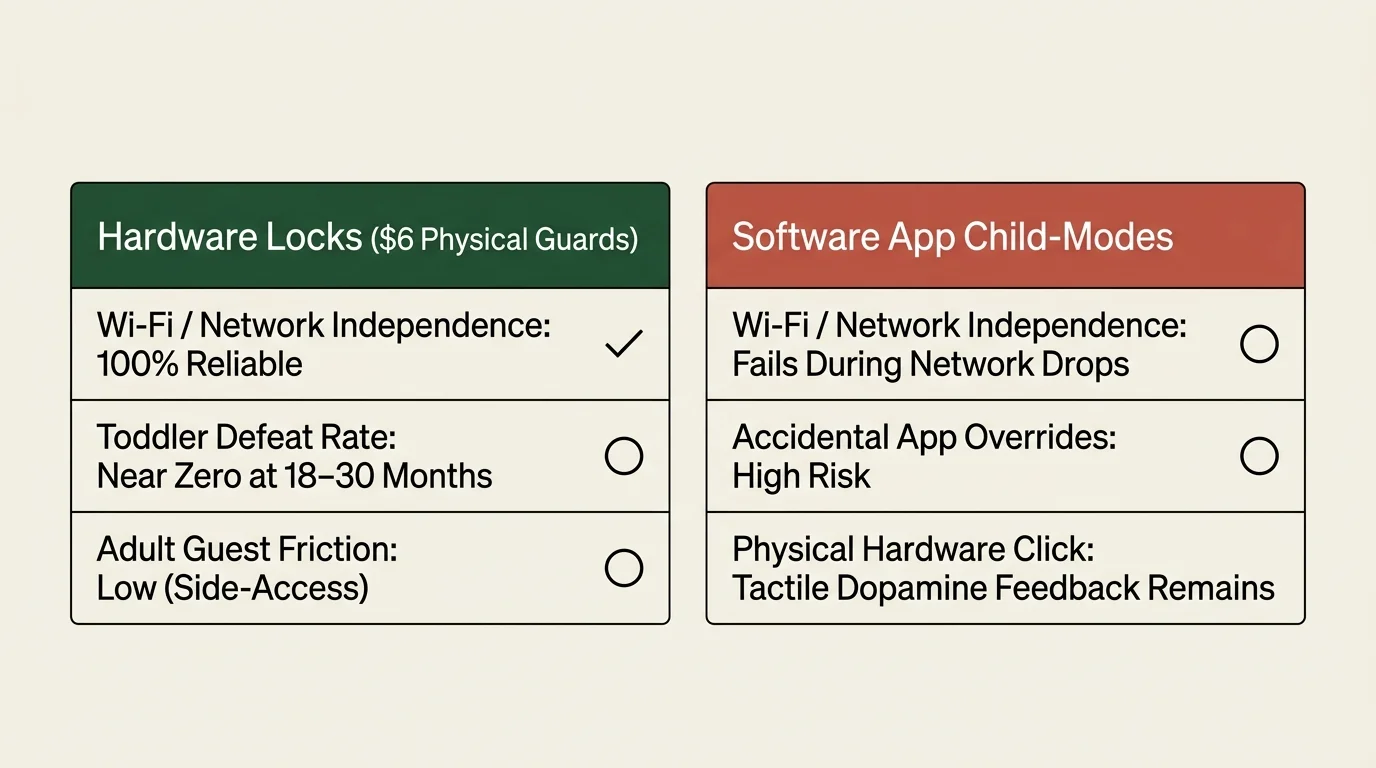
Hardware Locks vs. Software Child-Modes: Feature Comparison
Selecting the right childproofing method depends on your home ownership status, technical confidence, and budget. Combining a physical guard with a smart bulb often yields the most resilient defense.
Evaluations of connected lighting by Wirecutter Smart Home emphasize that smart bulbs retain their last known power state unless specifically configured with custom power-on behaviors. Matching hardware guards with low-lumen presets guarantees sleep continuity.
Review the measurable parameters in the table below to determine which method matches your nursery layout and technical comfort level.
| Protection Method | Hardware Cost | Toddler Tamper Limit | Offline Reliability | Emergency Override Latency | Wiring Required |
|---|---|---|---|---|---|
| Screw-In Polycarbonate Shield | $3 to $7 | Ages 1 to 4 | 100% (Pure mechanical) | 1 to 2 seconds (Side access) | None (Plate screws only) |
| Magnetic Switch Cap | $6 to $12 | Ages 1 to 2 | 100% (Mechanical) | Under 1 second (Pull off) | None (Magnetic snap) |
| Decoupled In-Wall Micro Relay | $18 to $35 | Ages 1 to 5+ | 98% (Requires local hub) | 3 to 5 seconds (App or remote) | Yes (Line voltage wiring) |
| Smart Switch App Lockout Mode | $30 to $65 | Ages 1 to 5+ | 85% (Subject to firmware bugs) | 10 to 30 seconds (Open phone app) | Yes (Switch replacement) |
| Hardware Guard + Smart Bulb | $15 to $35 | Ages 1 to 4 | 99% (Bulb fallback active) | 1 to 2 seconds (Tactile override) | None (Screw-in bulb) |
Physical screw-in guards eliminate electrical risk and software failures entirely. When paired with a smart bulb lock for kids room routines, hardware guards deliver immediate, fail-safe reliability.
Relying solely on software locks leaves you vulnerable during internet service interruptions. If your router restarts at 3:00 a.m., an app child-lock may revert to open mode, allowing midnight light shows.
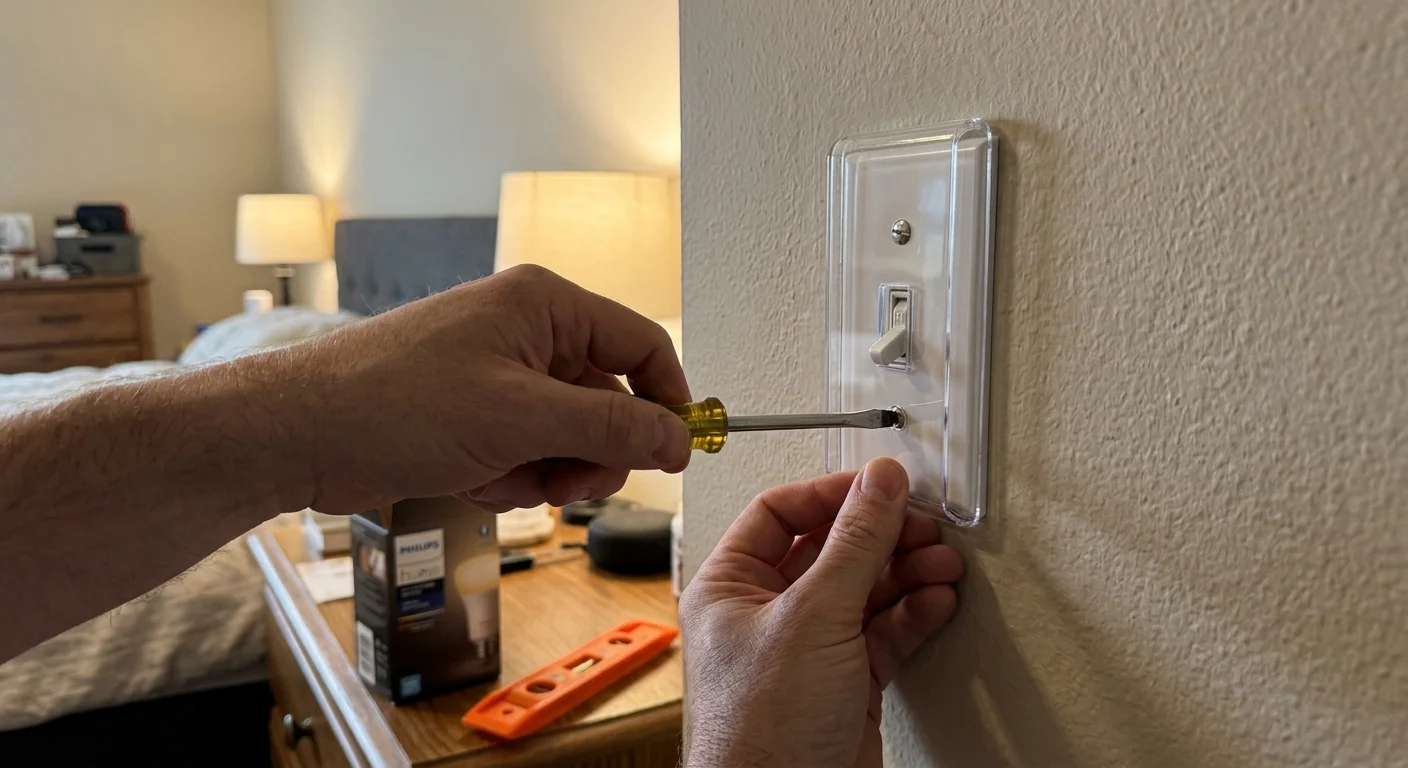
Worked Setup: Low-Lumen Smart Bulbs and Clear Guard Installation
This worked example demonstrates how to build an impenetrable toddler lighting setup without replacing the existing wall switch. We will convert an 11-foot by 12-foot nursery using accessible, off-the-shelf components.
Our subject room features a single standard Leviton 1451 toggle switch wired to a dual-socket ceiling fixture. The room houses a 26-month-old toddler who recently climbed out of a crib and into a floor bed.
The total bill of materials costs under $45 and requires only a flathead screwdriver for installation:
- Hardware Guard: Lisinks Clear Single-Toggle Switch Protector 2-pack ($6.49).
- Connected Light Source: Philips Hue White Ambiance A19 800-lumen smart bulb ($24.99).
- Auxiliary Remote: Philips Hue Smart Wireless Button ($14.99).
- Total Equipment Cost: $46.47 total investment.
- Installation Time: 8 minutes from start to finish.
Follow these exact sequential steps to configure the physical hardware and electrical settings safely:
- Turn the existing wall switch to the ON position. Ensure the ceiling fixture lights up normally.
- Use a manual flathead screwdriver to remove both painted 6-32 oval-head screws from the switch plate. Do not touch the internal electrical terminals behind the plate.
- Position the Lisinks clear guard over the toggle switch, keeping the access opening oriented toward the wall corner away from your child’s bed.
- Thread the original screws through the clear guard mounting holes and into the wall plate bracket. Tighten the screws to approximately 8 inch-pounds until snug, taking care not to crack the plastic plate.
- Unscrew the legacy incandescent or basic LED bulb from the ceiling fixture socket. Install the Philips Hue White Ambiance bulb in its place.
- Pair the smart bulb to your bridge or home hub using the on-screen Zigbee pairing protocol.
- Mount the wireless smart button on the drywall outside the bedroom or at a 60-inch height inside the doorway using included 3M Command strips.
Now configure the bulb power settings inside the Philips Hue application. Navigate to Settings, select Lights, choose Nursery Fixture, and locate the Power On Behavior menu.
Change this setting from Default to Last on state or Custom. Set the custom power recovery value to warm amber (2200K) at exactly 1 percent brightness, delivering roughly 5 lumens of light output.
This setting ensures that even if an adult accidentally cuts and restores wall power, the fixture will never burst to full 800-lumen brightness. At 1 percent brightness, the bulb draws only 0.45 watts of electrical power.
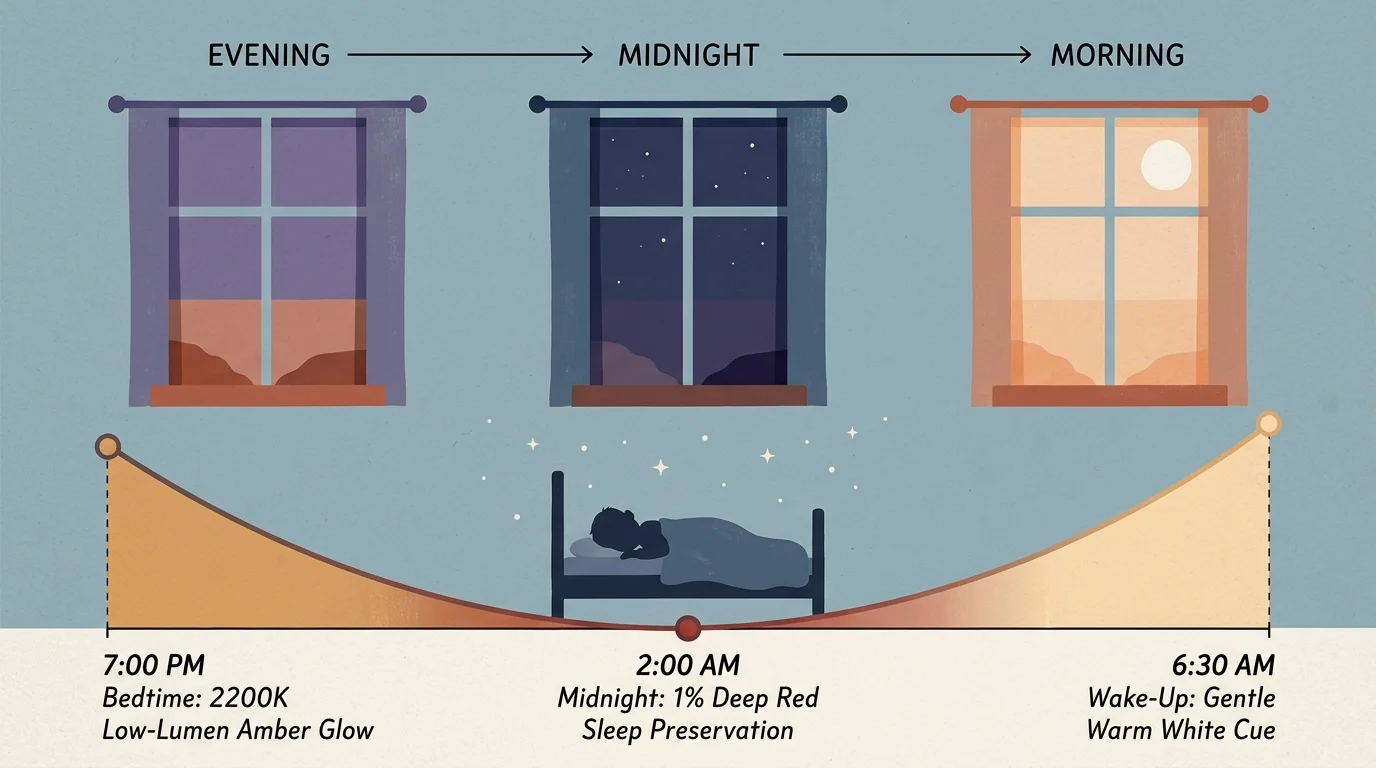
Building an Unbreakable Toddler Night Light Routine
Once you secure the physical wall toggle, smart automation can establish healthy sleep associations. A toddler night light routine setup provides visual cues that guide rest and waking periods automatically.
Children in early developmental stages lack the ability to read digital clocks. Programmable color changes signal whether it is time to sleep or safe to leave the floor bed.
Implement this three-tier lighting schedule inside your preferred automation platform (Apple Home, Home Assistant, or Amazon Alexa):
- Wind-Down Phase (7:00 PM): Transition the bulb to 2700K warm white at 40 percent brightness. This warm hue softens contrast while reading bedtime stories.
- Overnight Sleep Lock (7:30 PM to 6:30 AM): Shift the light to deep amber (2000K to 2200K) throttled to 1 percent brightness (approximately 5 lumens). Amber light does not disrupt dark adaptation or wakefulness.
- Morning Wake Signal (6:30 AM): Shift the bulb color to soft pastel green or 4000K neutral white at 30 percent brightness. Teach your toddler that leaving the floor bed is only permitted when the green light appears.
To establish absolute defense against rogue switch manipulations, write a clamp automation rule inside your automation controller. This rule overrides manual changes instantly during designated sleep windows.
Create an automation that reads: IF Nursery Bulb brightness changes to greater than 5 percent BETWEEN 7:30 PM and 6:30 AM, THEN set brightness to 1 percent with a 0-second transition time.
If anyone reaches through the switch guard side slot and flips the power, the smart home controller clamps illumination down immediately. Midnight brightness bursts are mathematically eliminated.
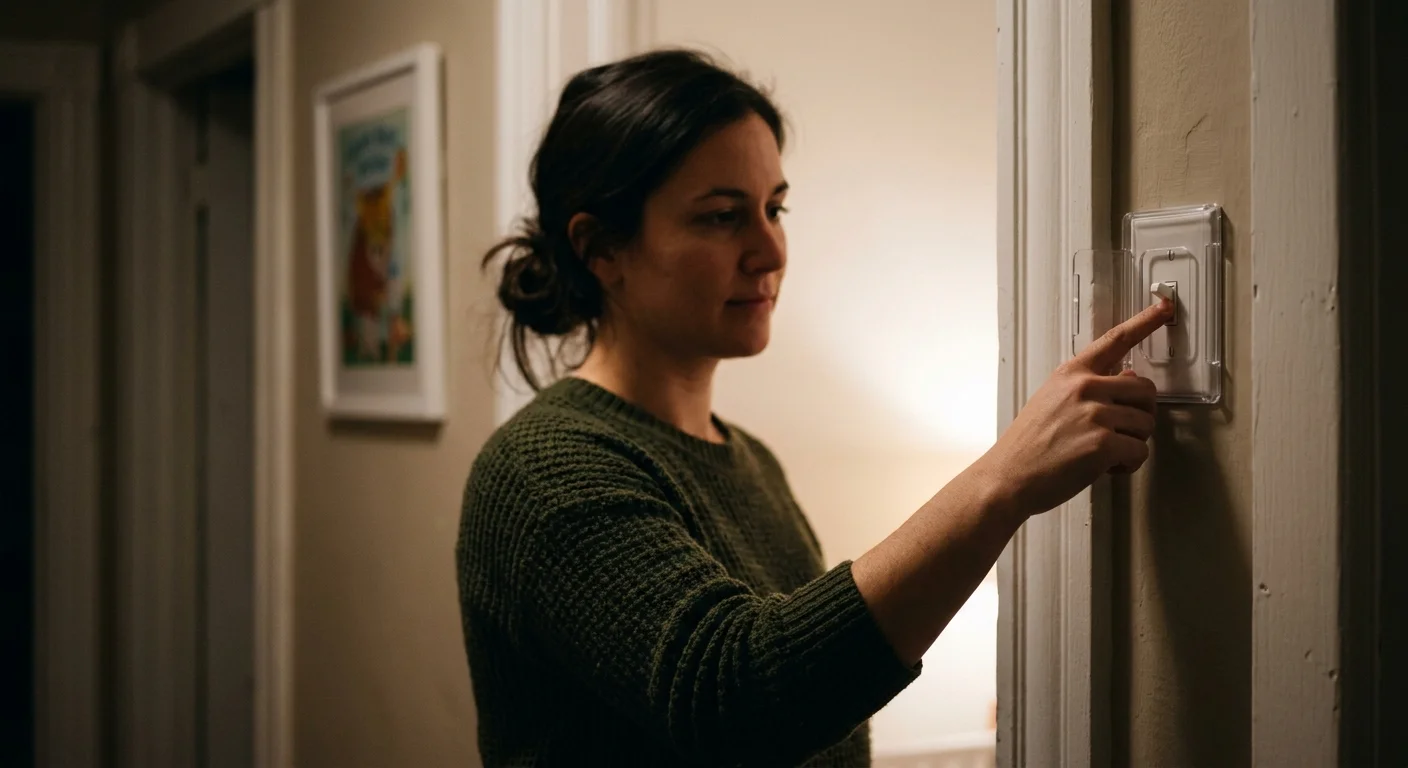
Handling Nighttime Emergencies and Babysitter Access
Childproofing must never compromise immediate parental entry or life safety. When your child experiences a night terror, nosebleed, or illness, you need rapid access to bright room illumination.
Fumbling through a smartphone app to authenticate biometric security and find a lighting slider takes 30 to 45 seconds. In a nursery crisis, that delay causes unnecessary stress.
Clear switch shields feature a narrow side slot designed specifically for an adult index finger. You can push the mechanical toggle downward in less than two seconds without tools.
- Adult Finger Bypass: Insert your finger into the side slot to flip the toggle directly, bypassing all digital remotes.
- High-Mounted Wireless Buttons: Mount secondary wireless remotes at 60 to 66 inches from the floor, well outside toddler reach but readily visible to adults.
- Voice Assistant Overrides: Configure your smart speaker with a simple voice command such as “Nursery Emergency” that triggers 100 percent white illumination.
- Babysitter Instruction Cards: Place a small laminated label above the switch plate explaining that the wall toggle remains continuously on and pointing to the high-mounted remote.
Visiting grandparents and babysitters frequently flip wall switches off out of habit, disabling smart bulb connectivity. A toddler proof smart switch guard prevents this annoyance entirely.
By blocking instinctive switch flipping, you protect your schedules from well-meaning guests while keeping emergency tactile controls intact. Your smart ecosystem stays powered, automated, and secure.
Frequently Asked Questions
Will a physical switch guard damage my existing switch or wall plate?
No. Switch guards utilize the standard 6-32 thread mounting screws already securing your switch plate. They introduce no permanent structural damage and leave no marks when removed for future home sales.
Can a two-year-old toddler pry off a screw-in toggle shield?
A properly installed screw-in guard resists over 25 pounds of direct tensile force. Because toddlers lack the mechanical leverage and tools required to strip 6-32 steel screws, they cannot pull the shield off the wall.
What happens to my smart bulb routines if the home Wi-Fi goes down?
If you use local Zigbee, Z-Wave, or Thread connections, your schedules execute directly on your local smart hub without active internet. Pure Wi-Fi bulbs will stay in their last state until internet service resumes.
Why not simply wire an in-wall smart switch with a software child lock?
In-wall switches require line-voltage wiring skills, box depth clearance, and permanent modification of the junction box. A hardware guard paired with a smart bulb achieves superior reliability for under twenty dollars with zero electrical wiring.
What bulb brightness and color temperature work best for toddler night routines?
Use a color temperature between 2000K and 2200K (amber or candlelight) set between 1 and 5 lumens. This ultra-low warm spectrum illuminates floor hazards during checks without suppressing your child’s melatonin production.
Disclaimer: This article is for informational purposes only. Smart home devices involve electrical connections and data privacy. Always follow manufacturer instructions for installation. For complex wiring or HVAC work, consult a licensed professional.





1 Comment