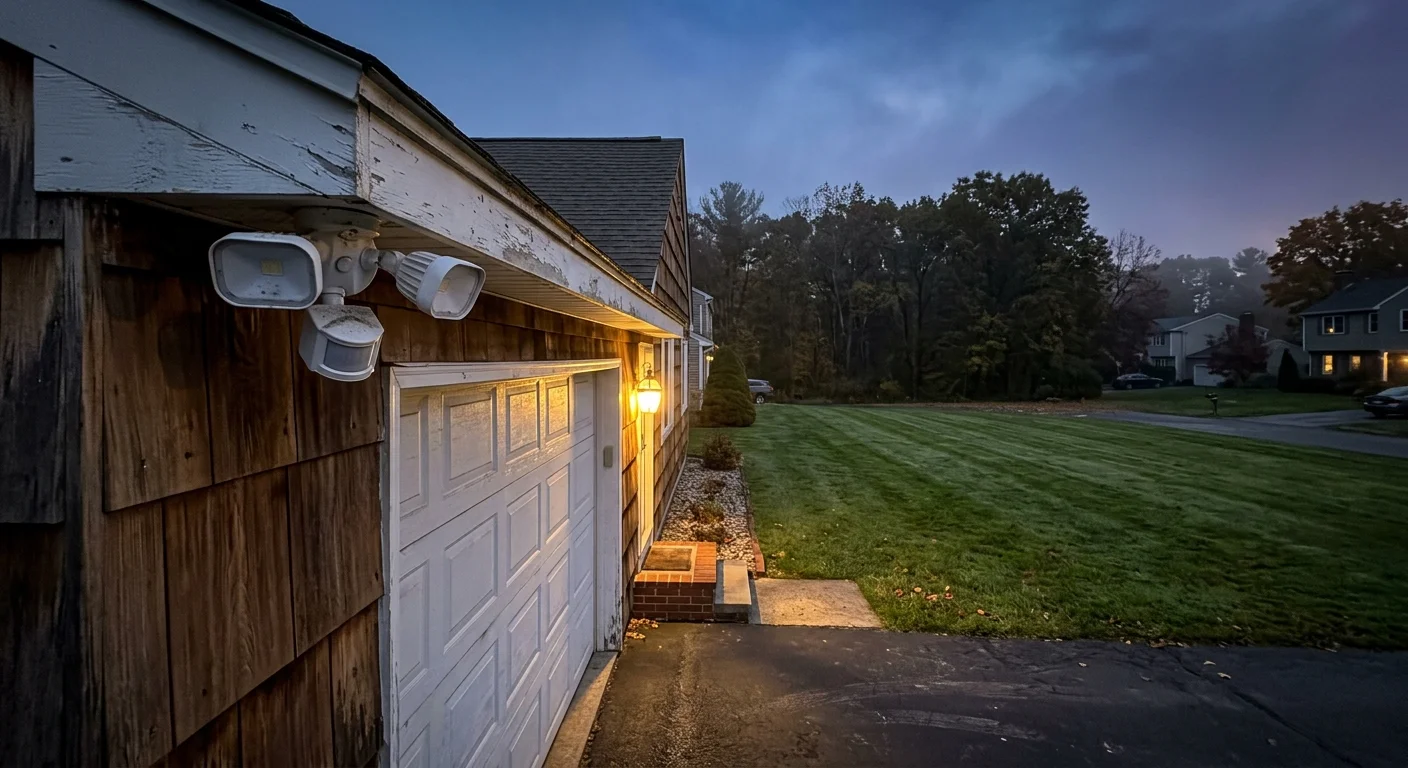
You can stop raccoons and suburban deer from tripping your outdoor security floodlights without sacrificing human intruder detection. Calibrating the physical Fresnel lens angle and lux thresholds blocks low-slung, 40-pound heat sources instantly.
Standard sensitivity sliders fail because quadrupeds emit the same 98-degree infrared radiation as humans. Physical lower-tier lens masking calculates beam elevation to preserve a six-foot human tripwire while blinding the sensor to ground-level wildlife.
This troubleshooting guide delivers exact geometric formulas, tape masking dimensions, and software configurations tailored for unfenced suburban yards.
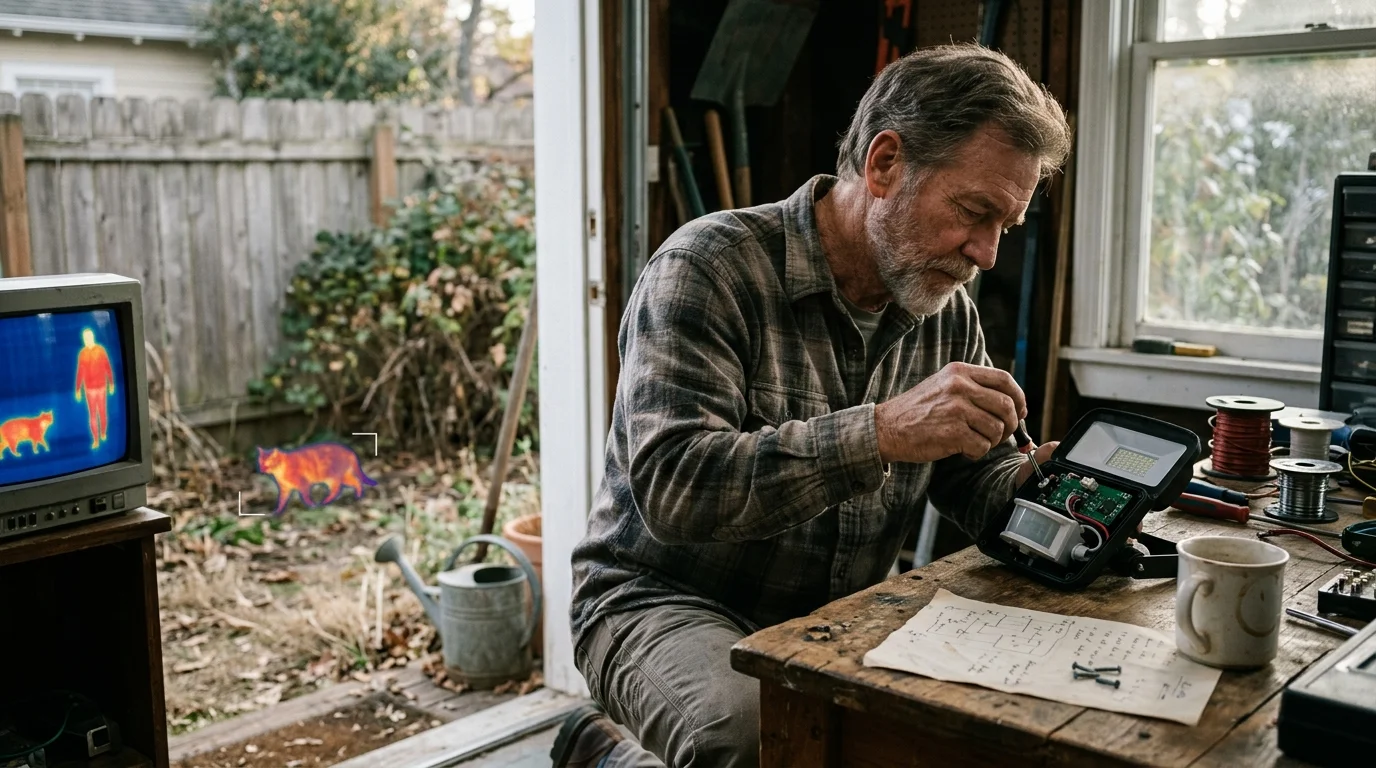
The Physics of PIR Sensors and Quadruped Heat Signatures
Passive infrared (PIR) sensors do not measure visual movement. Instead, they detect differential changes in surface temperature across split pyroelectric reception windows.
A molded plastic Fresnel lens divides the coverage area into interlaced conical detection zones. When an object crosses between these distinct thermal fingers, the internal sensor registers a rapid voltage differential.
Suburban wildlife creates significant false alarms because an animal’s core body temperature closely mirrors human biology. A 35-pound raccoon or a 40-pound white-tailed fawn radiates heat between 98 and 102 degrees Fahrenheit.
Because infrared radiation obeys the inverse-square law, proximity skews detection size. A small animal crossing close to the sensor emits the identical thermal flux of an upright adult standing thirty feet away.
The fundamental limitation of single-element PIR detection is the inability to distinguish between a small heat target close to the lens and a massive heat target far away.
Lowering the software sensitivity slider inside your smart floodlight application merely lowers the internal voltage trip threshold. Doing this degrades human detection range at the edge of your property line without stopping close-range animal triggers.
Calculating Mounting Height and Downward Angle Geometry
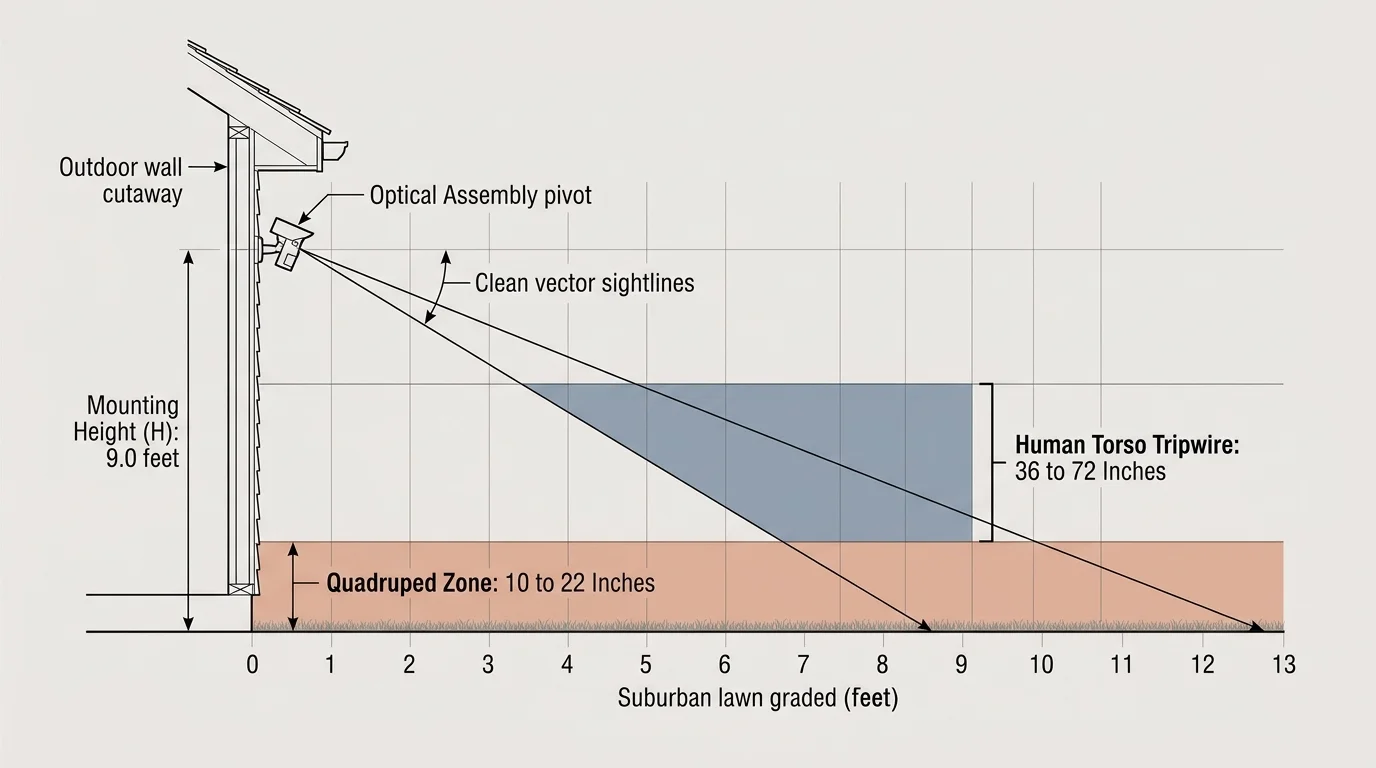
To eliminate animal false triggers reliably, you must separate upright vertical targets from low-profile horizontal targets using geometric elevation. You can achieve this by controlling the sensor’s depression angle and vertical field of view.
Quadrupeds under 40 pounds maintain a back height between 10 and 22 inches off the ground. In contrast, an upright human torso sits between 36 and 72 inches above the turf.
Smart outdoor floodlights typically mount between 8 and 10 feet above ground level. At this height, tilting the optical assembly downward creates distinct geometric zones across your lawn.
- Mounting Height ($H$): 9.0 feet (108 inches) above finished grade.
- Maximum Quadruped Height ($h_a$): 1.83 feet (22 inches) representing a large raccoon or bedded fawn.
- Minimum Human Torso Midpoint ($h_h$): 4.5 feet (54 inches) for an adult intruder.
- Target Animal Cutoff Distance ($D_{cut}$): 35 feet from the foundation wall.
By determining the critical depression angle, you locate the exact optical boundary where ground heat signatures fall outside the sensor’s reception cones. Any target traveling entirely underneath that boundary remains invisible to the pyroelectric sensor.
Independent smart device analysis from Wirecutter’s smart home testing guides confirms that mechanical aiming prevents far more nuisance triggers than software sensitivity adjustments alone.
Step-by-Step PIR Lens Masking Guide for 40-Pound Animals
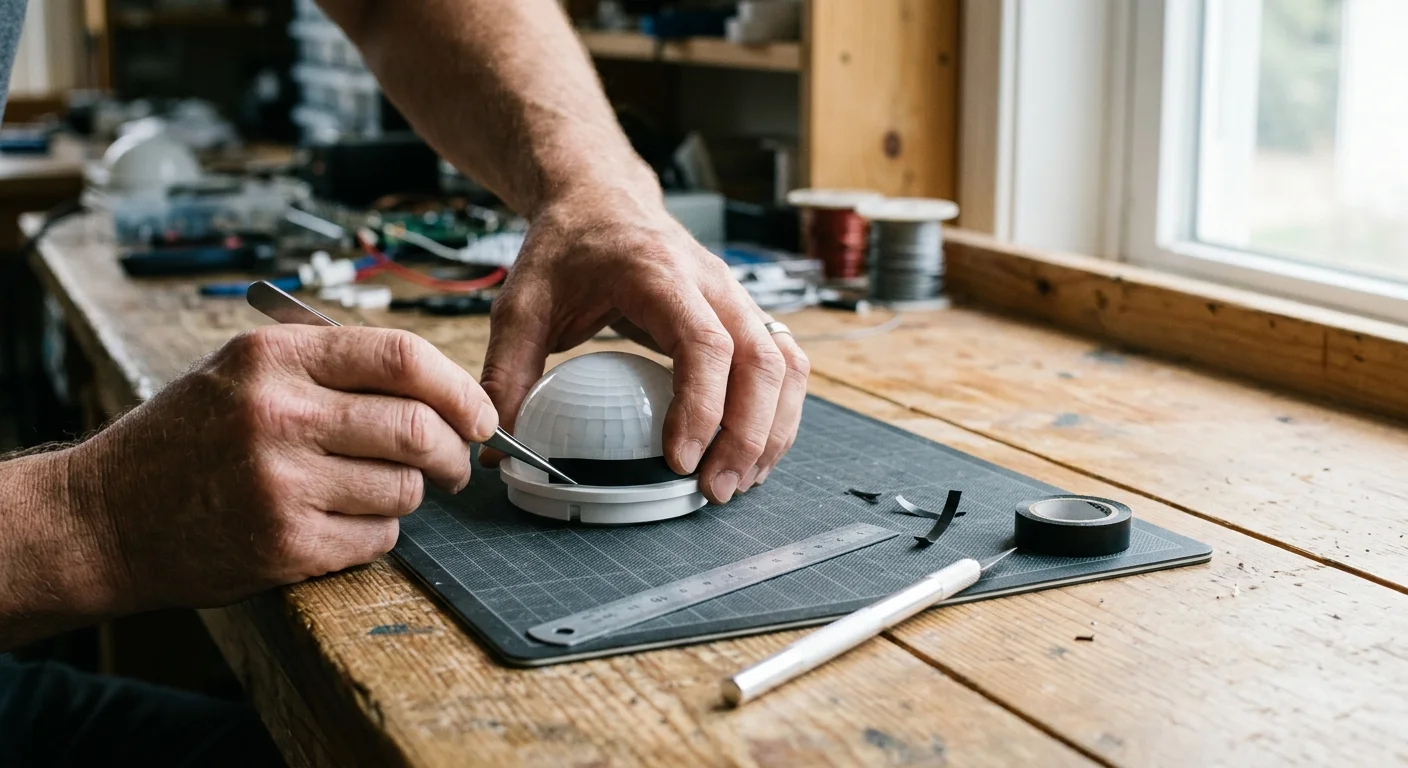
PIR lens masking physically blocks infrared energy from reaching specific segments of the internal pyroelectric crystal. Applying an opaque barrier over the lower tiers of the curved Fresnel lens prevents ground-level radiation from reaching the detector.
Never use standard paper masking tape or translucent Scotch tape for this task. Infrared wavelengths pass directly through standard masking tape; you must use high-density electrical vinyl or dedicated polyethylene masking film.
- Turn off the circuit breaker feeding the smart floodlight before touching or adjusting the housing.
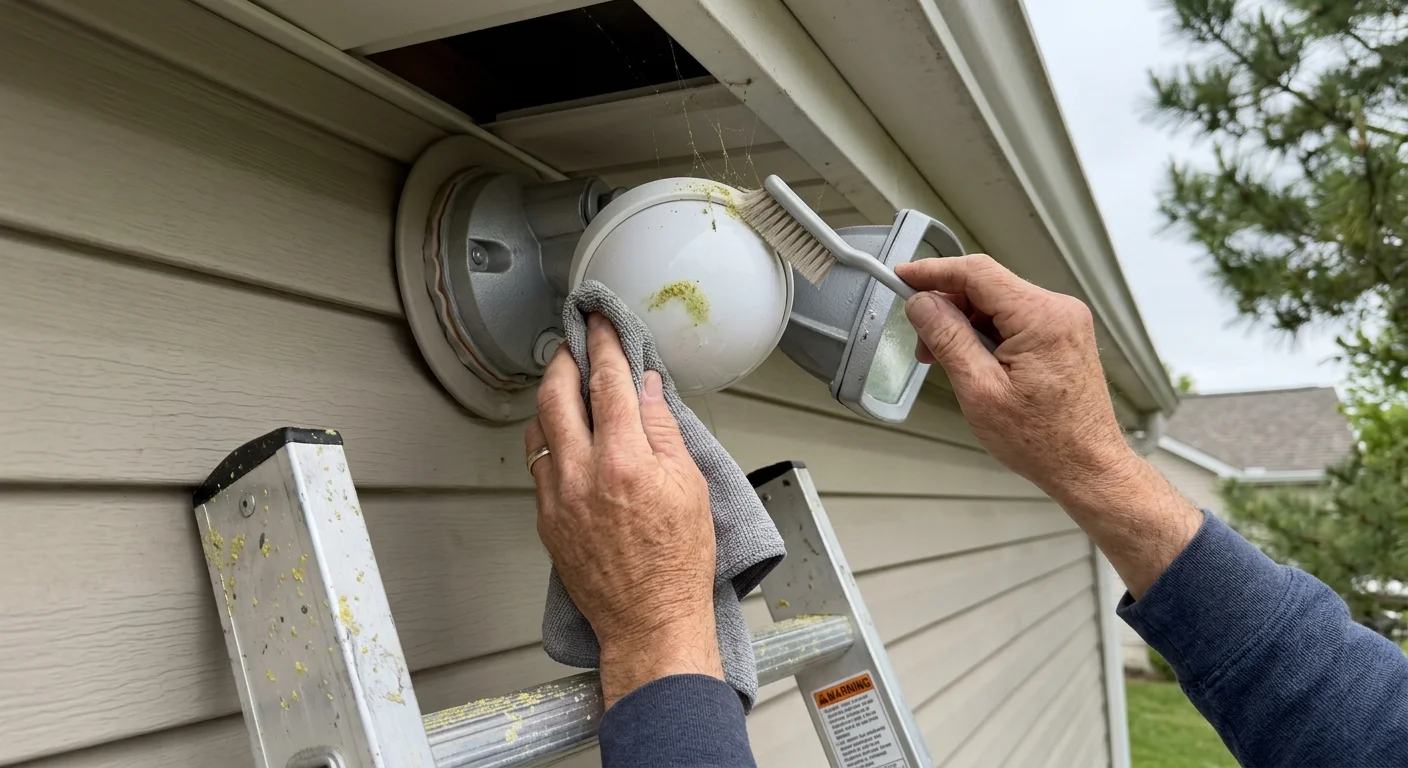
- Clean the exterior dome of the Fresnel lens using isopropyl alcohol and a lint-free microfiber cloth to remove exterior pollen and road grime.
- Cut a narrow strip of 3M Super 33+ vinyl electrical tape measuring exactly 4 millimeters wide and 20 millimeters long.
- Inspect the Fresnel lens surface under a flashlight to identify the segmented horizontal optical tiers.
- Apply the vinyl strip along the bottom third of the curved dome, covering the bottom-most micro-lens facets.
- Restore electrical power and allow the floodlight controller to complete its 60-second boot and thermal stabilization cycle.
- Conduct physical walk tests across your perimeter at 10, 20, and 30 feet to verify human detection.
If small animals still trip the spotlight within fifteen feet of your foundation, increase the tape width upward by one millimeter. This expansion trims the near-field downward cone without compromising perimeter tripwires.
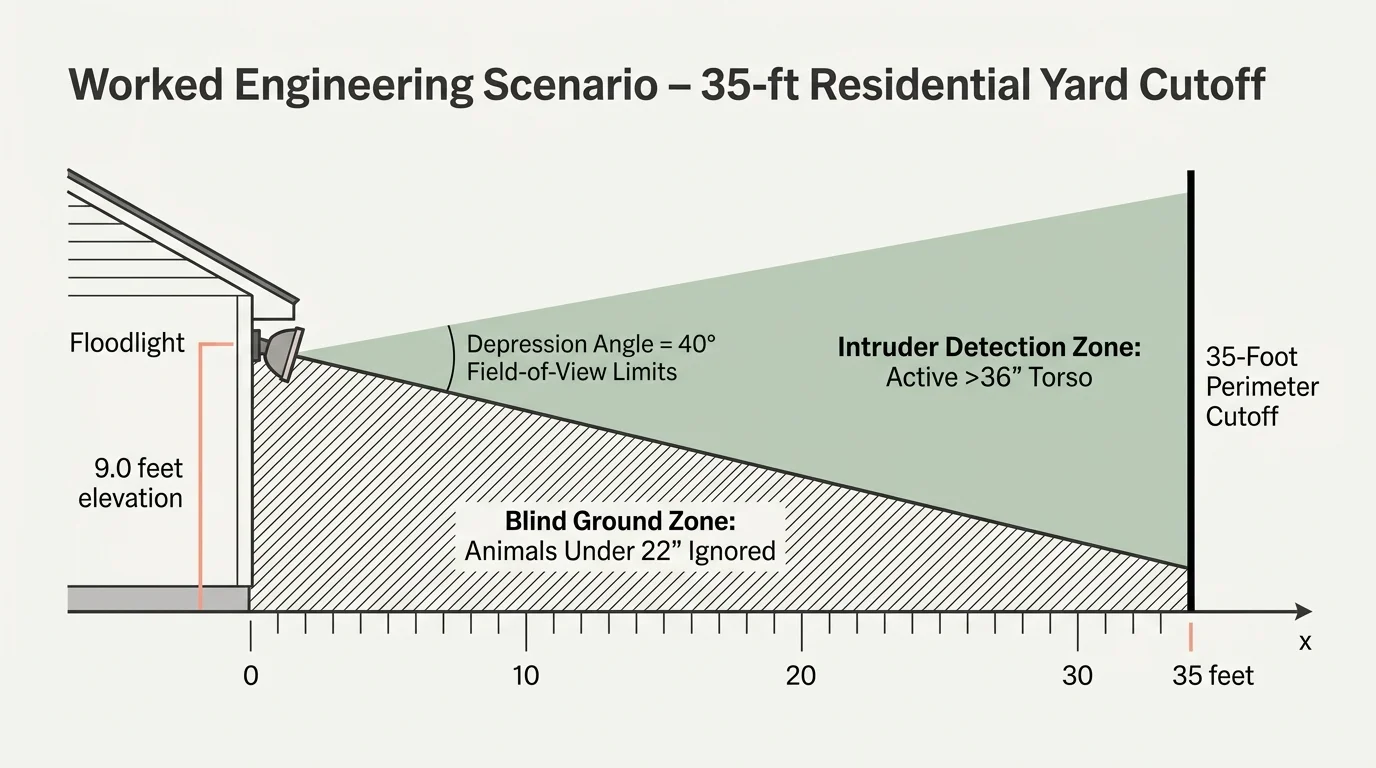
Worked Engineering Example: The 35-Foot Perimeter Cutoff
Consider an unfenced suburban property where raccoons continually trip a wall-mounted floodlight installed exactly 9 feet above the ground. The property line extends 35 feet before meeting municipal common space.
Our engineering goal is simple: blind the sensor to any heat source below 22 inches tall across that 35-foot span, while tripping instantly on any human torso above 48 inches.
The elevation difference between the 9-foot sensor mount and a 22-inch animal equals 7.16 feet (86 inches). Across a 35-foot horizontal run, the maximum sightline angle relative to the horizon calculates to 11.5 degrees downward.
Meanwhile, the elevation difference between the sensor and an upright human torso midpoint (54 inches) equals 4.5 feet (54 inches). Across the same 35-foot run, the human sightline angle calculates to 7.3 degrees downward.
- Target Sightline for 22-Inch Animal at 35 Feet: 11.5 degrees downward.
- Target Sightline for Human Torso at 35 Feet: 7.3 degrees downward.
- Target Angular Blinding Zone: Everything lower than 8.5 degrees below the horizon.
- Required Physical Masking Width: A 4.5-millimeter strip applied across the bottom 30% of an 18-millimeter Fresnel dome.
After applying the 4.5-millimeter vinyl strip to the bottom facets, ground-level heat blooms under 22 inches fail to strike the pyroelectric element. An upright human walking at 35 feet crosses the open upper facets, immediately closing the relay.
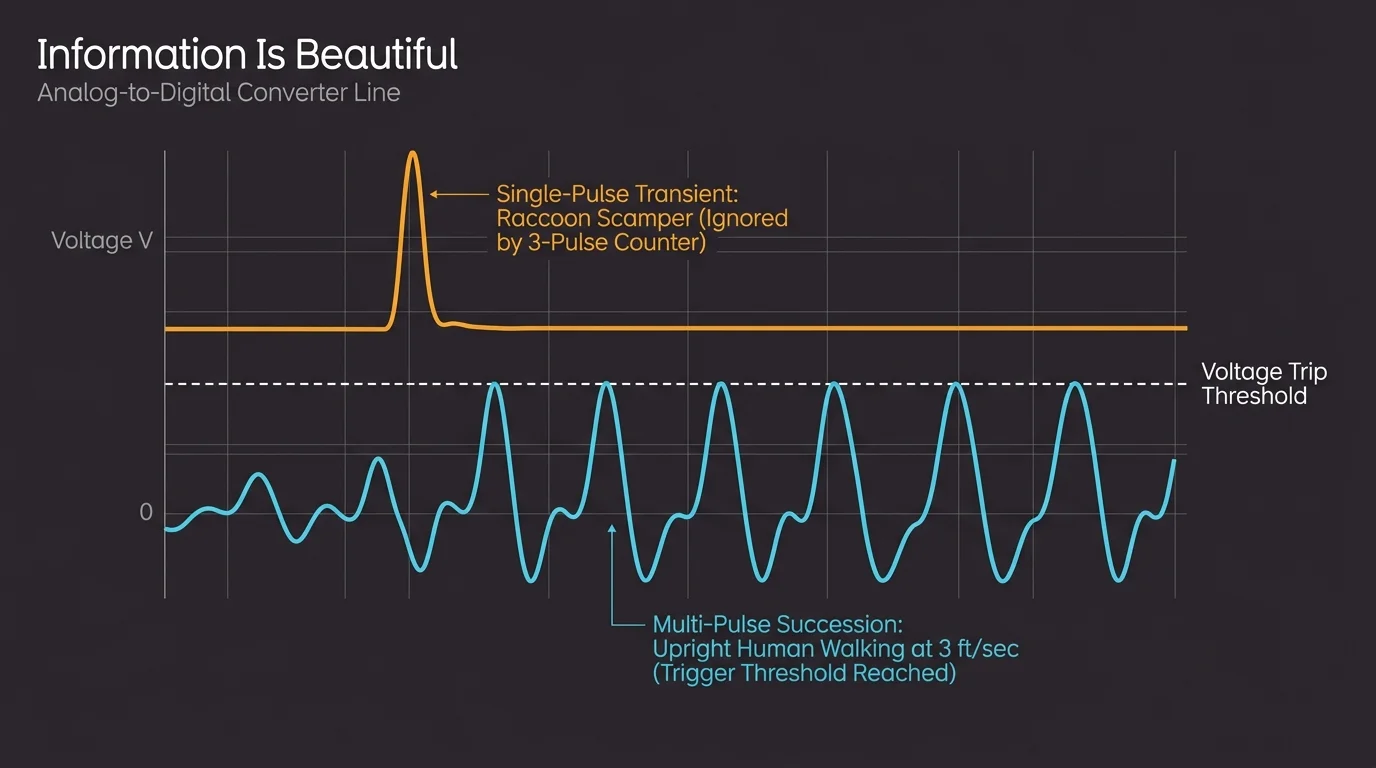
Smart Floodlight Sensitivity Tuning and Pulse Counters
Once you implement physical optical masking, you must tune the digital processing parameters inside your companion mobile app. Physical masking handles spatial boundaries; software handles signal velocity and duration.
Most premium smart floodlights let you adjust motion sensitivity through software sliders. These sliders control the voltage threshold required to trigger the onboard logic board.
Set your software motion sensitivity between 60% and 70%. Setting the threshold above 85% forces the chip to react to tiny thermal fluctuations caused by wind gusts and falling leaves.
If your device supports pulse counting, configure the sensor to register a 3-pulse or 4-pulse pattern before tripping the lights. Pulse counting requires a heat signature to cross multiple Fresnel zones sequentially within a fixed time window.
- 1-Pulse Setting: Triggers immediately on a single zone boundary crossing; highly susceptible to fast animal darts and windblown debris.
- 2-Pulse Setting: Standard factory profile; balances basic human entry detection with light suburban noise rejection.
- 3-to-4 Pulse Setting: Demands sustained motion across multiple beams; ideal for rejecting foraging animals that pause frequently while browsing.
Avoid setting the sensitivity slider below 40% in cold climates. Cold ambient winter air sharpens thermal contrast, which can cause an aggressively dampened algorithm to miss walking humans entirely.
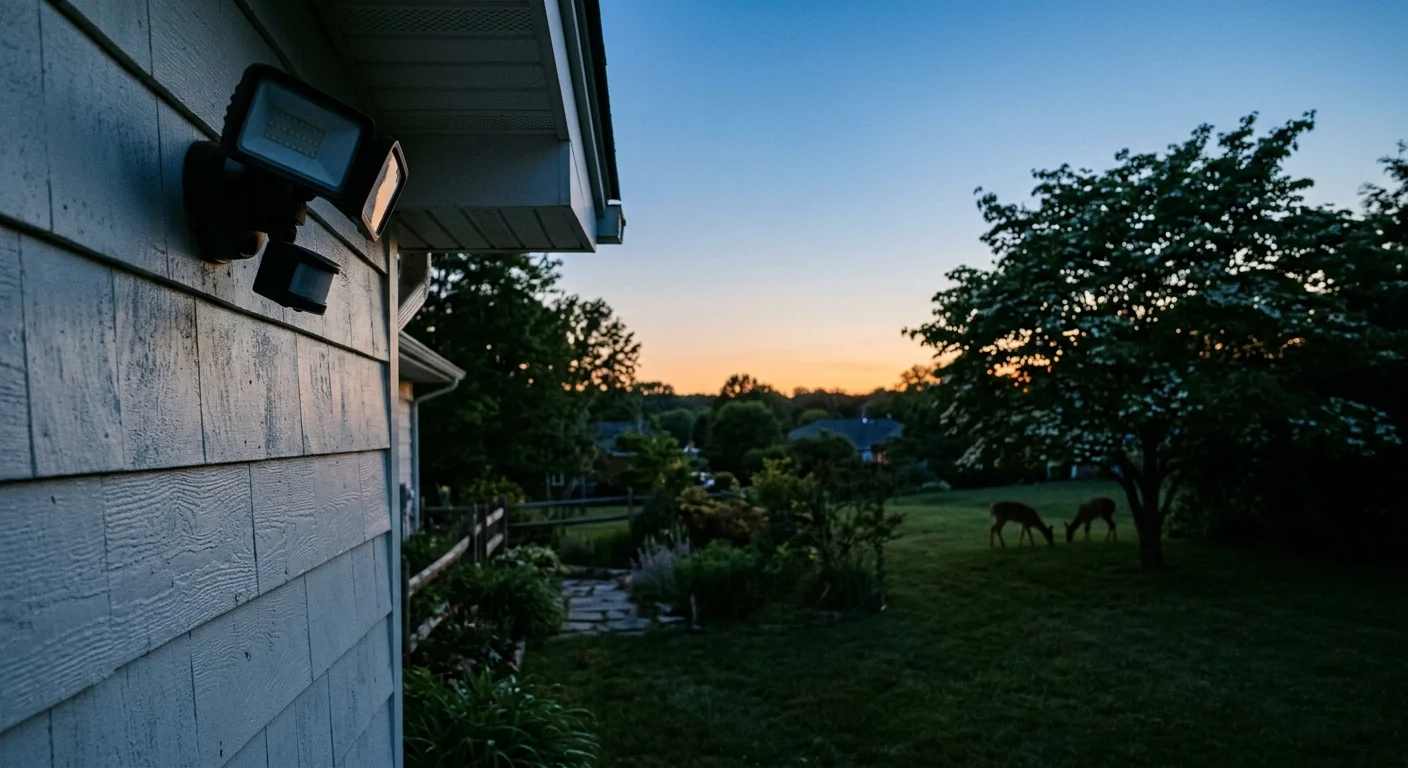
Ambient Lux Calibration to Stop Crepuscular Wildlife Triggers
Suburban wildlife species like white-tailed deer and raccoons are crepuscular, meaning their feeding and foraging peaks during dawn and dusk. Standard floodlight photocells often switch on while significant ambient sunlight still illuminates your yard.
A smart floodlight with an uncalibrated lux sensor activates its motion relay during early evening twilight. During this period, the human eye still sees clearly, making spotlight activation unnecessary.
Adjust the integrated twilight lux threshold downward inside your device application. Most factory defaults activate motion-triggered floodlights when ambient light drops below 35 to 50 lux.
- 50 Lux (Civil Twilight): Streetlights begin illuminating; too early for security floodlights; causes frequent deer false alarms.
- 20 Lux (Late Twilight): Significant shadows form across the lawn; acceptable for suburban perimeter lighting.
- 5 to 10 Lux (Full Nautical Darkness): Pitch black conditions; optimal setting to eliminate early-evening animal triggers.
Reducing the trigger threshold to 10 lux ensures that your 2,000-lumen floodlights remain dark until true nightfall arrives. This configuration conserves energy and eliminates early evening spotlight strobing caused by backyard wildlife.
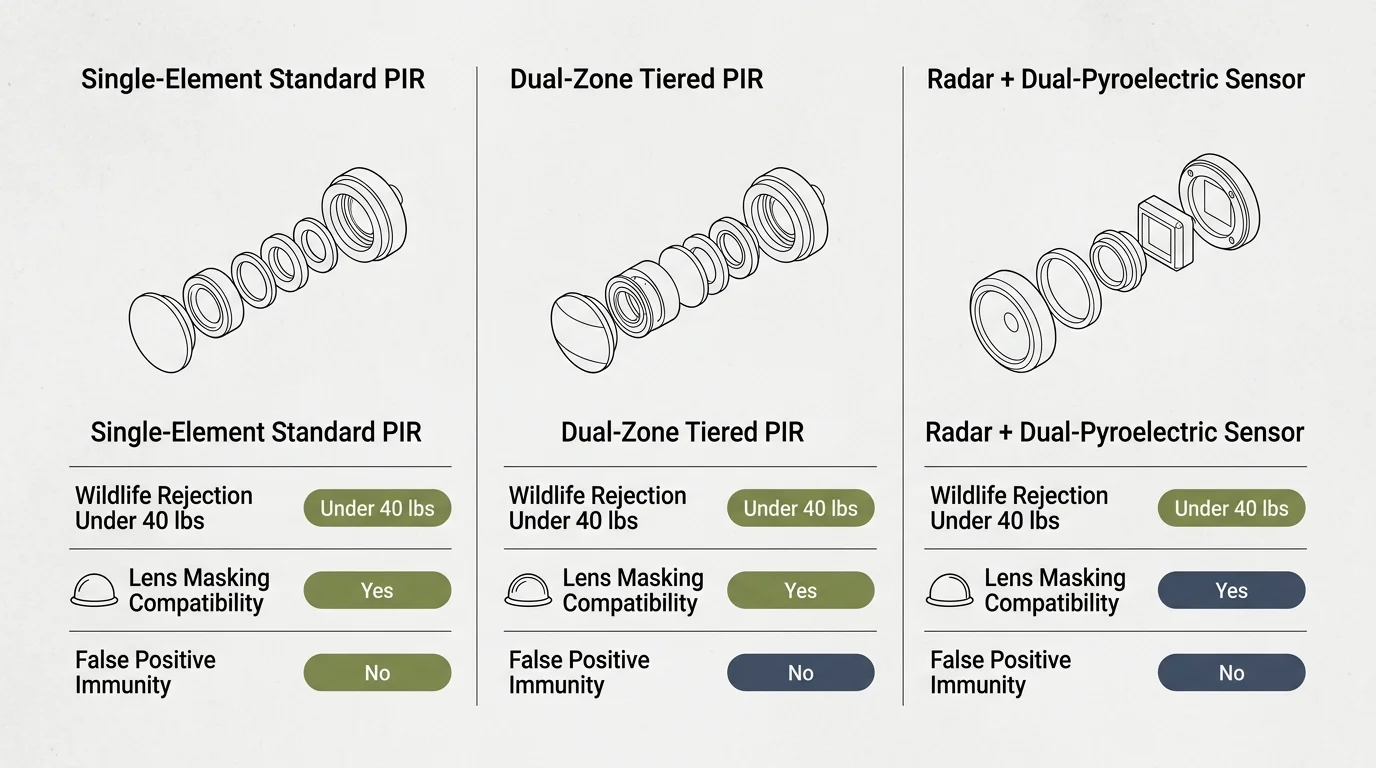
Comparing Smart Floodlight Hardware for Wildlife Filtering
Selecting the right hardware architecture determines how easily you can filter low-slung animals from your security perimeter. Units relying solely on single-zone PIR domes require significant manual lens masking to achieve pet immunity.
Advanced units combine optical PIR sensors with 24GHz millimeter-wave radar or edge-based computer vision. Hardware with radar measurement calculates target distance and speed natively, ignoring small animals without physical tape modifications.
| Smart Floodlight Model | Detection Architecture | Adjustable Lux Floor | Native Small-Animal Filtering | Requires Lens Masking |
|---|---|---|---|---|
| Ring Floodlight Cam Wired Pro | Dual PIR + 3D 24GHz Radar | 5 Lux (Software slider) | High (Radar distance thresholding) | No |
| Philips Hue Discover Outdoor | Multi-Tier Analog Fresnel PIR | 2 Lux (Hue App) | Low (Detects any heat differential) | Yes (Requires tape masking) |
| Eufy Floodlight Cam 2 Pro | PIR + Onboard AI Human Vision | 10 Lux (Fixed threshold) | Very High (Bypasses non-human outlines) | No |
| Lutron Caséta Outdoor Sensor | Wide-Angle Dual-Element PIR | 1 Lux (Physical switch) | Moderate (Internal pet-resistance lens) | Optional (Recommended for deer) |
If you own an analog Fresnel spotlight like the Philips Hue Discover, mechanical masking remains mandatory. With modern radar-assisted models, software distance gates replace electrical tape entirely.
Comprehensive reviews published by PCMag’s smart home security reviews highlight how dual-technology radar systems drastically reduce false alarms across perimeter boundaries compared to legacy PIR units.
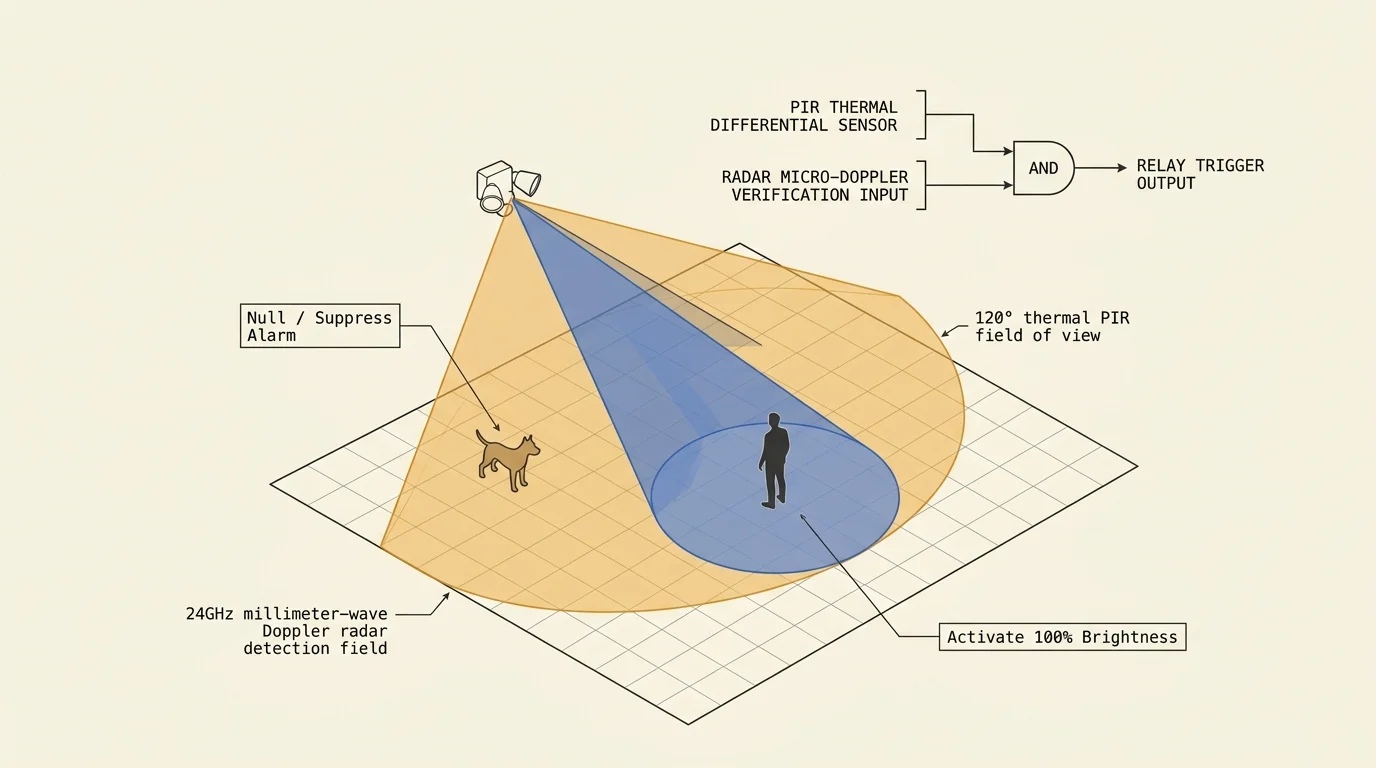
Integrating Dual-Technology Radar and Smart Automations
Advanced smart home platforms allow you to divorce motion detection from immediate full-blast illumination. You can create progressive lighting scripts using platforms like Home Assistant, Apple Home, or SmartThings.
Instead of triggering 2,500 lumens at maximum intensity whenever the PIR trips, configure your ecosystem to run an identification stage. Use low-lumen accent lighting as an intermediate security step.
- Trigger Event: The outdoor PIR sensor detects thermal motion past the physical perimeter boundary line.
- Condition: The system evaluates whether secondary AI cameras or radar verify a human profile within 1.5 seconds.
- Branch A (Human Confirmed): Switch security floodlights to 100% cool white (5000K) illumination and broadcast a chime.
- Branch B (Animal / Unverified): Maintain low-voltage pathway lights at 20% warm white (2700K) illumination without triggering spotlights.
This tiered strategy prevents neighborhood disruption while keeping your property lit and secure. Raccoons foraging along fence lines will not illuminate your bedroom window in the middle of the night.
Environmental Maintenance and Weatherproof Longevity
Physical lens masking requires regular inspection to ensure moisture and seasonal temperature swings do not degrade your calibration. Outdoor electrical tape can peel or leave sticky residue under relentless summer ultraviolet exposure.
Check the adhesive edges of your masking tape twice each year, preferably during spring and autumn cleanups. Clean the exposed lens dome with isopropyl alcohol to remove airborne grease, spider silk, and tree pollen.
- Inspect the vinyl tape edges for curling, bubbling, or thermal shrinkage caused by intense direct sunlight.
- Replace degraded vinyl tape using premium heavy-duty tape designed specifically for outdoor UV resistance.
- Check the sensor silicone mounting gaskets to ensure water cannot enter the high-voltage electrical box.
- Verify that nearby ornamental shrubs and tree branches have not grown into the primary detection envelope.
Keeping tree branches trimmed within 15 feet of the sensor prevents solar-heated foliage from generating thermal shadows during gusty winds.
Frequently Asked Questions
Why does my smart floodlight trigger when no animals or people are visible?
Rapid thermal shifts cause phantom triggers. Gusts of wind blowing through sun-baked shrubbery create moving thermal patterns that trick pyroelectric sensors into registering motion.
Will painting over the bottom of the Fresnel lens work instead of using tape?
Yes, opaque acrylic enamel or outdoor model paint works well. However, electrical vinyl tape remains preferable because you can peel, realign, and calibrate it easily without permanently damaging the housing.
Can cold winter temperatures increase animal false alarms?
Yes. The thermal contrast between a 100-degree animal body and a 20-degree winter lawn is extreme. This large difference causes tiny animals to register as massive heat signatures on standard PIR elements.
Does masking the PIR lens reduce the floodlight’s detection distance for human intruders?
No, proper lower-tier masking only blinds the sensor to downward, near-field ground targets. The upper horizontal beams remain untouched, preserving full detection distance for upright, six-foot human intruders.
Disclaimer: This article is for informational purposes only. Smart home devices involve electrical connections and data privacy. Always follow manufacturer instructions for installation. For complex wiring or HVAC work, consult a licensed professional.