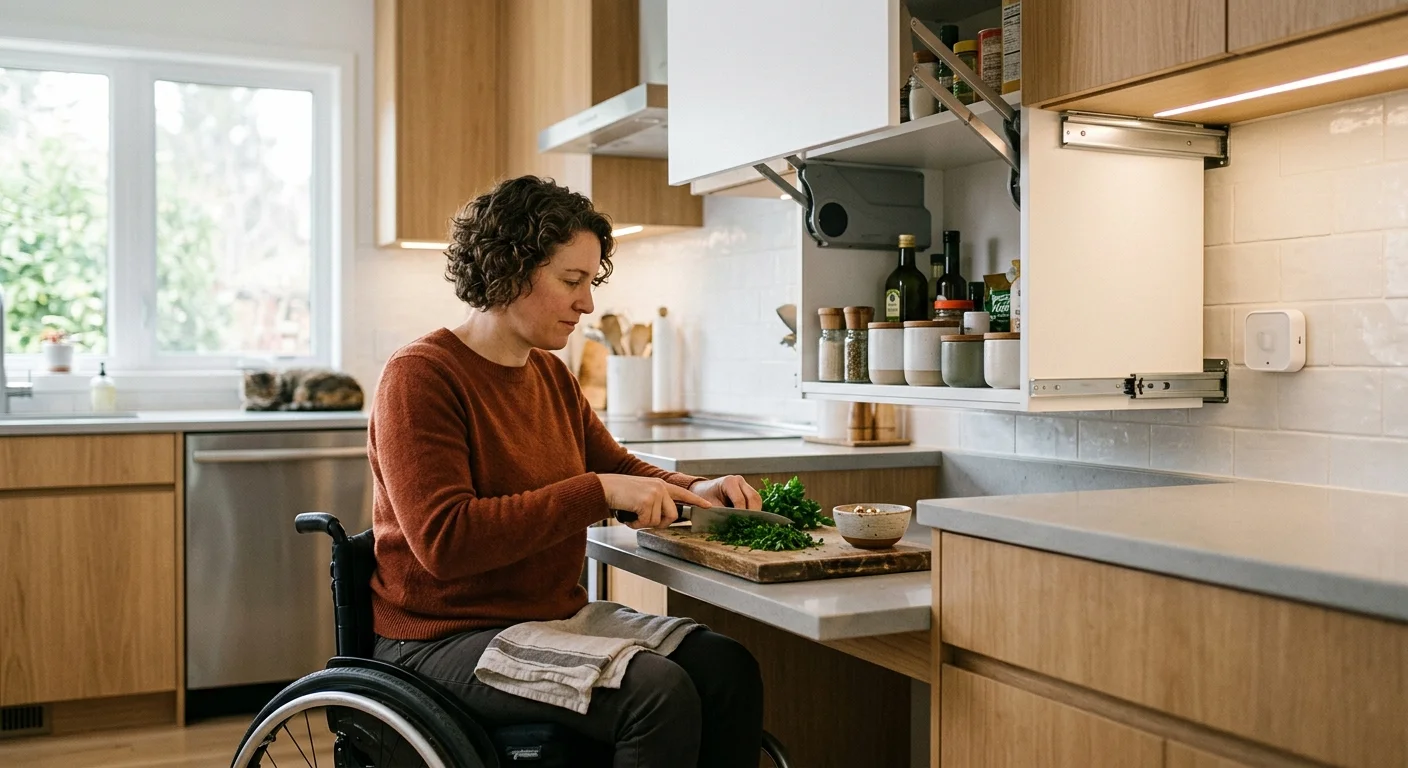
Standard upper cabinets hang at fifty-four inches, putting essential kitchen supplies well out of reach from a wheelchair. Millimeter-wave radar solves this barrier by dropping motorized cabinet shelving into your reach the second your chair crosses into a prep zone.
Unlike unreliable motion sensors or awkward wall rocker switches, spatial radar detects subtle micro-movements to hold cabinets lowered while you chop or measure. Pairing an Aqara FP2 sensor with bi-directional motor relays creates hands-free, autonomous accessibility.
This guide shows you how to wire, zone, and automate motorized lifts and appliance releases for seamless kitchen independence.
The ADA Reach Envelope Versus Kitchen Reality
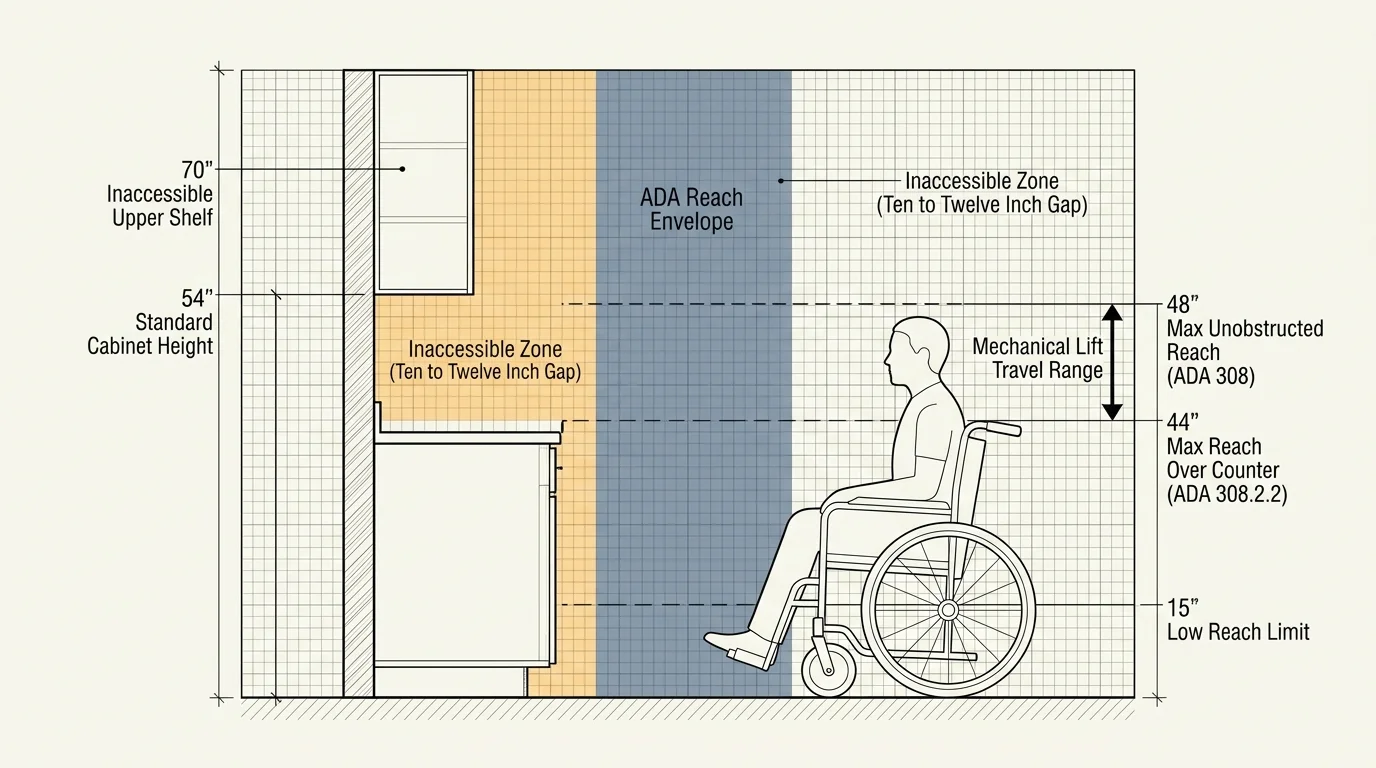
The 2010 ADA Standards for Accessible Design define strict vertical reach zones. Section 308 establishes an unobstructed forward reach range between fifteen inches and forty-eight inches above the finished floor.
Kitchen counters disrupt this standard. When you reach forward across a standard twenty-four-inch countertop obstruction, Section 308.2.2 caps your maximum reach height at forty-four inches.
Standard architectural layouts place upper wall cabinets fifty-four inches above the floor. Consequently, the lowest interior shelf sits ten to twelve inches above your seated reach limit.
Upper shelves often exceed seventy inches, forcing seated cooks to depend on others for simple pantry staples. Motorized cabinet lifts solve this physical barrier by mechanically bridging the vertical gap.
Why mmWave Radar Outperforms Passive Infrared in Accessible Kitchens
Traditional smart home automations rely on Passive Infrared (PIR) sensors. PIR detectors require gross body motion—such as walking across a room or waving an arm—to detect occupancy.
When you sit quietly at a counter slicing vegetables or reading a recipe, PIR sensors assume the room is empty. This limitation triggers false resets, causing motorized lifts to retract unexpectedly while you work.
Millimeter-wave (mmWave) radar operates at high radio frequencies, typically between 24 GHz and 60 GHz. These short waves detect sub-millimeter thoracic micro-movements caused by regular breathing.
According to PCMag smart home testing, advanced radar units track multiple static targets across dynamic household environments without dropping signals.
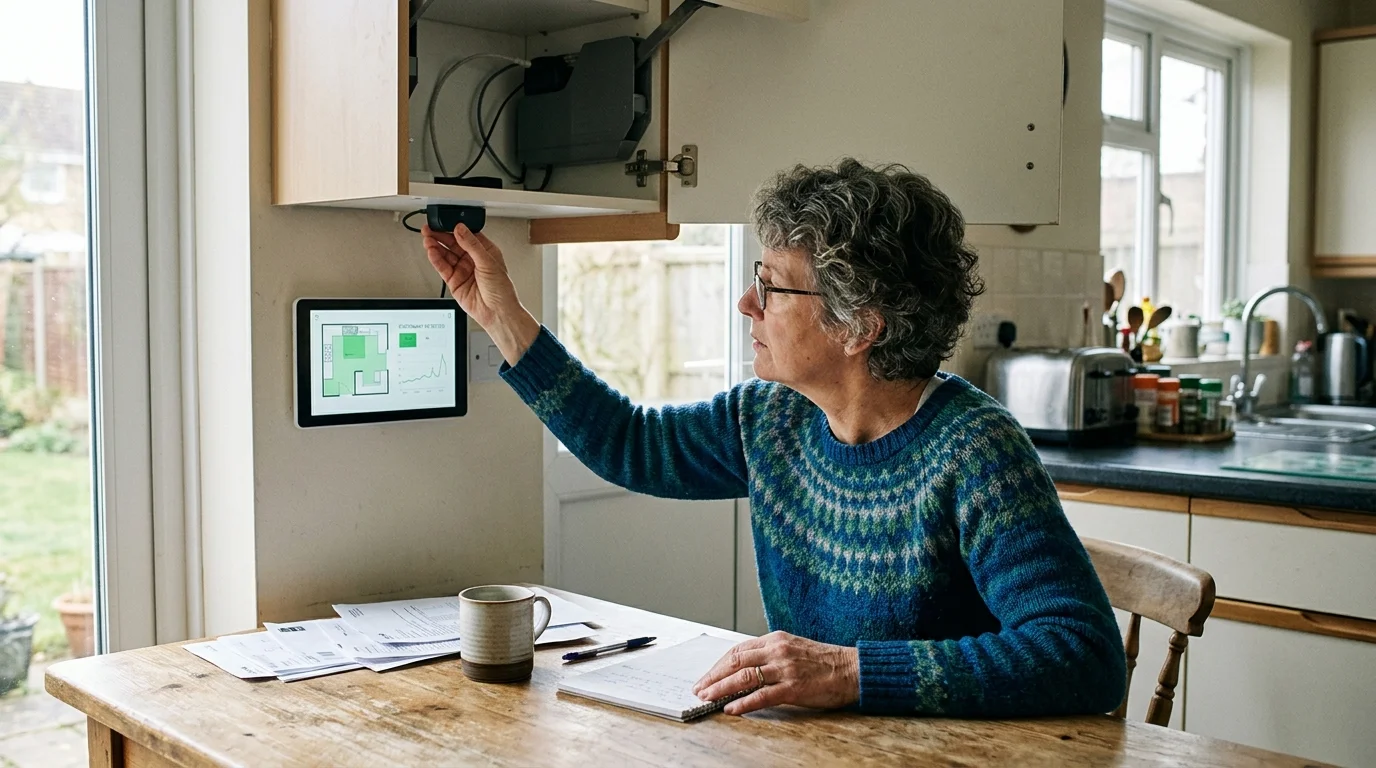
Modern mmWave devices like the Aqara Presence Sensor FP2 divide spaces into customizable grid zones. You can map a dedicated zone directly in front of your prep station while ignoring traffic in adjacent pathways.
Motorized Cabinet Lift Options: Vertical Versus Diagonal Articulation
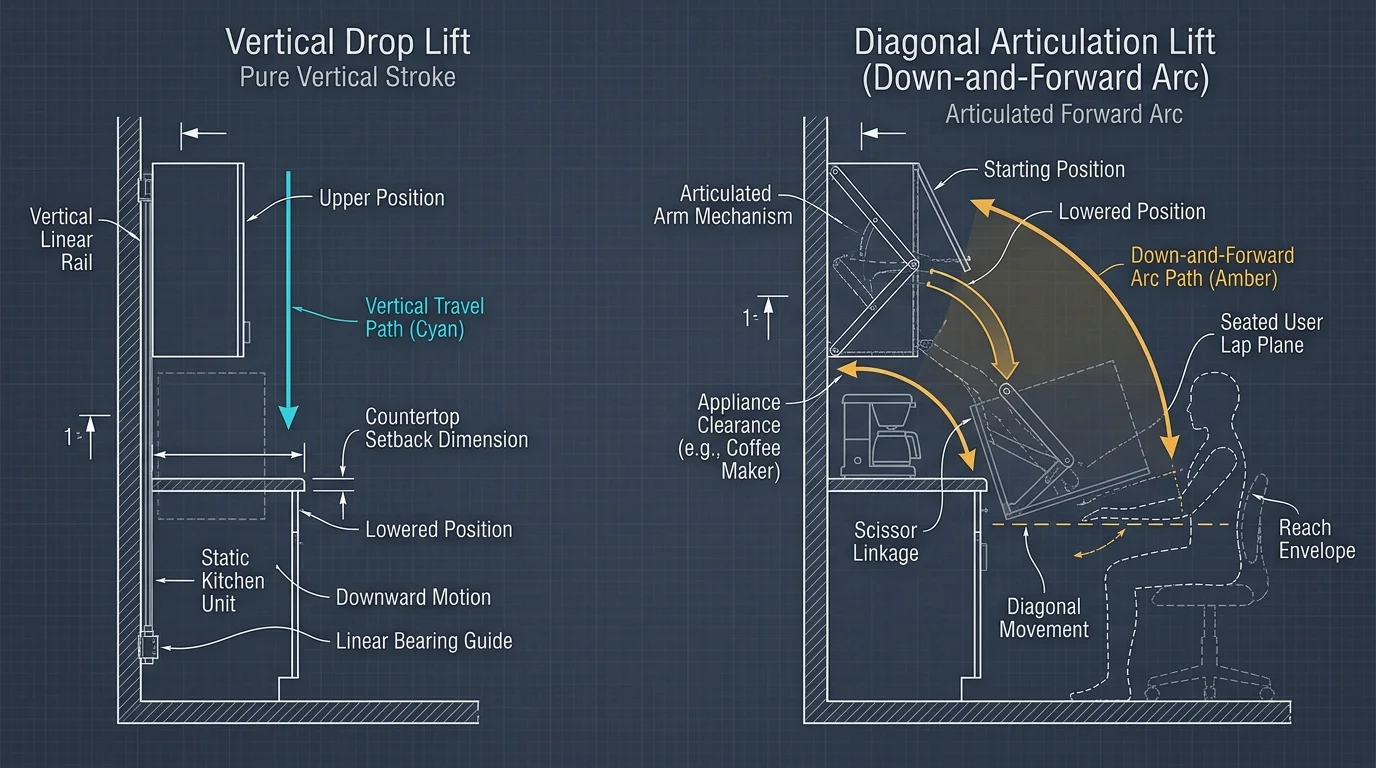
Motorized lifts fall into two functional designs: vertical drops and diagonal articulating lifts. Selecting the right lift depends on your upper body mobility and counter depth.
Vertical systems drop interior shelving racks straight down through the cabinet base. The outer cabinet shell and doors remain fixed in place, protecting the surrounding visual design.
Diagonal lifts bring the entire cabinet downward and forward toward you. This forward translation brings contents past the rear counter obstruction, placing items directly in your primary lap zone.
| System Model | Motion Path | Vertical Travel Range | Horizontal Extension | Max Dynamic Load |
|---|---|---|---|---|
| Granberg Verti 840 | Pure Vertical | 19.1 to 24.8 inches | 0.0 inches | 66 lbs (30 kg) |
| Ropox Diagonal | Downward & Forward | 17.0 inches | 7.0 inches | 264 lbs (120 kg) |
| Granberg Diago 504 | Curved Diagonal | 15.7 inches | 15.7 inches | 330 lbs (150 kg) |
Pure vertical lifts work best when you have good forward reach across the counter. Diagonal systems provide superior access if counter reach causes shoulder strain or trunk instability.
Essential Hardware and Component Integration
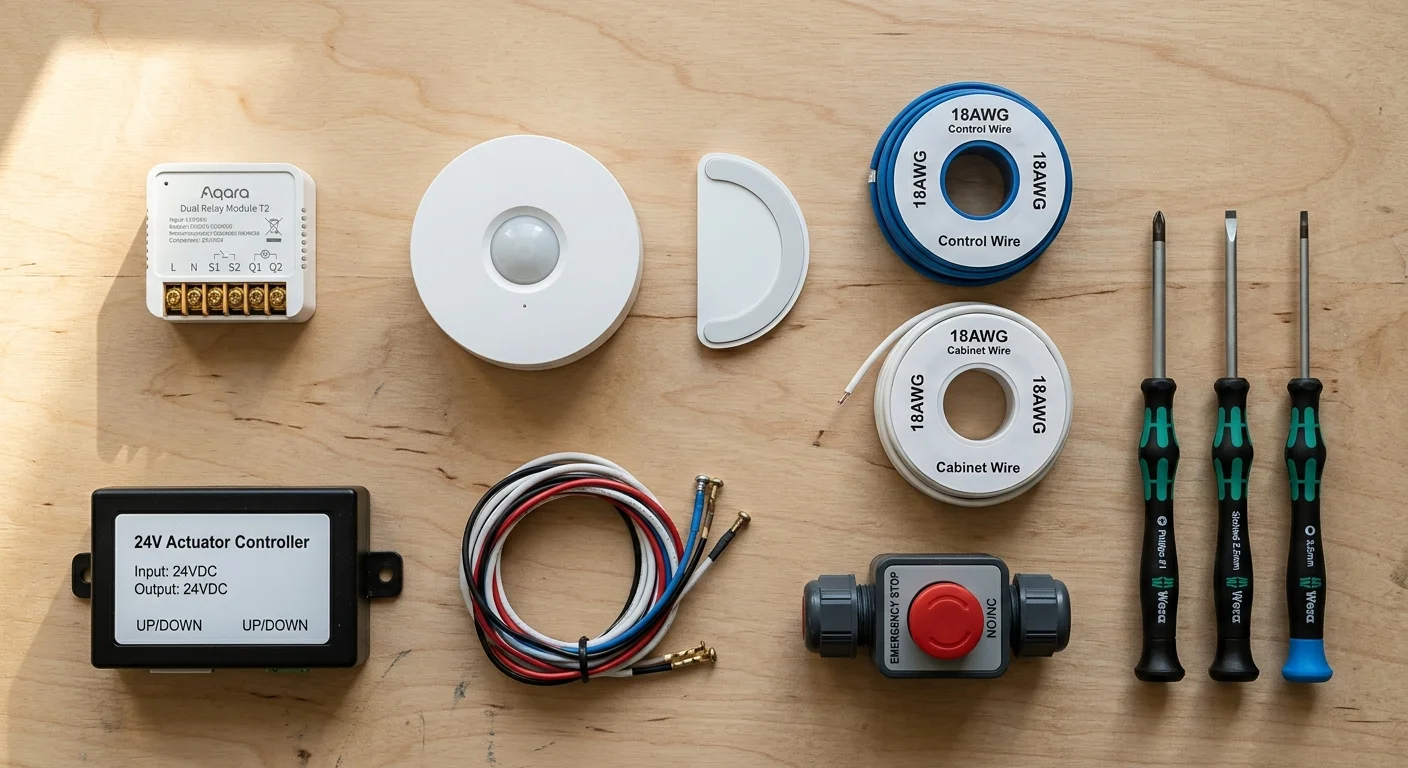
Building an autonomous lift setup requires integrating sensing, processing, motor control, and power management. High-amperage linear actuators require dedicated switching relays designed for motor reversing.
Integrating these hardware trip switches into a broader smart home emergency alert system ensures immediate notifications if an obstruction or pinch hazard halts the cabinet travel.
- Spatial Presence Sensor: Aqara Presence Sensor FP2 (60 GHz radar with 320-cell spatial grid mapping).
- Dual-Channel Motor Relay: Shelly Plus 2PM smart relay with roller shutter mode and integrated power monitoring.
- Motorized Lift Mechanism: Granberg Verti 840 or Ropox Diagonal cabinet framework with integrated 24V DC or 120V AC motor.
- Central Hub Controller: Local home automation controller, such as Home Assistant, operating local Zigbee or Wi-Fi integrations.
- Low-Voltage Micro-Actuator: SwitchBot Bot or wired relay solenoid for push-button microwave door mechanisms.
- Safety Edge Interface: Pressure-sensitive pneumatic or micro-switch bottom contact strip.
Always verify that your mechanical components support dry-contact integration or standard reversing switch wiring. Proprietary wireless controls often cause automation delays.
Step-by-Step: Wiring and Configuring the Smart Relay
Standard lift motors use bi-directional wiring controlled by directional limit switches. The Shelly Plus 2PM manages directional power to lower and raise the lift reliably.
- Disconnect mains power at the circuit breaker feeding your kitchen cabinet circuits before handling any wiring.
- Mount the Shelly Plus 2PM inside a UL-listed junction box behind or above the motorized cabinet framing.
- Wire the incoming Line (L) and Neutral (N) wires to the corresponding terminal lugs on the relay.
- Connect Output 1 (O1) to the motor’s directional “Down” wire and Output 2 (O2) to the directional “Up” wire.
- Route the lift system’s existing low-voltage rocker switch into the Switch 1 (SW1) and Switch 2 (SW2) inputs.
- Open the Shelly web interface, navigate to “Device Profile,” and change the operational mode to “Cover” (roller shutter).
- Run the automated travel calibration routine to establish precise run times and monitor dynamic motor wattage.
The cover profile provides internal software interlocks. These interlocks prevent Output 1 and Output 2 from energizing simultaneously, which would short-circuit the actuator motor.
Set the Shelly current-threshold auto-shutoff feature to trigger if electrical draw spikes above normal operational limits. This setting serves as an essential secondary safety layer.
Mapping the Prep Zone: Configuring the Aqara FP2 Radar Grid
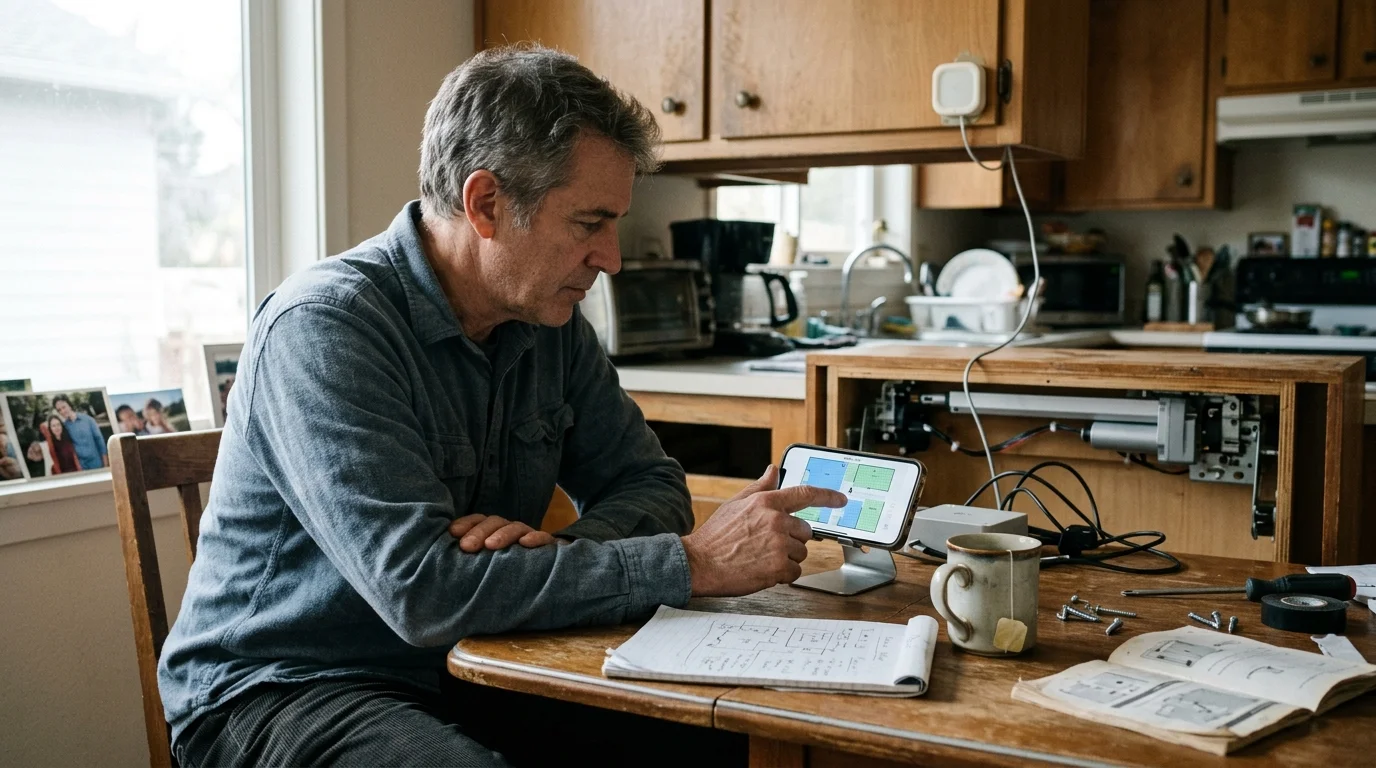
The Aqara FP2 detects targets across a forty-square-meter detection envelope. To prevent false triggers from family members walking past, you must isolate your wheelchair station.
Mount the FP2 sensor horizontally under an adjacent cabinet or on a perimeter wall between forty and forty-eight inches high. This height aligns the radar beam directly with your torso.
- Open the Aqara Home app and navigate to the FP2 real-time detection grid.
- Position your wheelchair directly at the counter workstation where you want the cabinet to lower.
- Observe the live target coordinate on the 320-cell map interface to locate your exact seated position.
- Draw a defined detection rectangle measuring approximately two feet deep by three feet wide over this specific cell cluster.
- Label this zone “Baking Station Prep.”
- Designate adjacent kitchen walkways as “Interference Zones” to filter out edge reflections from metal appliances.
Configure a two-second entry delay inside your automation software before triggering the down command. This delay prevents the cabinet from lowering if you simply roll past to reach the sink.
Add a five-second exit dwell delay. This ensures the cabinet remains lowered if you lean back slightly while retrieving a mixing bowl.
Extending Accessibility: Automating Microwave and Appliance Releases
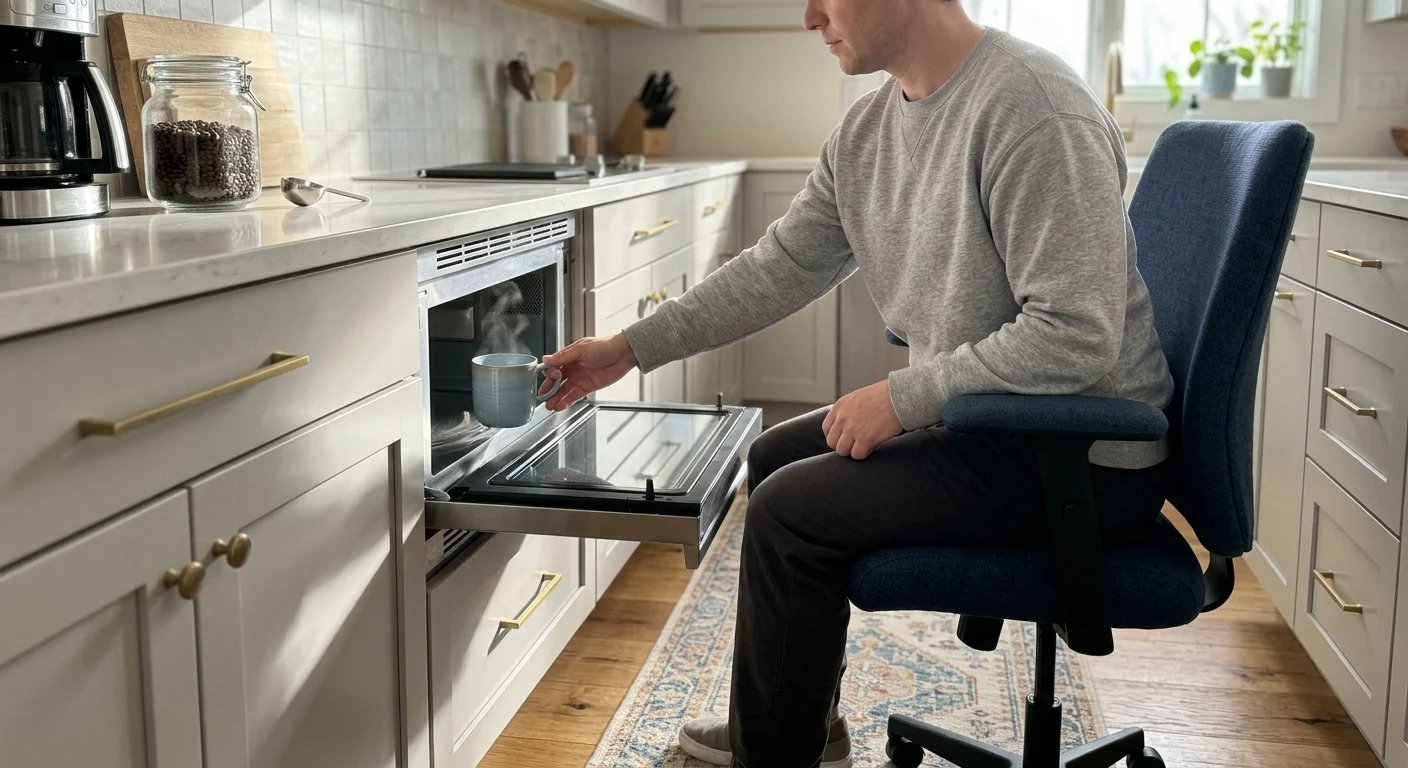
Upper cabinetry isn’t the only barrier seated cooks face. Built-in countertop microwaves often feature stiff push-button latches that require significant forward leverage to depress.
In addition to wireless armrest switches, integrating voice assistant controls designed for accessible living provides a reliable hands-free secondary trigger for cooks who cannot reach countertop buttons.
The modern Matter smart home standard enables cross-platform communication between presence sensors, cabinet lifts, and automated appliance openers.
You can retrofit standard mechanical push-to-open doors using high-torque mechanical finger actuators like the SwitchBot Bot. Secure the actuator directly over the exterior door-release switch using high-bond acrylic tape.
Link the door release to an assistive gesture or secondary radar zone. When your presence registers at the primary station, your home hub primes the door actuator.
A wireless mini-switch mounted to your wheelchair armrest can then trigger the actuator instantly. This setup eliminates high, awkward shoulder reaches across hot surfaces.
Worked Example: Building a Fully Automated Baking Station
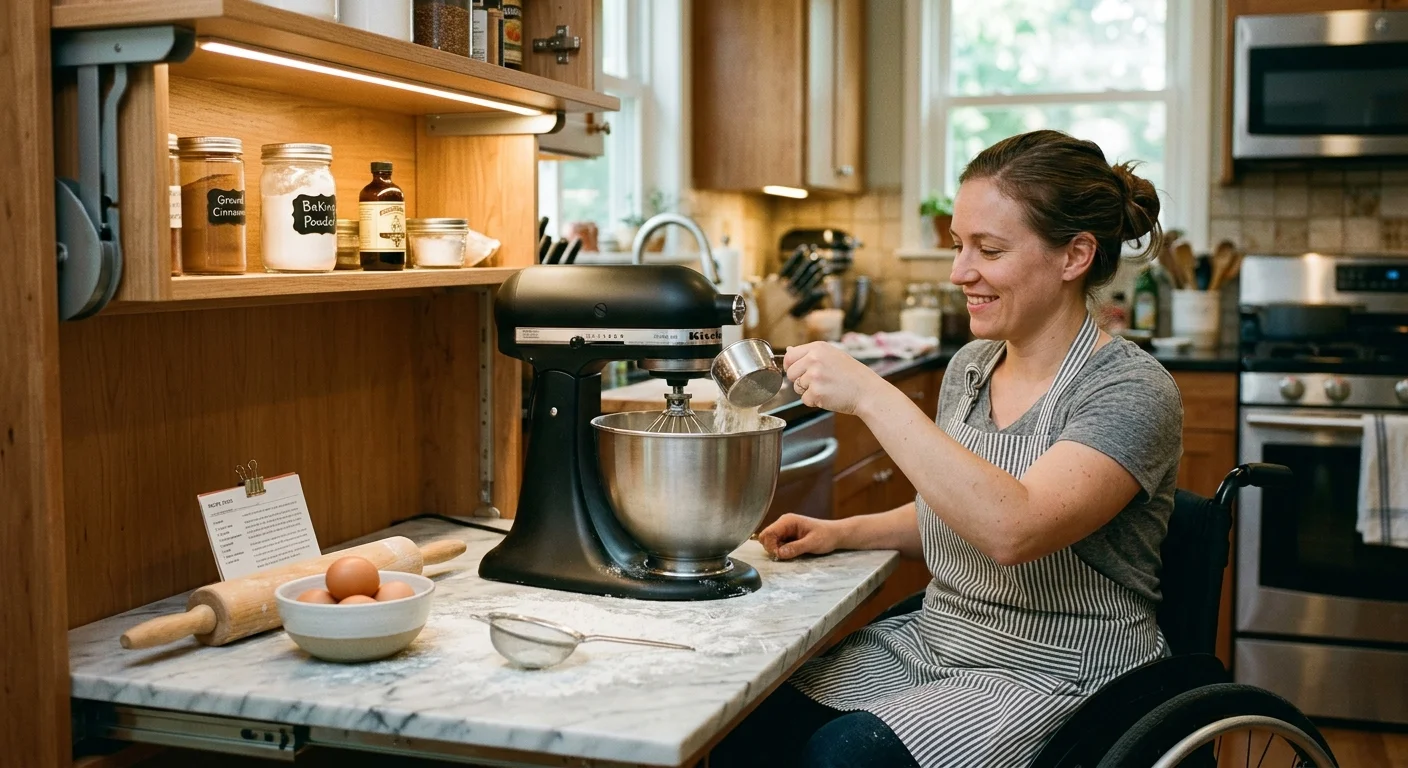
Consider this practical installation for an accessible baking and prep station. This example details the physical layout, components, and programming logic for a thirty-six-inch wide workstation.
You can complement this accessible prep counter by automating pantry humidity and temperature to keep proofing conditions consistent across seasonal shifts.
The station features a thirty-six-inch wide by thirty-inch high double wall cabinet hung fifty-four inches above the floor. The workstation features a thirty-four-inch high, ADA-compliant shallow counter underneath.
- Cabinet Hardware: Granberg Verti 840-900 vertical shelf drop mechanism ($2,650.00).
- Shelving Travel: 24.0 inches downward vertical drop path.
- Drop Cycle Time: 14.0 seconds at a travel speed of 1.7 inches per second.
- Smart Relay: Shelly Plus 2PM dual-channel motor switch ($24.00).
- Sensor Hardware: Aqara Presence Sensor FP2 ($82.99).
- Total System Hardware Cost: $2,756.99 (excluding installation labor and mounting brackets).
The lowest internal shelf drops from fifty-four inches down to thirty inches above the floor. This places everyday items comfortably inside the unobstructed ADA reach window of fifteen to forty-eight inches.
The automation engine executes a structured logic sequence. The program continuously evaluates presence data against mechanical safety parameters.
- Trigger: Target enters “Baking Station Prep” zone and maintains presence for 3.0 consecutive seconds.
- Condition Check: Safety edge plate circuit is closed (normal state) and current time is between 07:00 and 21:00.
- Action 1: Shelly Plus 2PM activates Output 1 for 14.0 seconds, lowering the Verti 840 internal frame to 30 inches.
- Action 2: Under-cabinet task lighting illuminates to 100 percent brightness via local Zigbee dimmer.
- Hold State: Target maintains micro-movements within the 2×3-foot grid; automation holds the motor in the extended down state.
- Clear Trigger: Target vacates the “Baking Station Prep” zone continuously for 10.0 seconds.
- Action 3: Shelly Plus 2PM activates Output 2 for 14.0 seconds, returning shelves safely into the upper cabinet frame.
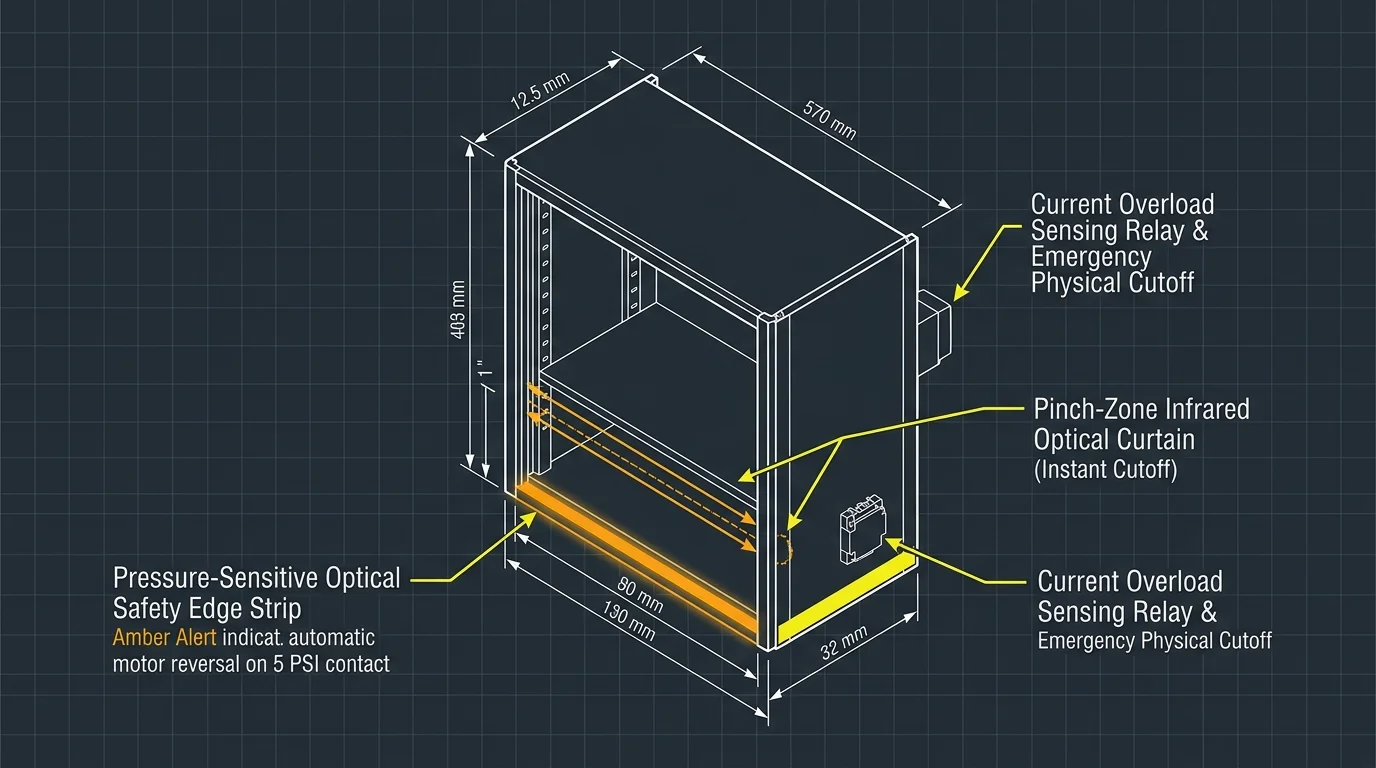
Non-Negotiable Safety Protocols and Collision Avoidance
Automating heavy overhead machinery over kitchen counters creates physical pinch risks. You must follow strict safety protocols to protect hands, equipment, and appliances.
Safety systems on automated physical machinery must remain hardwired and autonomous; never entrust primary pinch-point protection to wireless networks or cloud automations.
Commercial accessibility systems include a spring-loaded bottom contact safety plate. If the descending shelf touches a blender, mug, or fingers, the plate tilts upward and trips a physical microswitch.
You must wire this safety switch directly into the motor controller’s hardware break line. When triggered, the circuit immediately cuts power to the downward relay and initiates a brief auto-reverse cycle.
- Always retain an accessible hardwired emergency stop switch or toggle button at counter level within reach.
- Configure the Shelly Plus 2PM overcurrent limit to 1.8 Amperes to catch mechanical blockages automatically.
- Keep software routines purely local to ensure commands execute even if your home internet connection drops.
- Schedule monthly manual inspections to verify that safety trip plates halt travel instantly upon physical contact.
If you lack experience with mains electrical work or load-bearing wall structural fasteners, hire a licensed contractor. Overhead lifts carry significant static and dynamic loads that require proper structural framing.
Frequently Asked Questions
Will my pets trigger the cabinet lift if they walk into the prep area?
No, provided you configure spatial height filters and detection zones properly. The Aqara FP2 allows you to filter low-elevation targets and limit sensitivity so that small dogs and cats do not trigger the lift routine.
What happens if our home Wi-Fi drops while the cabinets are lowered?
Your local automation hub executes routines over the local network without relying on cloud servers. Furthermore, the hardwired manual wall switch remains fully functional, letting you raise or lower the cabinet regardless of network status.
Can I install a motorized lift into existing custom kitchen cabinets?
Yes. Systems like the Granberg Verti 840 mount inside existing cabinet carcases after removing the original fixed shelves. Ensure the interior depth measures at least 12.2 inches and the wall studs can support dynamic loads.
How does the system prevent the lift from crushing appliances on the counter?
The integrated pressure-sensitive bottom plate instantly cuts motor power and reverses travel if it touches an obstruction. In addition, the smart relay’s built-in power meter cuts current if motor resistance spikes unexpectedly.
Disclaimer: This article is for informational purposes only. Smart home devices involve electrical connections and data privacy. Always follow manufacturer instructions for installation. For complex wiring or HVAC work, consult a licensed professional.