
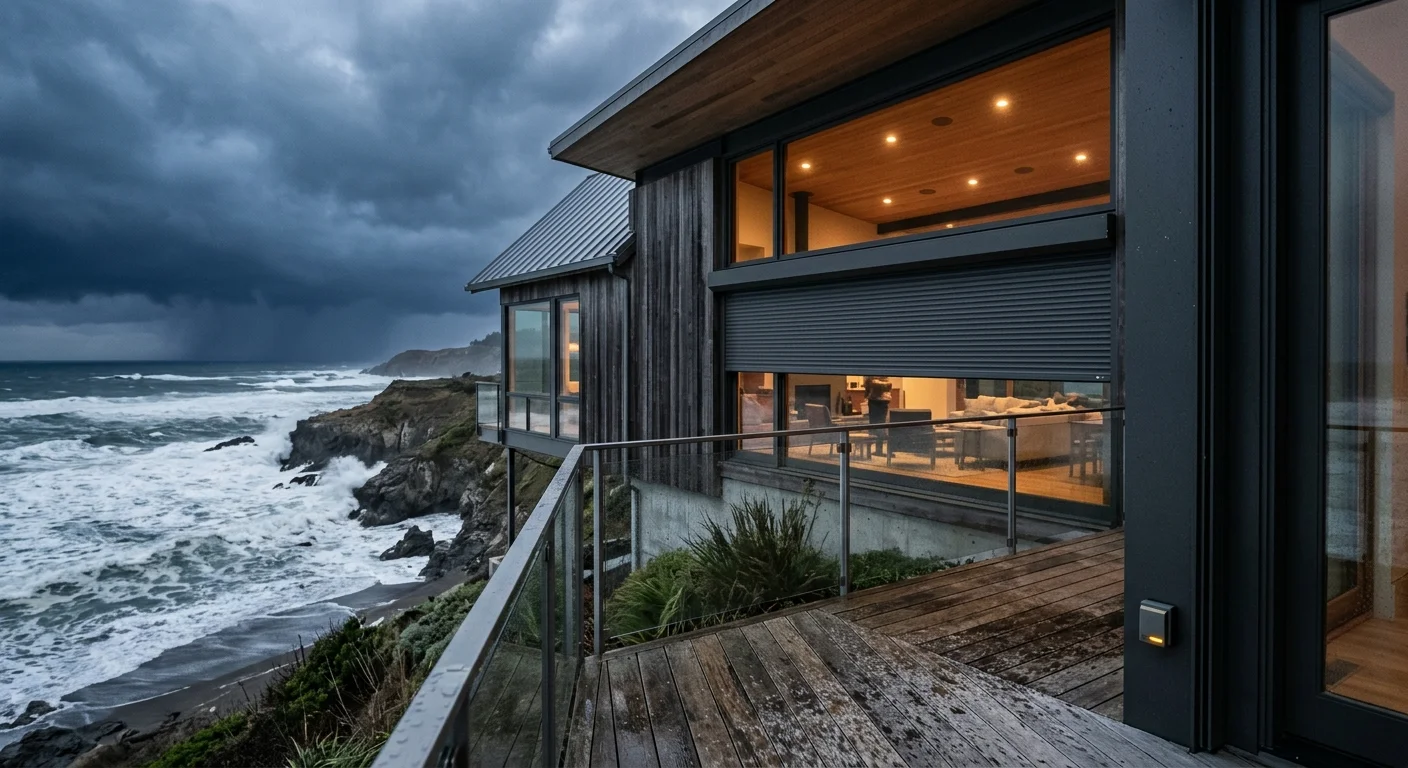
Rapid barometric pressure drops signal approaching hurricane squalls hours before cloud-based alerts reach your phone. By linking local pressure telemetry directly to smart relays, your home can close storm shutters and shed heavy electrical loads automatically.
Most storm routines fail because they rely on grid power and internet connectivity that collapse as wind speeds rise. True coastal resilience requires edge-computed sensor automations that run entirely over your local home network.
This guide shows you how to build rapid-drop triggers that deploy motorized shutters safely while pre-chilling refrigerators and isolating solar battery banks.

The Physics of Barometric Triggers: Setting Pressure Drop Thresholds
Standard sea-level atmospheric pressure sits at exactly 1,013.25 hPa (29.92 inHg). When an organized cyclonic system approaches, air columns evacuate upward, producing a measurable drop at ground level.
Unlike general seasonal smart home automations that prepare properties for gradual temperature shifts, coastal storm automations must react to volatile hourly pressure trends.
You cannot trigger critical preparations on absolute low pressure alone. A slow winter cold front can depress ambient pressure without posing any structural threat to your windows.
Instead, your automations must evaluate the rate of change over time, known in meteorology as the pressure tendency. A sustained drop of 1 to 2 hPa per hour indicates an advancing squall line.
A continuous decline exceeding 3 hPa across a three-hour window signals a severe tropical front or localized convective cell. This rate of change is your primary automation threshold.
Major tropical cyclones produce dramatic absolute drops. Tropical storms range between 990 and 1,000 hPa, while Category 3 through Category 5 hurricanes routinely plummet below 950 hPa.
Explosive cyclogenesis, commonly called a bomb cyclone, involves a pressure drop of at least 24 hPa within 24 hours. Your edge routines should act long before pressure reaches those extremes.
- Phase 1 Alert (Advisory): Pressure drops 1.5 hPa in 3 hours; the smart home logs the event and verifies battery states.
- Phase 2 Action (Structural Prep): Pressure drops 3.0 hPa in 3 hours; your hub deploys exterior shutters and secures motorized dampers.
- Phase 3 Lockdown (Power Isolation): Pressure drops 5.0 hPa in 3 hours with absolute pressure below 1,000 hPa; critical circuits shift to battery storage.
Local Weather Stations: Hardware That Reports Without Cloud Latency
When high winds strike coastal communities, cellular towers experience severe congestion and power failure. Automations that depend on cloud-hosted weather APIs fail precisely when you need them most.
While cloud-reliant weather-based smart home automations work well for daily convenience, life-safety coastal routines require hardware that operates completely off-grid.
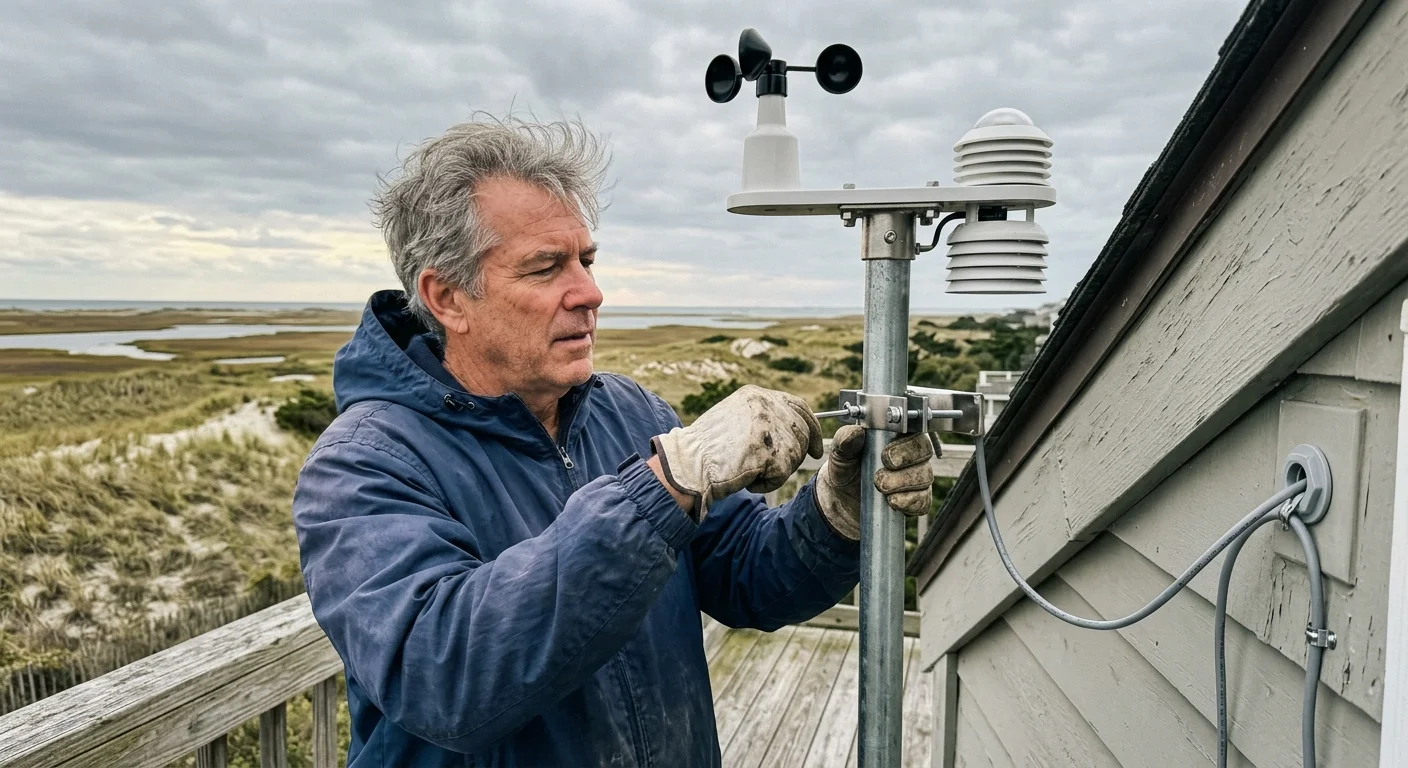
Reliable pre-storm routines demand an on-site personal weather station communicating over your local area network. Local push updates ensure your automation hub receives fresh pressure readings every few seconds.
The WeatherFlow Tempest retails between $329 and $349 and features a solid-state barometric pressure sensor. It broadcasts real-time UDP packets locally over your Wi-Fi network without requiring an active internet connection.
Ambient Weather offers the WS-2902 for $199.99 and the commercial-grade WS-5000 for $449.99 to $474.99. Both stations expose local telemetry through local network interception or direct hub bindings.
According to smart home analyses published by Wirecutter Smart Home, local protocol support represents the deciding factor for safety-critical hardware reliability.
Mount your personal weather station away from roof turbulence and direct thermal exhaust vents. Artificial pressure differentials caused by high-velocity wind buffeting can distort raw barometric readings.
- Position the outdoor sensor array at least five feet above your roofline on a rigid, unswaying mast.
- Ensure the station’s internal barometer or indoor base station operates within a temperature-stabilized zone inside your home.
- Configure your smart automation platform to ingest local sensor updates at intervals of 60 seconds or less.
- Set up an automated notification ping if the weather station stops transmitting data for more than five consecutive minutes.
Automating Storm Shutters: In-Wall Relays and Motorized Deployments
Motorized roll-down hurricane shutters cost between $50 and $175 per square foot installed, or roughly $350 to $1,200 per window opening. Motorizing an existing manual roll-down assembly costs approximately $500 to $700 per opening.
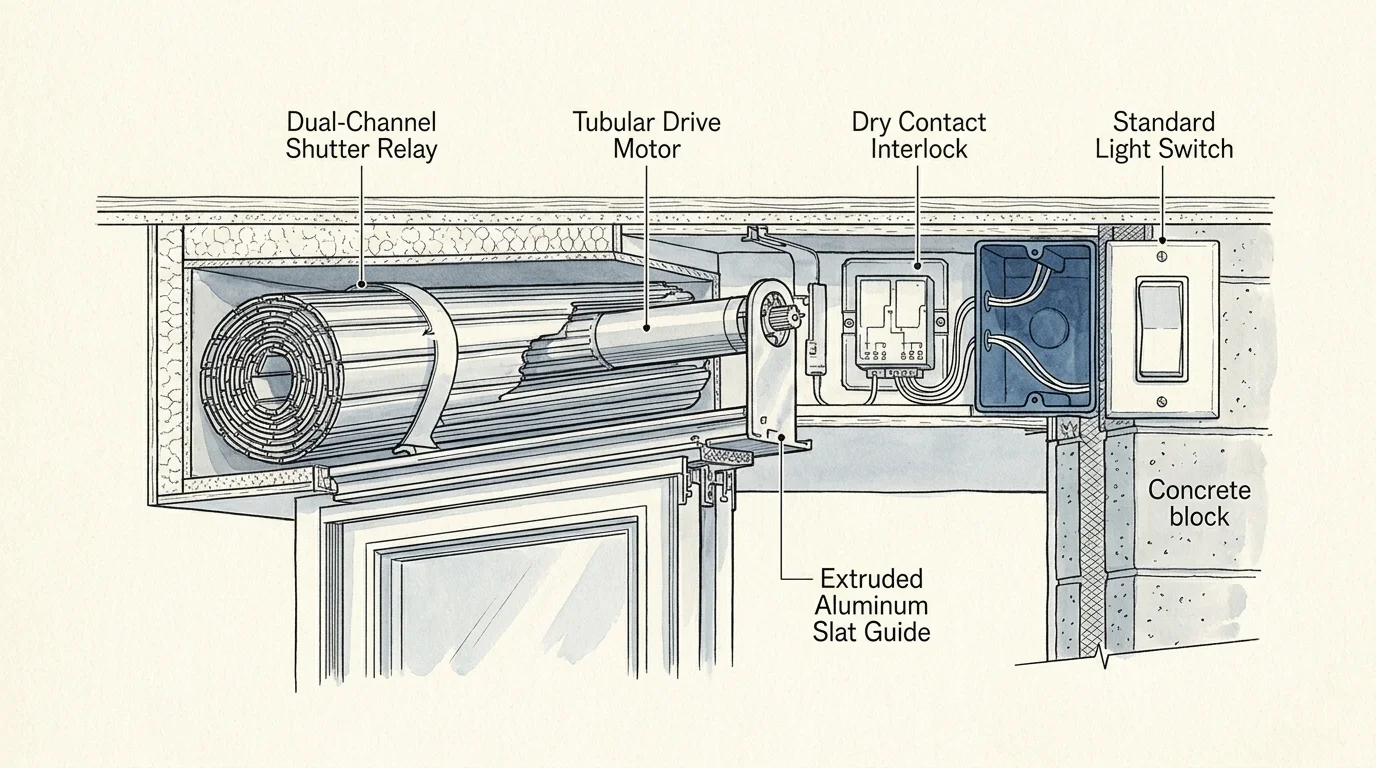
Standard motorized roll-down systems use 120V alternating current tubular motors inside an overhead axle barrel. These bidirectional motors require specialized switching logic to prevent powering both directions simultaneously.
You can retrofit standard shutter switches using in-wall dual-relay modules such as the Shelly Plus 2PM ($20 to $35) or the Fibaro Roller Shutter ($60 to $65). These modules fit directly inside the wall box behind the manual rocker switch.
When you automate storm shutters barometric pressure triggers must enforce staggered run cycles. Firing ten shutter motors simultaneously creates an inductive inrush current that can trip your main breaker or overload an off-grid inverter.
Program your controller to deploy shutters in sequential banks. Lower windward second-story windows first, pause ten seconds, and then lower leeward and ground-floor units.
Review independent device assessments on PCMag Smart Home to choose certified relays with integrated thermal monitoring and electrical overload protection.
Life Safety and Building Codes: Preventing Shutter Egress Traps
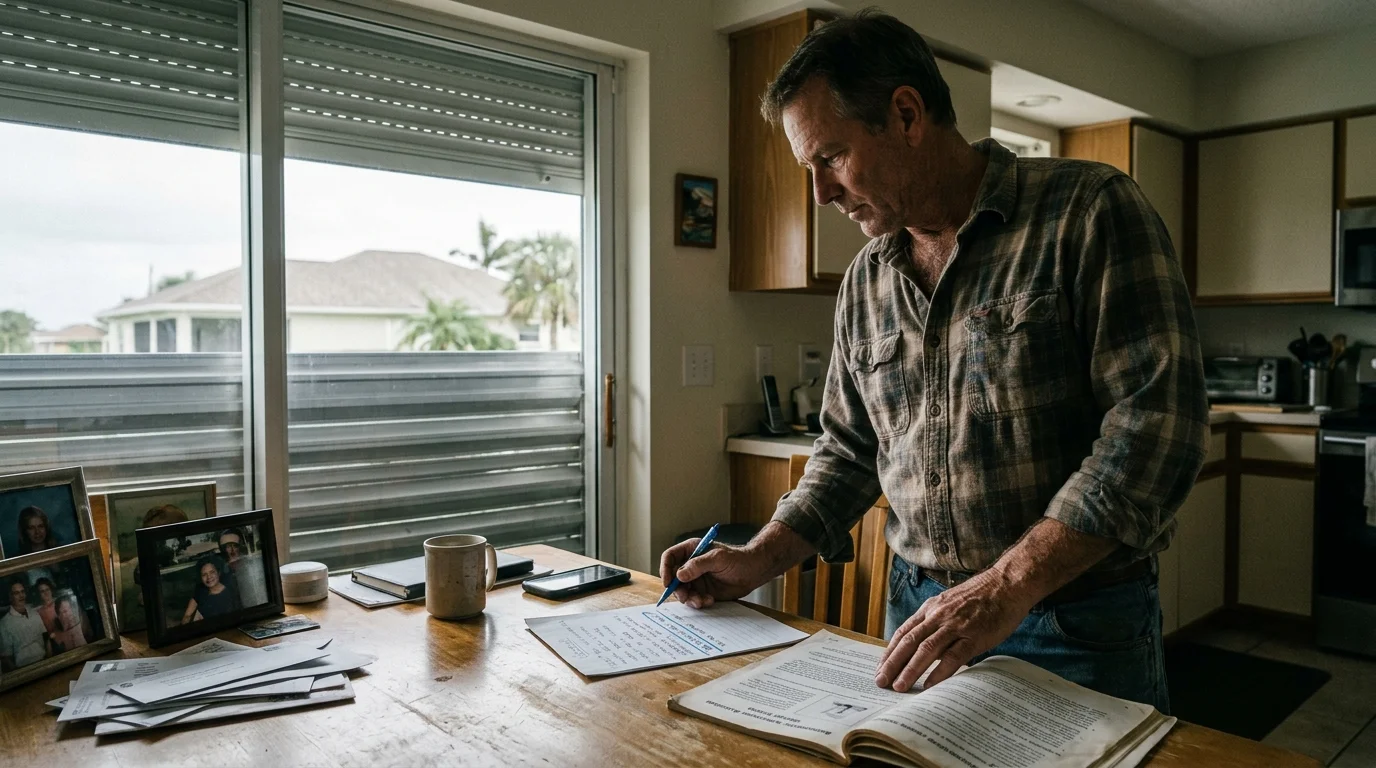
Fully enclosing your home with automated metal barriers creates a severe entrapment hazard during electrical fires or gas leaks. Life safety considerations must always override convenience and structural protection.
Pairing these physical egress fail-safes with a centralized smart home emergency alert system guarantees that all residents receive audible voice warnings before exterior barriers lock down.
The Florida Building Code (FBC Section 1010.1.4.6 and Section R310) regulates emergency escape openings. Dwellings must maintain an unobstructed primary path of egress to the exterior on the ground level.
Never place 100% of your exterior doorways under unmonitored automated closure routines. Leave at least one primary egress door manually operated or equipped with an internal mechanical disconnect.
In High-Velocity Hurricane Zones (HVHZ), shutters must carry a Florida Product Approval or Miami-Dade Notice of Acceptance (NOA). These assemblies must pass testing under TAS 201, 202, and 203, or ASTM E1886 and ASTM E1996.
Impact certification requires the shutter curtain to deflect a nine-pound two-by-four timber traveling at 50 feet per second (34 mph) without rupturing. Smart relay additions must not compromise the shutter’s mechanical locking pins.
- Manual Crank Overrides: Ensure all ground-floor bedroom shutters feature manual gear-reduction cranks accessible from inside the room.
- Smoke Detector Interlocks: Hardwire an automation bypass that immediately raises all shutters if indoor smoke or carbon monoxide detectors activate.
- Battery Backup Power: Connect your automation hub and critical shutter relays to an uninterruptible power supply (UPS) to guarantee operation after grid failure.
- Insurance Documentation: Have a licensed inspector complete Form OIR-B1-1802 (Uniform Mitigation Verification Inspection) to secure opening protection discounts of 15% to 45% on your windstorm premium.
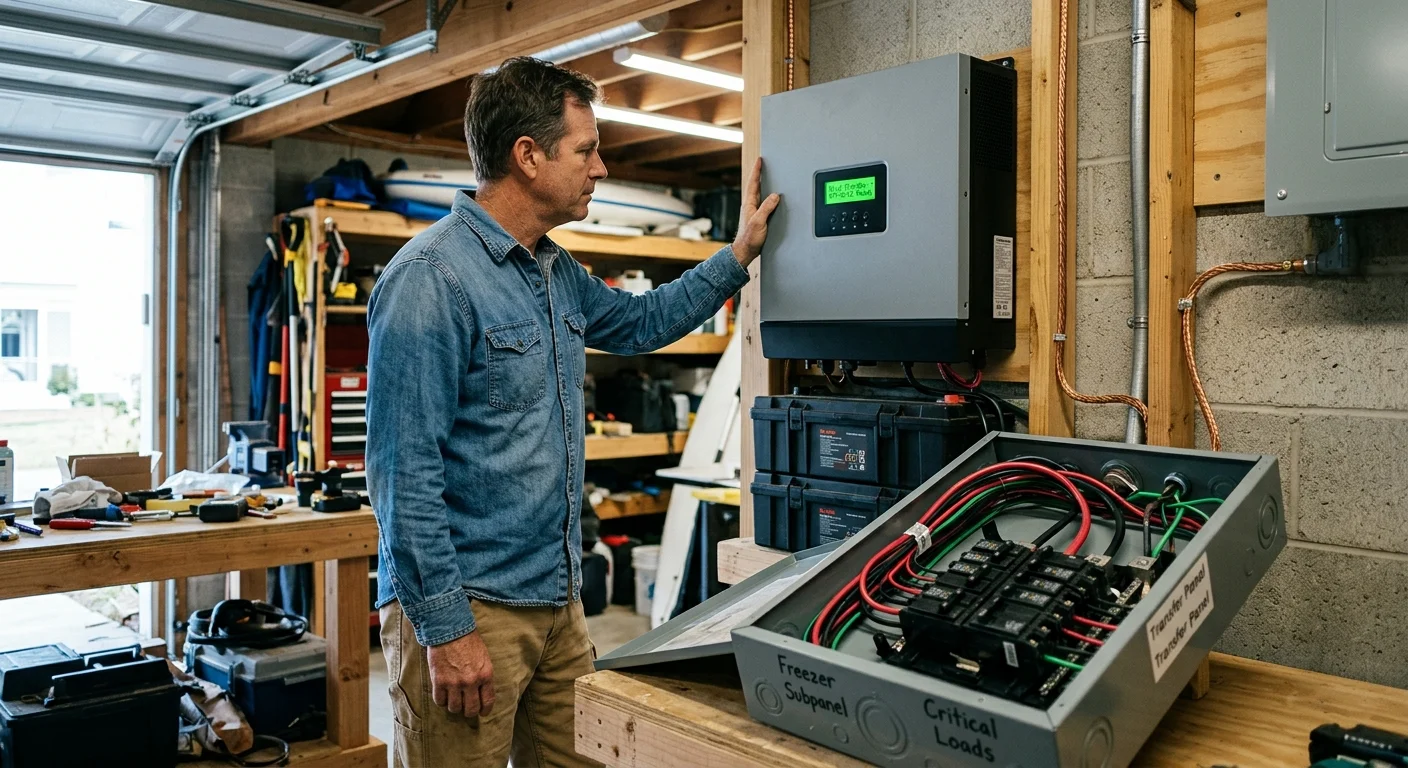
Power Management: Pre-Freezing and Battery Inverter Off-Grid Prep
Barometric pressure triggers allow you to initiate thermal energy storage long before high winds sever incoming utility lines. Pre-cooling your home and deep-freezing food stores cushions your family against extended outages.
When your weather station alert routines register an approaching front, your hub should drop smart thermostat setpoints by four degrees. This sub-cools structural drywall and concrete slabs while grid power remains plentiful.
Simultaneously, command smart plugs on non-critical freezers and secondary refrigerators to drop temperatures to their lowest achievable operating setpoints. Lowering your chest freezer to -10°F buys up to 48 hours of thermal preservation without opening the lid.
Smart home systems coordinating hurricane prep smart home automation should instantly force residential solar batteries into full backup reserve mode. This stops self-consumption cycles and locks the battery at 100% capacity.
If utility power fails, cycling refrigeration circuits periodically rather than running them continuously saves immense battery capacity. A well-insulated modern refrigerator only requires power for 20 minutes out of every hour to maintain safe temperatures.
- Detect barometric pressure dropping faster than 1 hPa per hour over two consecutive hours.
- Send an automated switch instruction to your hybrid solar inverter to charge storage batteries from the grid up to 100% state-of-charge.
- Lower the primary home thermostat setpoint to 68°F to pre-chill living areas before grid loss.
- Disable auxiliary energy loads, including electric water heater elements, landscape lighting transformers, and architectural pool pumps.
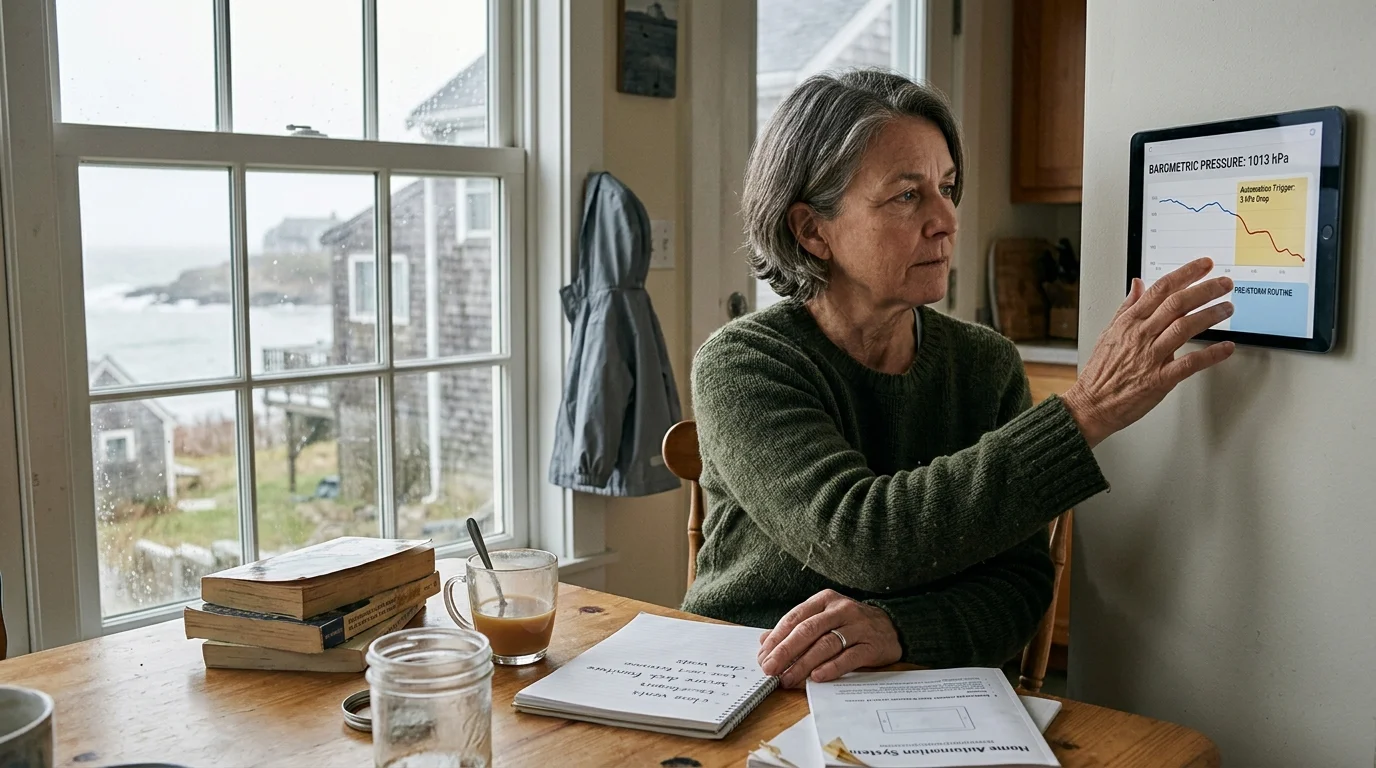
Worked Example: A Coastal Automation Scenario for a 3 hPa Drop
Consider a two-story home in Pinellas County, Florida, equipped with a WeatherFlow Tempest ($339) and Home Assistant running on an internal mini PC. The home features eight motorized roll-down shutters controlled by four Shelly Plus 2PM dual-channel relays ($119.60 total).
Integrating these rapid-drop triggers into your existing vacation mode routine provides peace of mind that coastal properties will autonomously batten down even when empty.
The outdoor baseline pressure reads 1,012.0 hPa at 10:00 AM on September 15. Over the next three hours, an outer rainband from an approaching Category 2 hurricane moves inland.
At 1:00 PM, the Tempest station reports a local atmospheric pressure of 1,008.6 hPa. The three-hour rolling delta reaches 3.4 hPa, satisfying the automation condition (delta greater than 3.0 hPa in three hours).
The automation engine executes the following sequenced logic blocks across an eight-minute execution window:
- Minute 0:00: The system sends an audible voice alert across interior smart speakers warning that storm shutters will deploy in 60 seconds.
- Minute 1:00: Relay Bank A fires, closing four upper-story bedroom shutters (drawing 170W per motor, 680W total, for 42 seconds).
- Minute 2:30: Relay Bank B fires, closing three ground-floor living room shutters, while leaving the main patio egress door open.
- Minute 4:00: Thermostats drop from 74°F to 69°F, while smart switch relays on the domestic water heater shut off to conserve baseline power.
- Minute 8:00: The inverter switches its operating profile to Storm Guard mode, pulling 3.2 kW from the grid to top off the 10 kWh home battery.
By automating the response based on pressure tendency rather than local power cuts, the house seals its structural envelope and fills its storage reserves 4.5 hours before sustained gale-force winds hit the property.
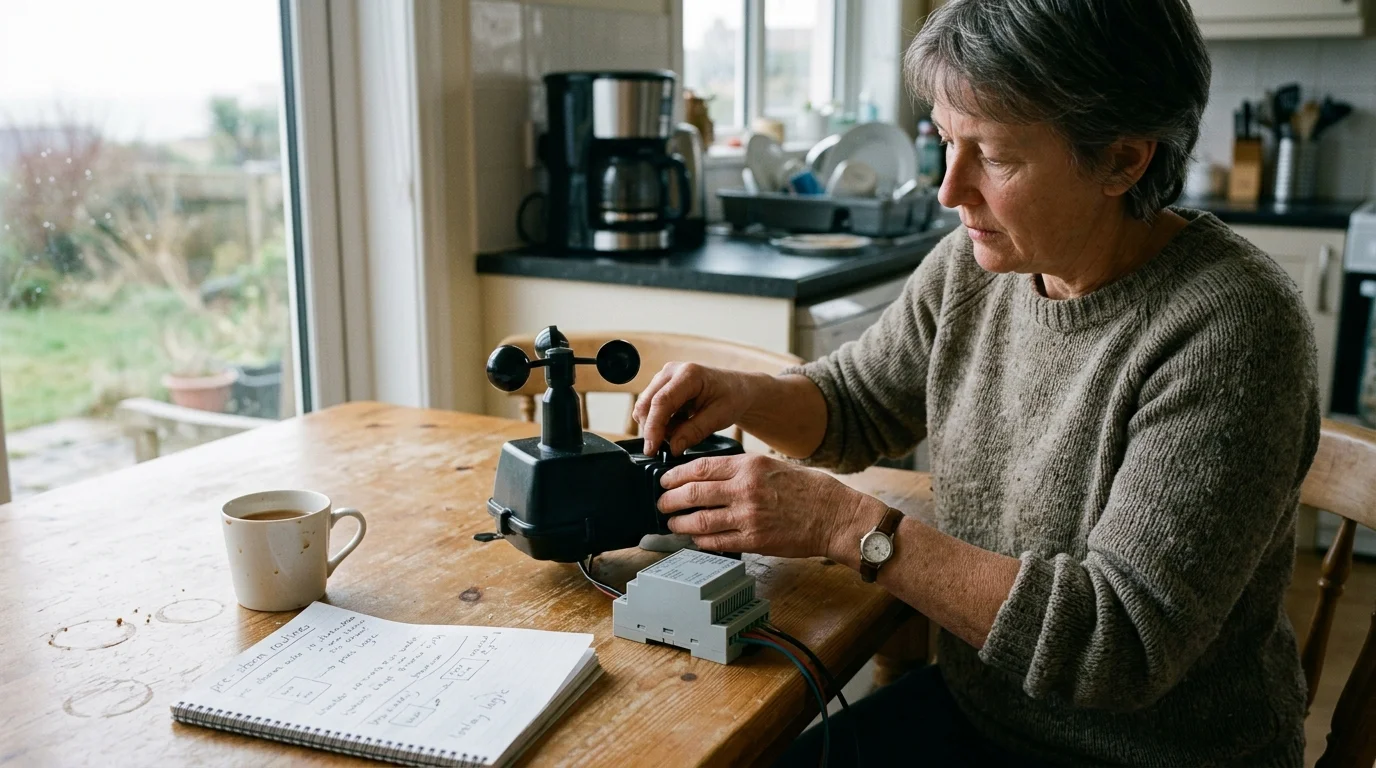
Coastal Automation Hardware Compared: Weather Stations and Relay Modules
Building an autonomous pre-storm routine requires reliable edge devices that report telemetry and switch heavy inductive loads without cloud servers. The table below compares field-tested equipment across key operational metrics.
| Hardware Model | Device Category | Retail Price | Local Protocol / Interface | Standalone Local Failover |
|---|---|---|---|---|
| WeatherFlow Tempest | Weather Station | $329–$349 | Local UDP Broadcast, REST | Yes (transmits via local RF hub) |
| Ambient Weather WS-5000 | Weather Station | $449–$475 | Local Network HTTP, RF 915MHz | Yes (via local gateway sniffing) |
| Shelly Plus 2PM | Shutter Relay | $20–$35 | Local Wi-Fi, MQTT, RPC over HTTP | Yes (runs onboard device scripts) |
| Fibaro Roller Shutter 3 | Shutter Relay | $60–$65 | Z-Wave Plus (800 Series) | Yes (mesh controller binding) |
Shelly modules feature internal scripting engines that run lightweight code directly on the physical relay. This allows the relay to read local pressure data and trigger shutter deployment even if your primary home hub crashes.
Z-Wave options like the Fibaro Roller Shutter 3 operate on a sub-gigahertz radio band that easily penetrates thick concrete and hurricane-rated block walls. This RF resilience prevents dropped packets during violent electrical storms.
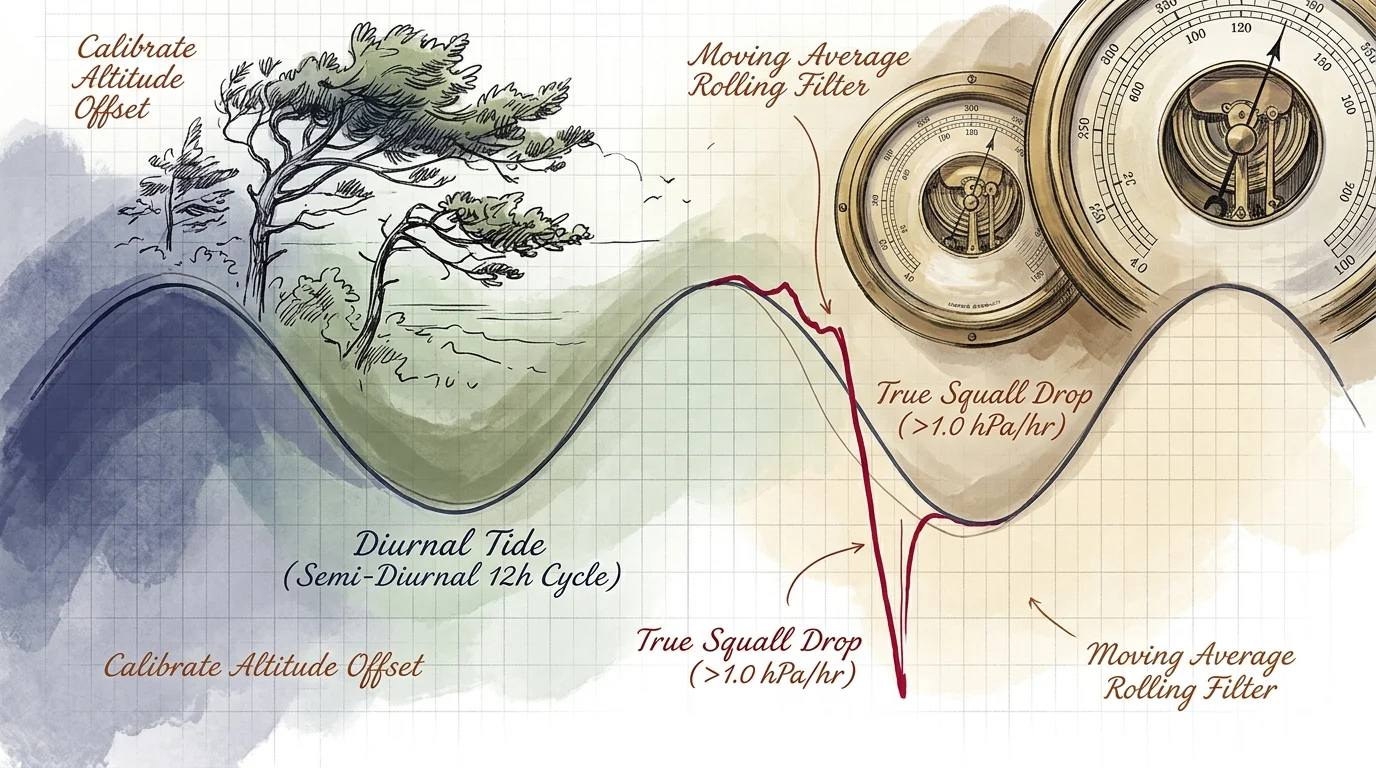
Troubleshooting Sensor Drift, Diurnal Tides, and False Triggers
The Earth’s atmosphere exhibits natural daily pressure fluctuations known as atmospheric diurnal tides. Solar heating and gravitational tidal forces cause pressure to rise and fall twice each day by as much as 2.5 hPa in equatorial and coastal zones.
Atmospheric tides typically crest around 10:00 AM and 10:00 PM and drop to daily troughs around 4:00 AM and 4:00 PM. If you configure a static drop trigger of 2.0 hPa without a time filter, afternoon diurnal troughs can trigger false shutter deployments.
To eliminate diurnal false positives, pair your rate-of-drop calculation with a secondary wind speed or absolute humidity check. Severe storm fronts carry elevated wind gusts and rapid dew-point spikes alongside pressure declines.
Barometric sensors inside weather stations drift over time due to dust accumulation, moisture ingress, and thermal stress on the piezo-resistive membrane. Recalibrate your station against the nearest National Weather Service (NWS) airport station semi-annually.
Wind buffeting against exterior sensor housings creates localized aerodynamic pressure drops known as the Bernoulli effect. High-speed laminar winds rushing across a sensor port create an artificial vacuum that fools cheap hardware.
- Use Moving Averages: Smooth raw pressure readings through a 15-minute rolling median filter before feeding values into your rate-of-change calculation.
- Require Compound Triggers: Require a sustained pressure drop of 3 hPa in 3 hours PLUS average wind speeds above 25 mph before deploying shutters.
- Implement Notification Halts: Configure an automated push notification to your phone providing a 90-second countdown to cancel shutter closure if you are entertaining outdoors.
- Verify Local Sensor Health: Monitor battery voltages on wireless outdoor sensor arrays; depleted lithium cells report erratic barometric telemetry prior to dropping offline.
Frequently Asked Questions
Can a barometric automation deploy shutters if my home internet goes down?
Yes, provided your automation controller and weather station communicate over your local Wi-Fi or Z-Wave network. Platforms like Home Assistant and Hubitat process logic locally without requiring cloud internet access.
Will closing all motorized shutters trap my family inside during an emergency?
Yes, if you fail to leave an unobstructed primary egress route or install manual mechanical overrides. Building codes mandate that your home must retain at least one operable ground-floor egress door that occupants can open manually during a power outage.
How do I prevent diurnal atmospheric cycles from falsely deploying my storm shutters?
Natural afternoon diurnal pressure variations can cause drops up to 2.5 hPa under clear skies. Prevent false triggers by pairing your pressure rate-of-change trigger with sustained wind speed readings or requiring a pressure drop of at least 3 hPa over three hours.
Do motorized shutter relays qualify for wind mitigation insurance discounts?
Smart relays do not alter structural ratings, but the hurricane shutters they control qualify your home for discounts if certified under TAS 201/202/203. A licensed inspector must verify opening protection ratings using Florida Form OIR-B1-1802.
Disclaimer: This article is for informational purposes only. Smart home devices involve electrical connections and data privacy. Always follow manufacturer instructions for installation. For complex wiring or HVAC work, consult a licensed professional.


1 Comment