
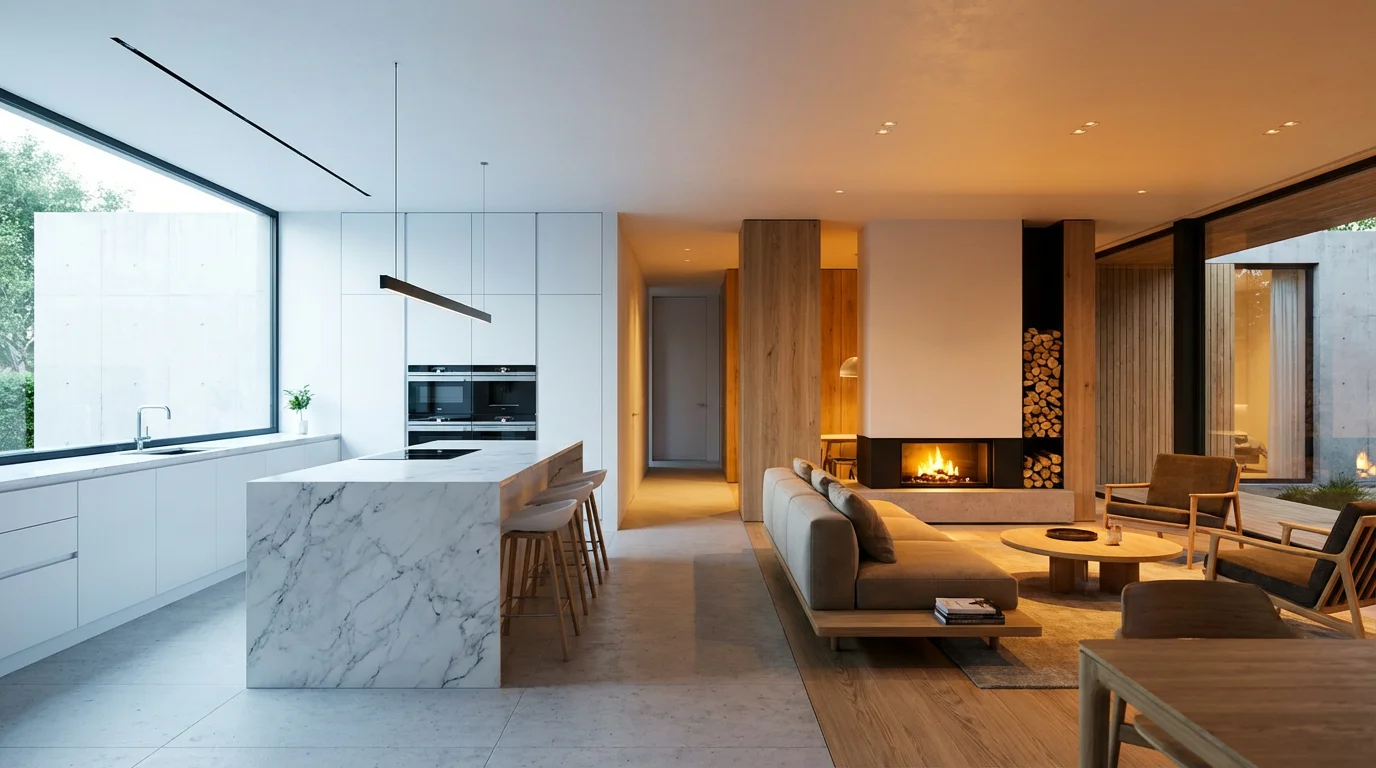
Lighting profoundly influences how you feel, how well you sleep, and how effectively you work. Yet, most homes rely on static, single-temperature bulbs that ignore your biological needs. You flip a switch, and the light is either on or off, regardless of whether it is high noon or midnight. By upgrading to smart lighting, you gain control over color temperature and intensity, allowing your home environment to adapt to your circadian rhythm.
This guide moves beyond simple on/off commands. You will learn how to design lighting schemes that boost energy in the morning, sharpen focus during work hours, and signal your brain to relax when the day ends. We will walk through the science of light, the necessary hardware, and specific strategies for every major room in your house.

The Science: Color Temperature and Your Brain
Before buying bulbs, you must understand the Kelvin (K) scale. This measures the “temperature” of white light. The appearance of light shifts from warm (yellow/orange) to cool (blue/white) as the Kelvin number increases. Your brain interprets these shifts as signals for wakefulness or rest.
- Warm White (2000K – 3000K): Resembles candlelight or sunset. This spectrum promotes relaxation and melatonin production, making it ideal for evenings.
- Neutral White (3100K – 4500K): Similar to mid-morning daylight. It offers high contrast without being harsh, suitable for general household tasks.
- Cool White / Daylight (4600K – 6500K): Mimics the sun at noon. This blue-rich light suppresses melatonin and boosts alertness, focus, and productivity.
Traditional “dumb” bulbs lock you into one temperature. Smart bulbs, particularly those labeled “White Ambiance” or “Color,” allow you to slide along this scale throughout the day. This capability is the foundation of circadian lighting—mimicking the sun’s natural progression indoors.
Essential Smart Lighting Hardware
Building a responsive lighting system requires the right mix of form factors. You do not need to replace every bulb at once; start with the rooms where you spend the most time.
Smart Bulbs vs. Smart Switches
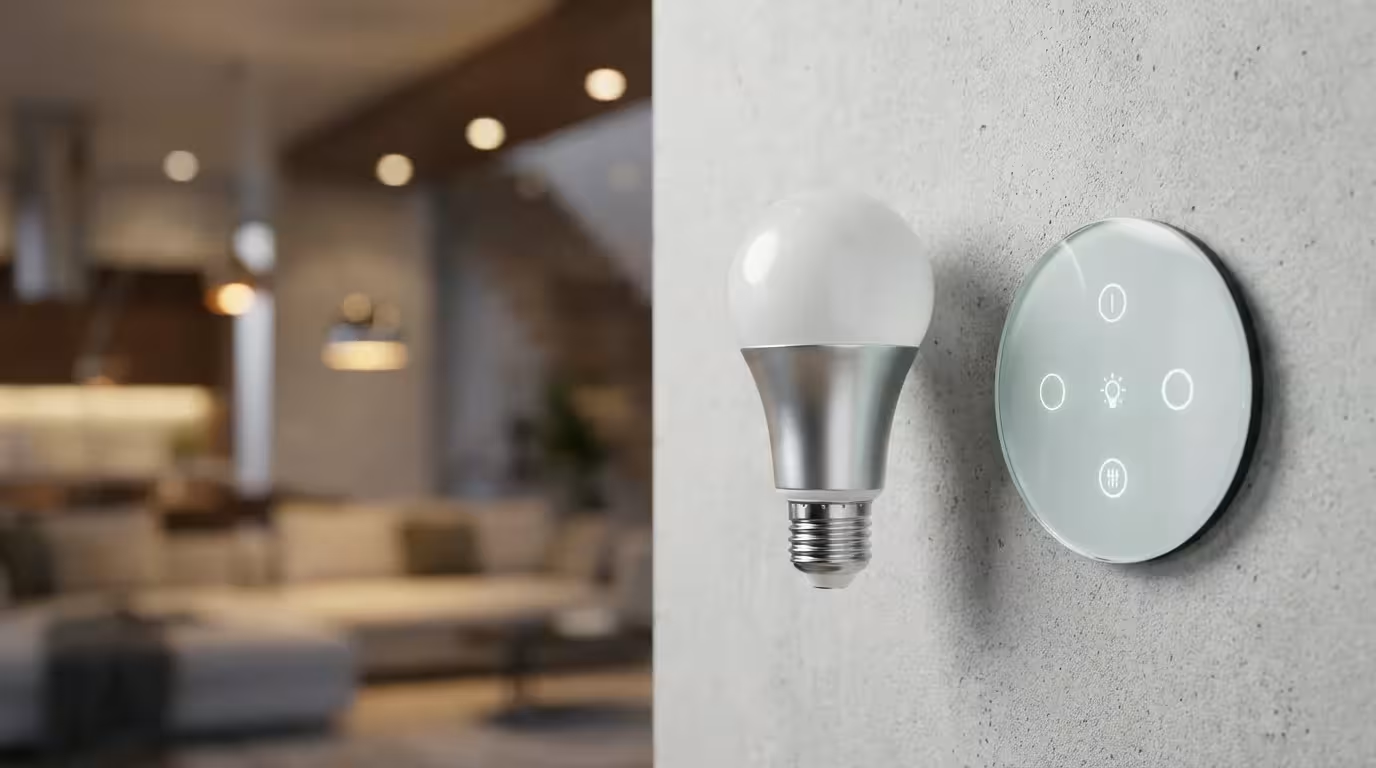
You generally face a choice between smart bulbs and smart switches. Smart bulbs (like Philips Hue or LIFX) offer color and temperature control, which is essential for mood lighting. Smart switches control your existing dumb bulbs; they are cheaper for distinct zones with many pot lights but usually lack color temperature adjustment.
For the purposes of mood and productivity, smart bulbs are superior because they allow you to change the Kelvin temperature. However, you should pair them with smart remotes or buttons so you don’t have to use your phone to turn on the lights.
Types of Fixtures
To create a truly immersive environment, mix different light sources:
- A19/E26 Bulbs: The standard shape for lamps and ceiling fixtures.
- BR30 Bulbs: Floodlights typically used in recessed ceiling cans.
- Light Strips: Adhesive LED strips perfect for indirect accent lighting behind TVs, under cabinets, or along baseboards.
- Light Bars: Directional lights used to wash walls with color or provide bias lighting behind monitors.
Pro Tip: When selecting bulbs, look for a high CRI (Color Rendering Index) of 90 or above. This ensures colors in your home look vibrant and accurate rather than washed out.

The Home Office: Lighting for Focus and Productivity
Poor lighting in a workspace leads to eye strain, headaches, and a drop in energy by mid-afternoon. Your goal here is “productivity lighting”—bright, cool illumination that keeps you alert.
The Strategy: Cool to Warm Transition
During work hours (9:00 AM to 4:00 PM), set your overhead lights to a cool white (approximately 5500K). This mimics daylight and keeps your energy levels high. As the workday concludes, automate the lights to shift to a warmer tone (3000K). This visual cue signals your brain that the workday is ending, helping you disconnect mentally.
Task and Bias Lighting
Overhead lights often cause glare on computer screens. Supplement your ceiling lights with specific task lighting:
- Desk Lamp: Use an adjustable smart lamp directed at your paperwork, not your screen. Keep this slightly warmer than your overheads to reduce harshness.
- Bias Lighting: Place a light strip or light bar behind your monitor, facing the wall. This reduces the contrast between your bright screen and the dark room behind it, significantly reducing eye strain. According to Wirecutter, proper lighting layers are essential for long-term comfort in home workspaces.
The Living Room: Layering for Versatility
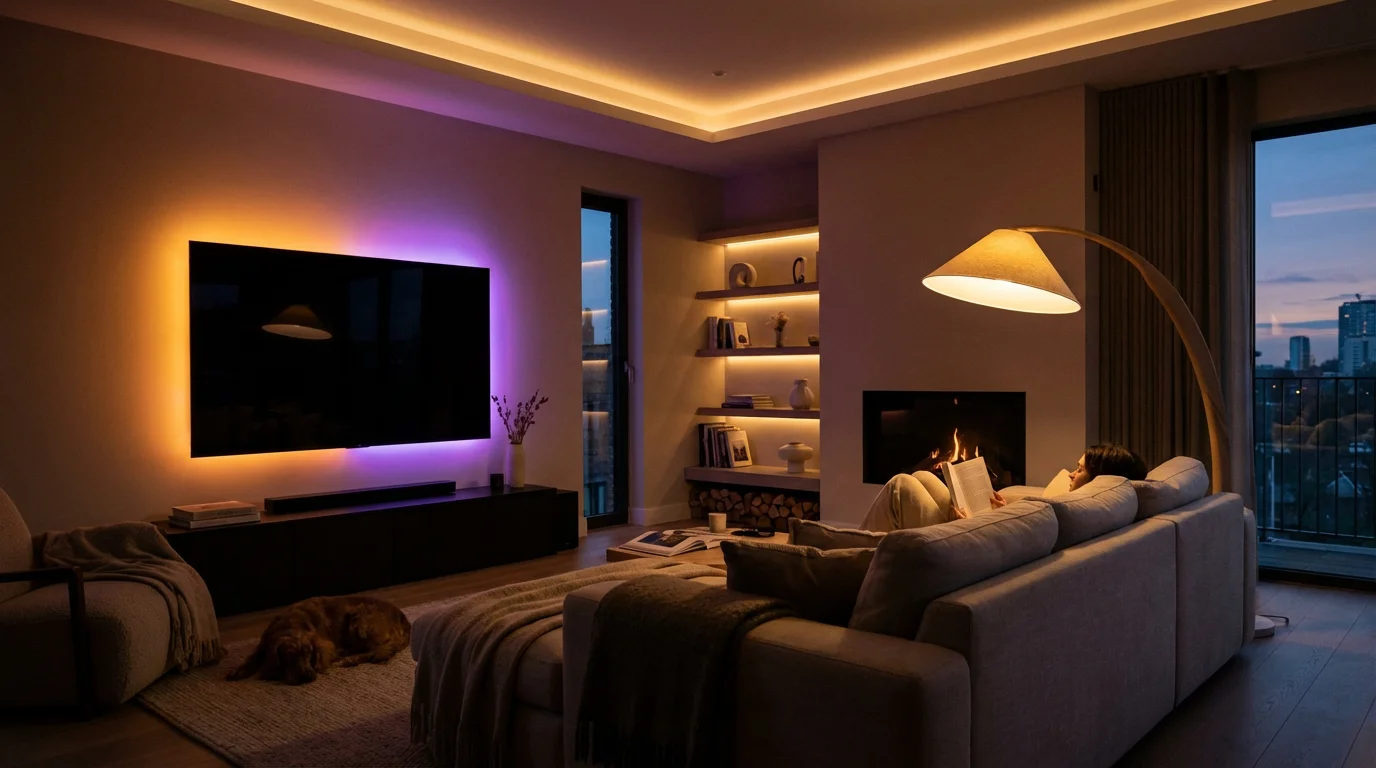
The living room is a multi-purpose space. You might read a book, watch a movie, or host a game night in the same spot. A single overhead light cannot accommodate all these activities. You need “scenes”—preset combinations of brightness and color.
To take your entertainment to the next level, learn how to sync your smart lights with music and movies for a reactive visual experience.
Creating Scenes
Most smart lighting apps allow you to save scenes. Create these three essentials for your living room:
- “Read” Scene: High brightness, warm-neutral white (3500K) in lamps next to seating areas; overhead lights dimmed to 30%.
- “Movie” Scene: Overhead lights off. Light strips behind the TV set to a dim glow (10-20%) to reduce eye strain without causing glare. If you use color bulbs, a deep blue or purple hue can enhance the cinematic feel.
- “Relax” Scene: A cozy, very warm white (2200K) at 50% brightness. This effectively turns your living room into a sunset environment, perfect for socializing or unwinding before bed.
Accent Lighting
Use light strips to highlight architectural features. Running a strip along the underside of a media console or behind a bookshelf adds depth to the room. This indirect light is softer and more pleasing than direct downlighting.
The Kitchen and Dining: from Prep to Parties
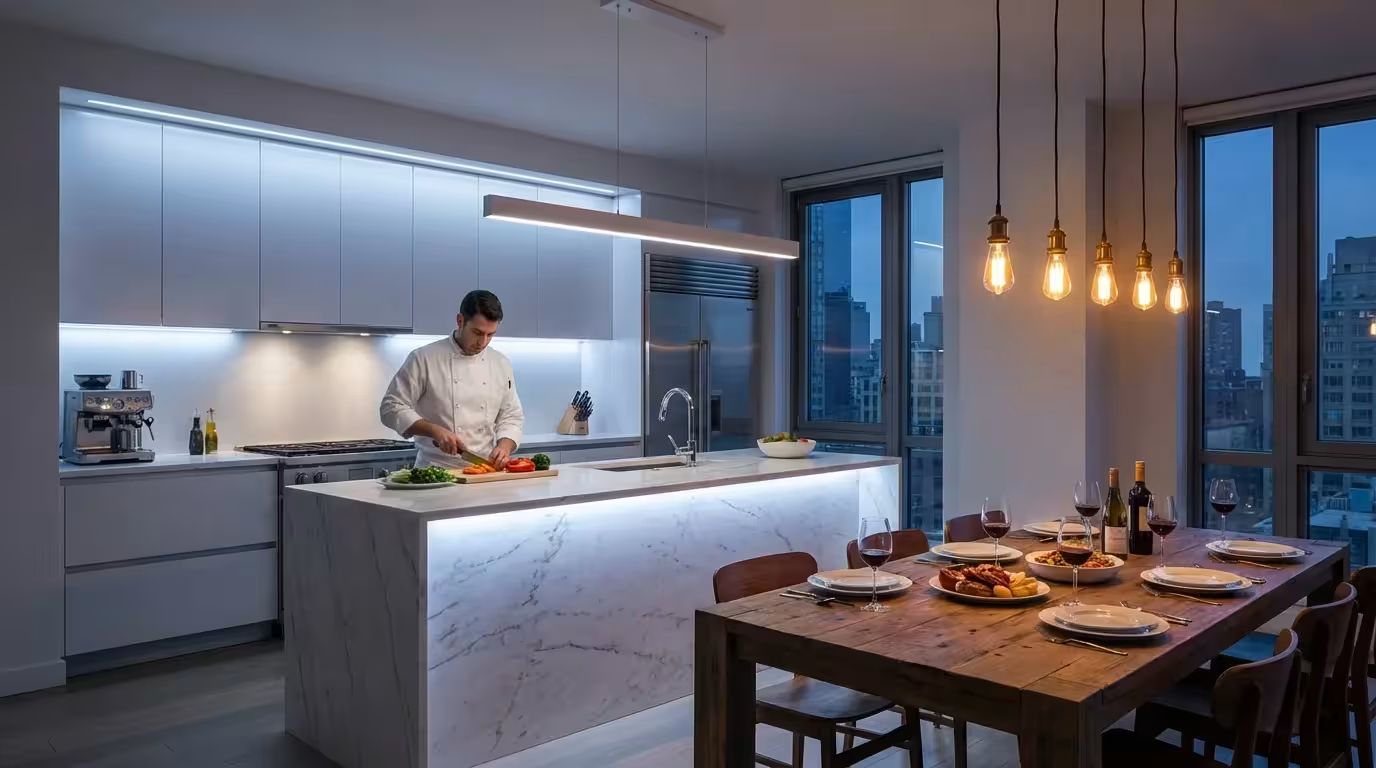
The kitchen requires high-utility lighting for safety, while the dining area demands ambiance. Smart lighting bridges this gap, allowing an open-concept kitchen to shift modes instantly.
Functional Task Lighting
When you are chopping vegetables or reading recipes, you need high visibility. Shadowy counters are dangerous. Install smart light strips under your upper cabinets. Set these to a bright, neutral white (4000K) whenever you are cooking. This provides shadow-free illumination exactly where your hands are working.
Dining Ambiance
Once the food is prepped, the bright “laboratory” look kills the mood. Automate your kitchen lights to dim and warm up at mealtime. For the dining table, use a dimmable smart bulb in the pendant fixture.
Try this automation: If your smart home ecosystem supports it, create a “Dinner” button. One press turns off the under-cabinet lights, dims the kitchen overheads to 20%, and sets the dining table light to a warm, inviting 2500K.
The Bedroom: Optimizing Sleep Hygiene
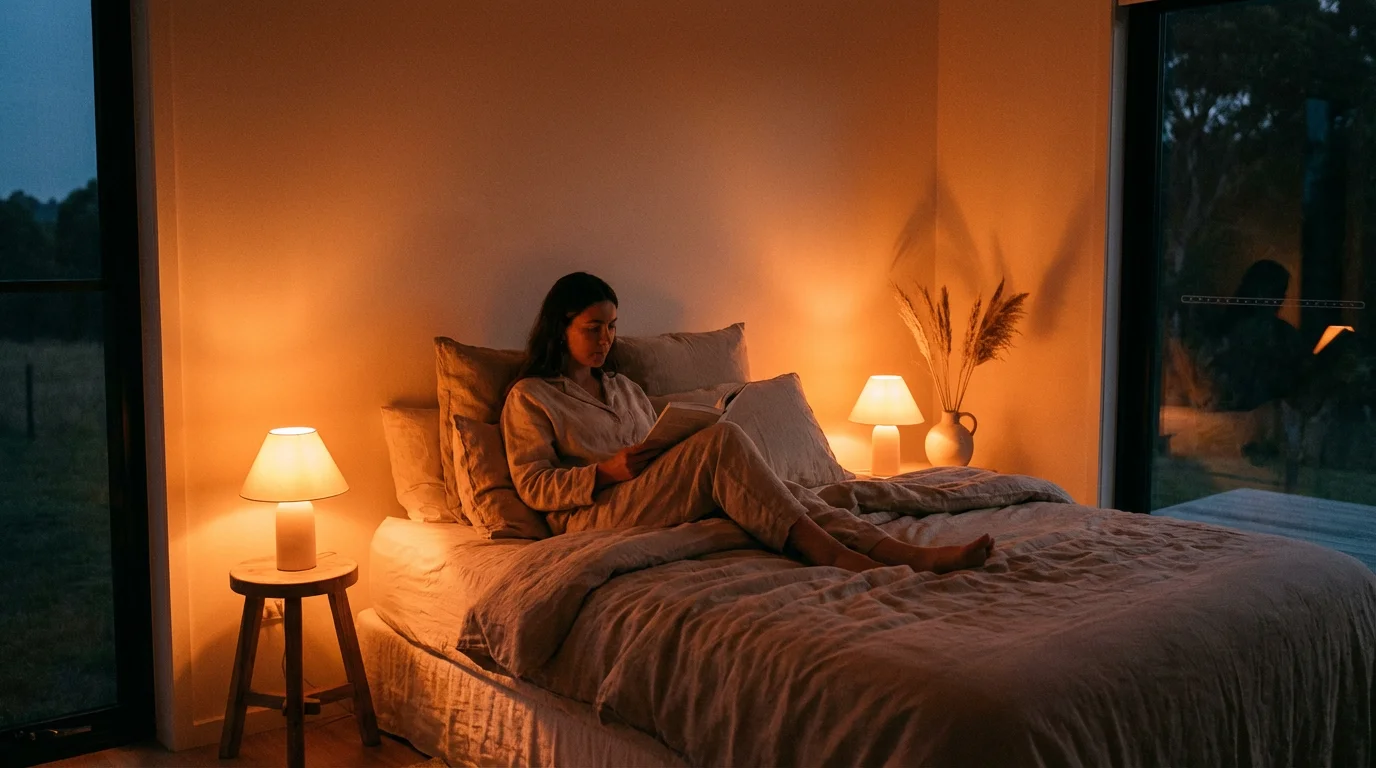
Your bedroom lighting should prioritize circadian health above all else. Exposure to bright, cold light late at night suppresses melatonin, the hormone that regulates sleep.
The Wind-Down Routine
Program your bedroom lights to automatically fade to a warm amber color starting 30 minutes before your target bedtime. If you use Philips Hue or similar ecosystems, look for “candlelight” settings. This simulates firelight, which humans have evolved to sleep around.
Sunrise Simulation
Waking up to a blaring alarm clock triggers cortisol (stress). A sunrise simulation is a gentler alternative. Schedule your smart lights to fade in gradually over 20 minutes before your alarm goes off. They should start at a deep red/orange and transition to a bright morning white. This helps you wake up naturally and feel more alert.
Nightlight Automation
Getting up for a glass of water shouldn’t blind you. Use a motion sensor placed under the bed or near the door. Program it so that between 11:00 PM and 6:00 AM, motion triggers the lights to turn on at only 1% brightness in a deep red color. Red light is the least likely to disrupt your night vision or sleep cycle.
The Bathroom: Start and End Your Day Right
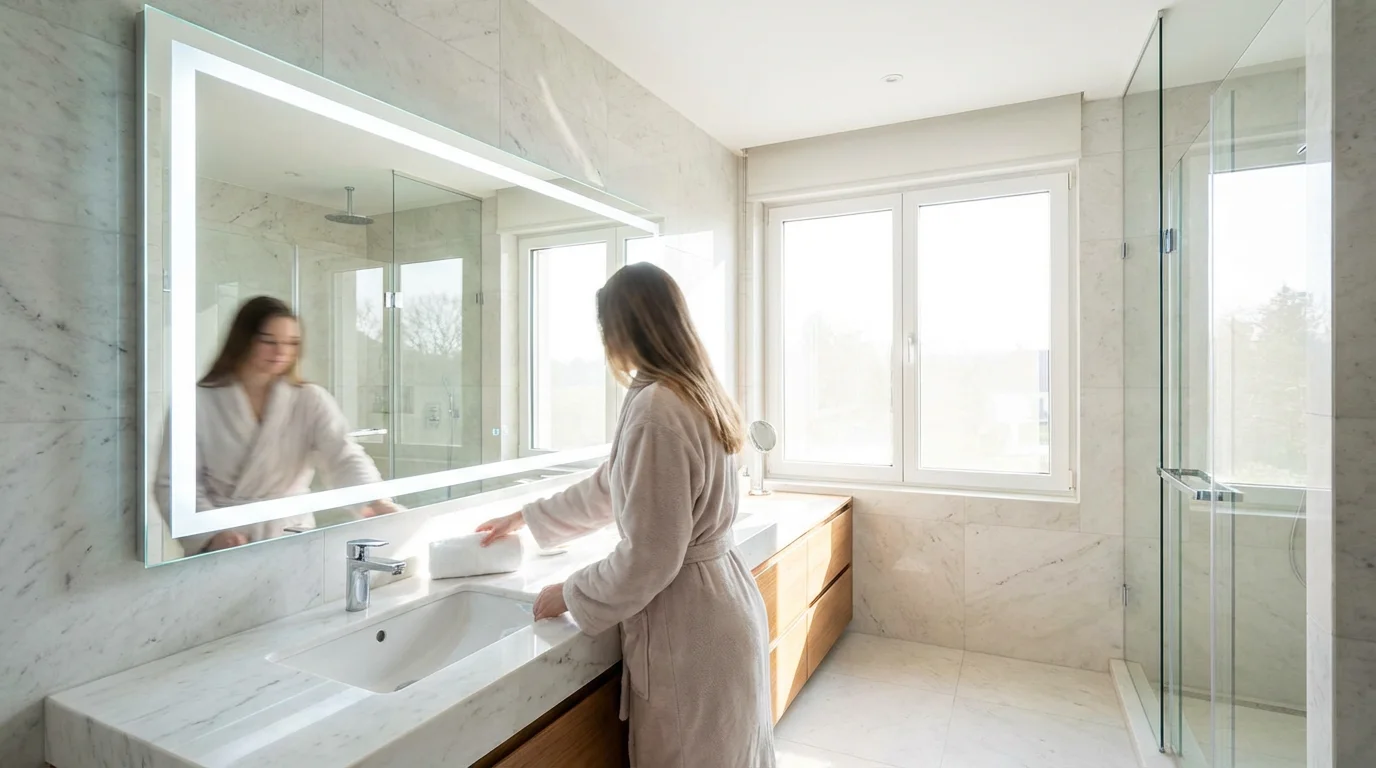
The bathroom is often the first room you visit in the morning and the last one at night. It needs a dual personality.
For more ways to streamline your start to the day, see our ultimate morning routine automation guide.
Morning Energizer
For your morning shower and grooming routine, you want high-CRI, cool white light (5000K). This helps you see clearly for shaving or applying makeup and wakes up your brain.
Evening Spa
Taking a bright white shower before bed is jarring. Create an “Evening Bath” scene where the main overhead lights turn off, and a soft accent light (perhaps a strip behind the mirror or a waterproof niche light) glows warm and dim. This maintains the sleepy state you cultivated in the living room.
Automation and Scheduling Strategies
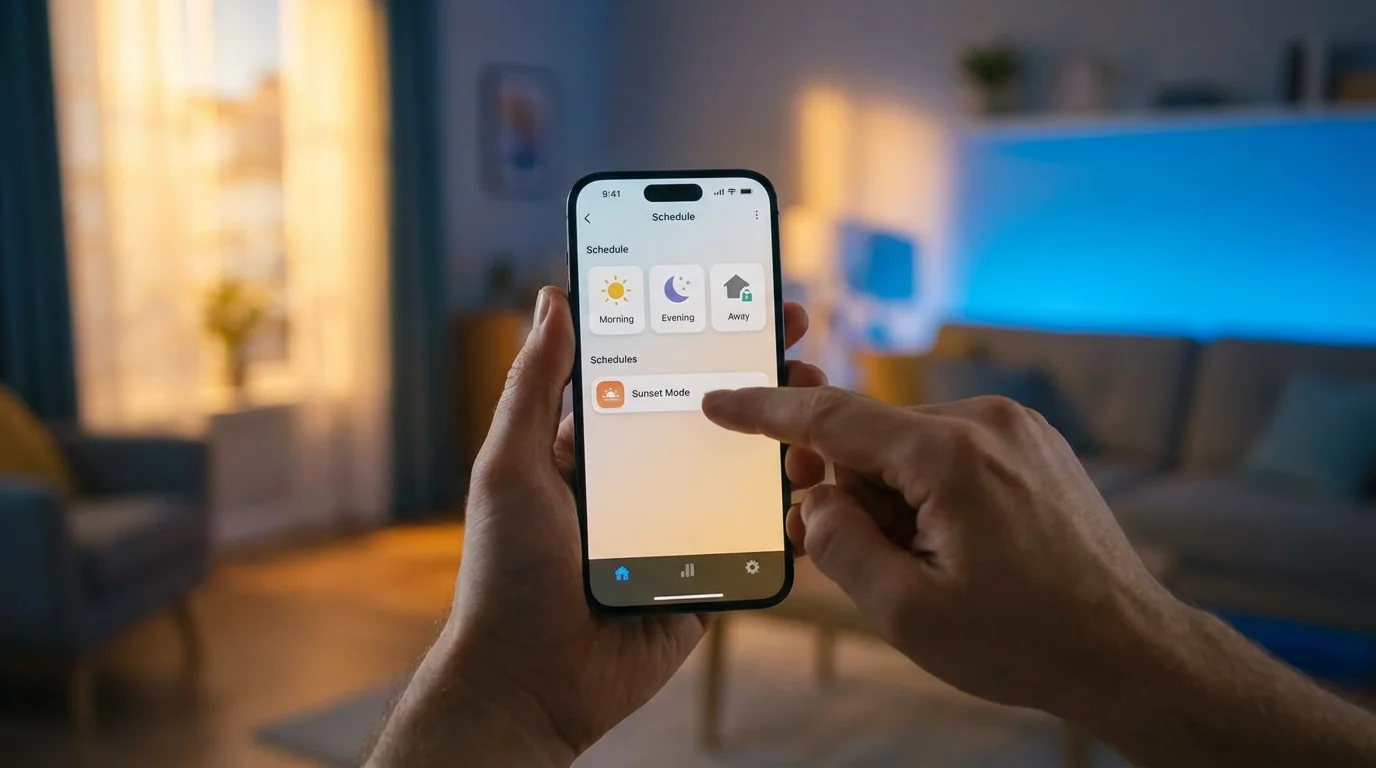
The best smart home is one you don’t have to micromanage. If you are constantly opening an app to change lights, you are doing it wrong. Use these methods to make your lighting truly “smart.”
Adaptive Lighting Features
Major platforms now offer built-in circadian features. Apple HomeKit has “Adaptive Lighting,” and Philips Hue offers “Natural Light” scenes. These features automatically adjust the color temperature of your supported bulbs throughout the day—cool at noon, warm at sunset—without you setting individual schedules.
Motion and Presence Sensors
Install motion sensors in high-traffic areas like hallways, laundry rooms, and pantries. Set them to turn lights off after 5 minutes of no motion. This saves energy and adds convenience. For the living room or office, consider “presence” sensors (often using mmWave radar), which can detect you even if you are sitting still, preventing the lights from turning off while you read.
Voice Assistants
Connect your lighting ecosystem to Amazon Alexa, Google Home, or Apple Siri. This is vital for “context switching.” It is much easier to say, “Hey Google, turn on Movie Time,” than to find your phone, unlock it, open the app, and select a scene.
By implementing these room-by-room strategies, you transform your home from a static box into a dynamic environment that supports your lifestyle. Whether you need deep focus for work or a tranquil sanctuary for sleep, smart lighting provides the flexibility to shape your space instantly.
Frequently Asked Questions
Do I need a hub for smart lighting?
It depends on the brand. Wi-Fi bulbs (like LIFX or Wyze) connect directly to your router without a hub. Zigbee or Z-Wave bulbs (like Philips Hue) require a dedicated bridge or hub. Hub-based systems are generally more reliable and faster, especially if you have more than 20 bulbs in your home.
Can smart lighting really improve my sleep?
Yes. Exposure to warm, dim light in the evening allows your body to produce melatonin naturally. Conversely, eliminating blue-rich light (cool white) before bed prevents your brain from thinking it is still daytime. Automating this shift ensures you don’t accidentally expose yourself to energizing light right before sleep.
Does smart lighting use a lot of electricity?
No. Smart bulbs use LED technology, which is highly efficient. While they do draw a tiny amount of power (standby power) to stay connected to your network when “off,” the overall consumption is significantly lower than traditional incandescent or halogen bulbs.
What is the best color temperature for working from home?
For maximum concentration, aim for a cool white temperature between 4000K and 6000K. This spectrum mimics daylight and has been shown to improve alertness and focus. Avoid warm yellow light during work hours, as it can induce relaxation and drowsiness.
Disclaimer: This article is for informational purposes only. Smart home devices involve electrical connections and data privacy. Always follow manufacturer instructions for installation. For complex wiring or HVAC work, consult a licensed professional.


2 Comments