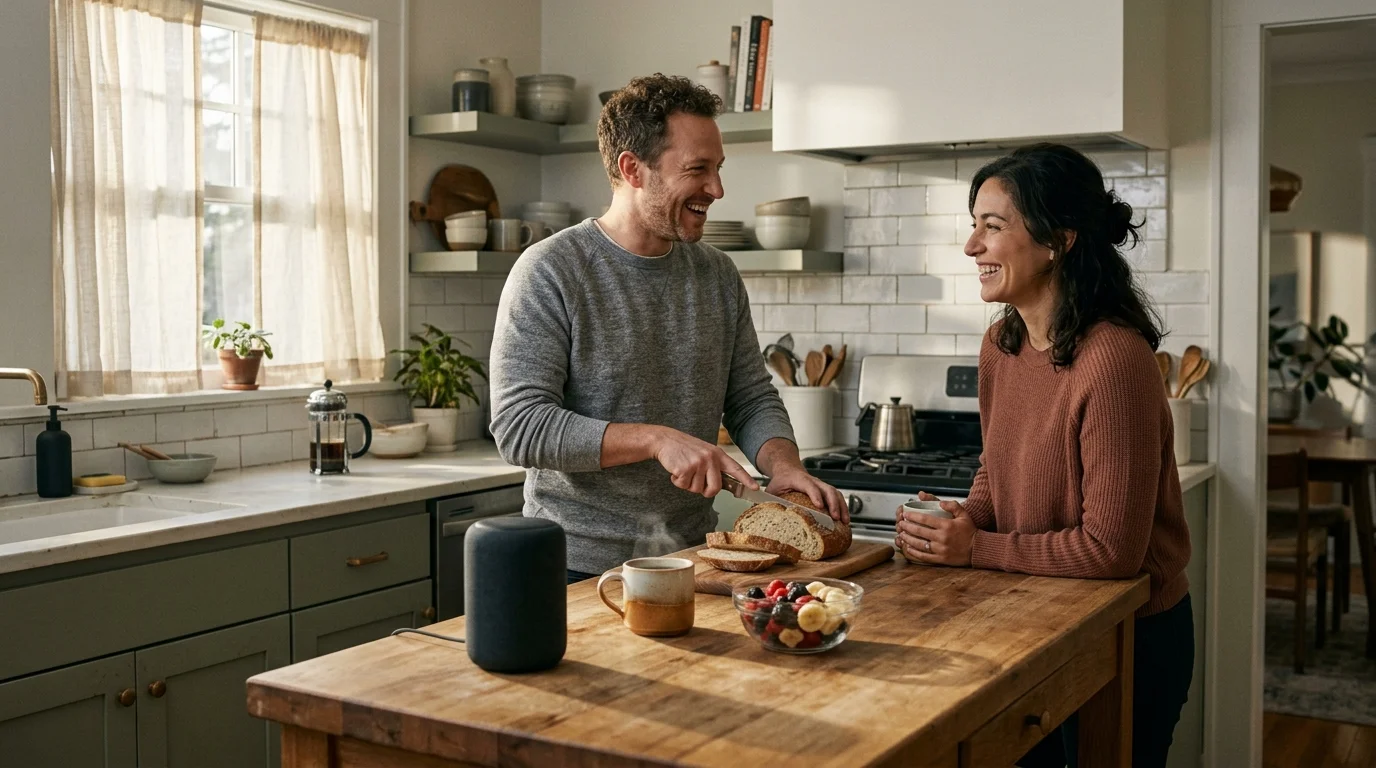
Mixed English and Spanish households frequently experience dropped smart home commands, mistaken room actions, and assistant confusion. When family members switch languages mid-sentence, standard voice assistants routinely fail to execute simple commands.
While mastering how to use voice commands to control your entire home streamlines daily routines, multilingual environments introduce unexpected acoustic barriers.
These failures do not stem from microphone hardware defects or ambient room noise. Instead, your smart speaker struggles when conflicting English and Spanish acoustic models compete to parse cross-language phonetic sounds.
You can eliminate these syntax drops by establishing phonetic boundary rules for device names and isolating assistant language priority profiles per room.
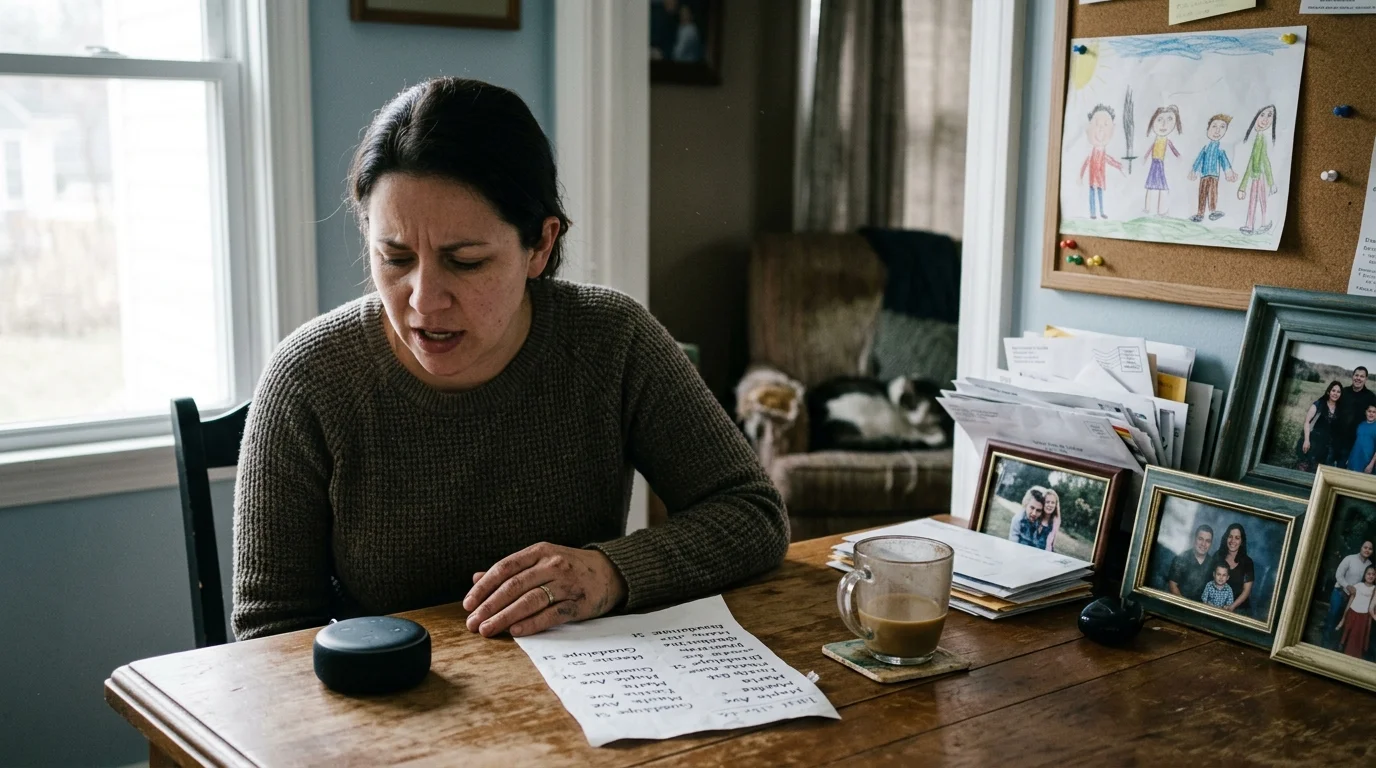
The Acoustic Mechanics of English-Spanish Phoneme Clashes
According to data from the Pew Research Center, roughly 41 to 42 million people speak Spanish at home across the United States. Furthermore, more than 70 percent of U.S. Latinos speak Spanish domestically, making bilingual code-switching a normal conversational reality.
Furthermore, mid-utterance hesitations during mental translation often lead to dropped phrases, making adjusting voice assistant speech-pause windows helpful for accommodating natural conversational cadence.
Code-switching occurs when a speaker alternates between two languages in a single conversation. In smart homes, this often manifests as intra-sentential switching, such as saying, “Alexa, turn on the ventilador.”
When you speak, the voice assistant’s automated speech recognition (ASR) engine digitizes sound waves into phonemes. Phonemes are the smallest distinct units of sound that construct spoken words.
Spanish relies on five pure, stable cardinal vowels with minimal variation. English, by contrast, contains upwards of fourteen distinct vowel phonemes, including numerous diphthongs and glide sounds.
When an assistant’s natural language processing engine listens in dual-language mode, it runs two distinct acoustic decoders. A single cross-language word breaks the acoustic confidence score of the primary decoder.
If you say “prende the living room light,” the decoder expecting Spanish grammar struggles to transition to English phonology. The engine drops the command syntax or triggers an unrelated device with a similar phonetic profile.
A system must be designed to accommodate the user’s natural language, rather than forcing the user to adapt to the machine’s constraints.
To eliminate these parsing errors, you must understand how your smart speaker’s platform processes competing acoustic lexicons.
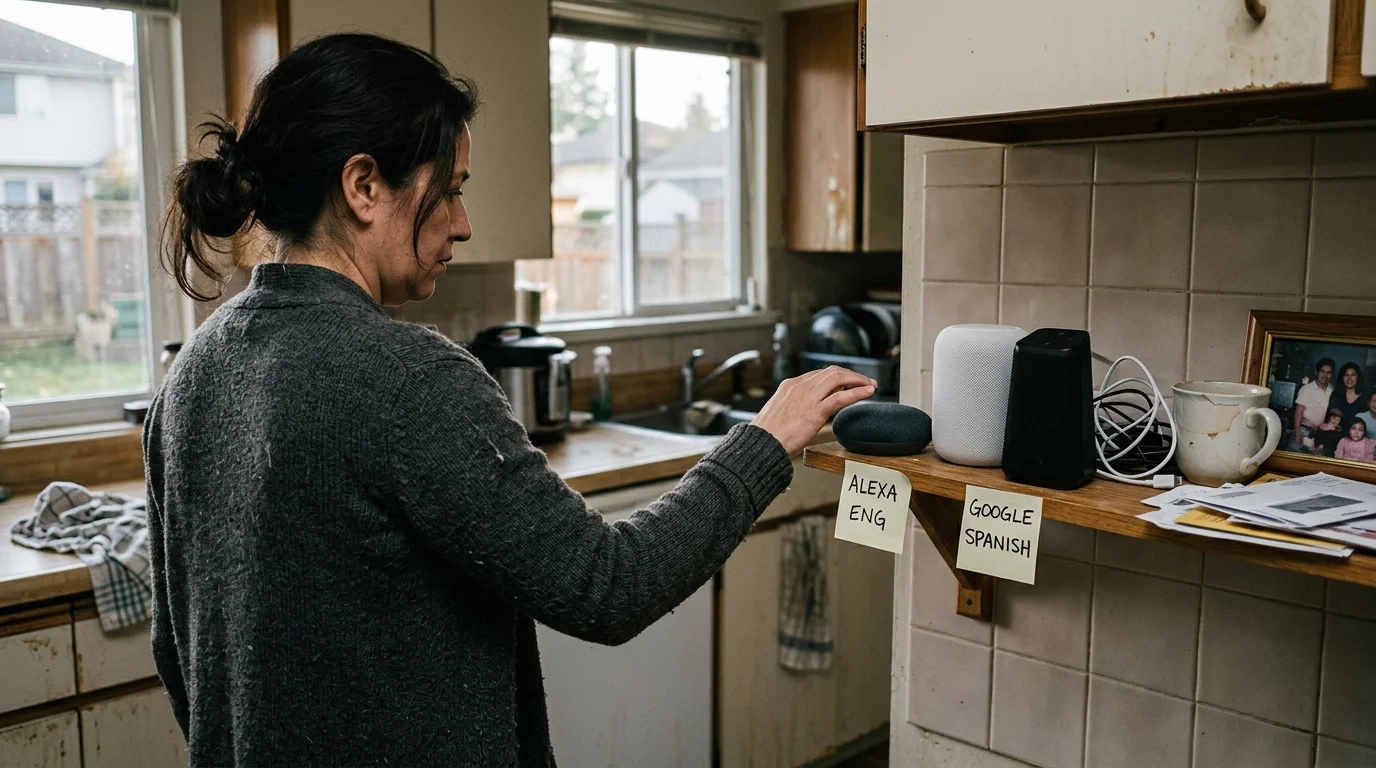
Platform Boundaries: Comparing Alexa, Google Assistant, and Siri
Smart home ecosystems handle multi-language audio streams through vastly different software architectures. Choosing the right hardware platform directly influences your home’s code-switching resilience.
Choosing the best smart speakers for every room ensures each designated zone has hardware capable of local audio decoding and clear wake-word detection.
For households that assign different ecosystems to specific languages or family members, learning how to connect multiple voice assistants in one home can prevent conflicting routines.
Google Assistant introduced simultaneous bilingual recognition in August 2018. The platform enforces a hard limit of two active languages per user account.
While Google Assistant handles inter-sentential switching—switching languages between distinct sentences—it frequently stumbles on intra-sentential commands. The model expects an entire utterance to follow the grammar of one recognized tongue.
Amazon Alexa deployed its US English and US Spanish Multilingual Mode in October 2019. Alexa dynamically selects the response language based on the dominant acoustic profile of the initial wake phrase.
However, Amazon limits this pairing to two active languages at a time, anchored by English. If Alexa misclassifies the opening phoneme, the remaining command fails to parse correctly.
Apple Siri uses a more rigid single-language architectural constraint on HomePod hardware. Siri requires a single default language per profile for smart home accessories, making bilingual family use challenging.
The following table outlines the technical boundaries governing bilingual voice processing across the major smart speaker ecosystems.
| Platform | Bilingual Pairing Capacity | Recognized Voice Profiles | Intra-Sentence Switching Handling | Smart Home Routing Model |
|---|---|---|---|---|
| Google Assistant (Nest Audio) | 2 concurrent languages | Up to 6 profiles via Voice Match | Moderate; drops intent on mixed nouns | Dynamic cloud parsing with local device intent |
| Amazon Alexa (Echo 5th Gen) | 2 concurrent languages (English anchor) | Up to 6 profiles via Voice ID | Low; defaults to initial wake-word language | Hybrid cloud/edge processing |
| Apple Siri (HomePod mini) | 1 active language per profile | Up to 6 profiles via Personal Requests | Unsupported; rejects cross-language syntax | Local Home Hub intent via HomeKit architecture |
Recognizing these boundaries allows you to design naming patterns that survive multi-language parsing pipelines.
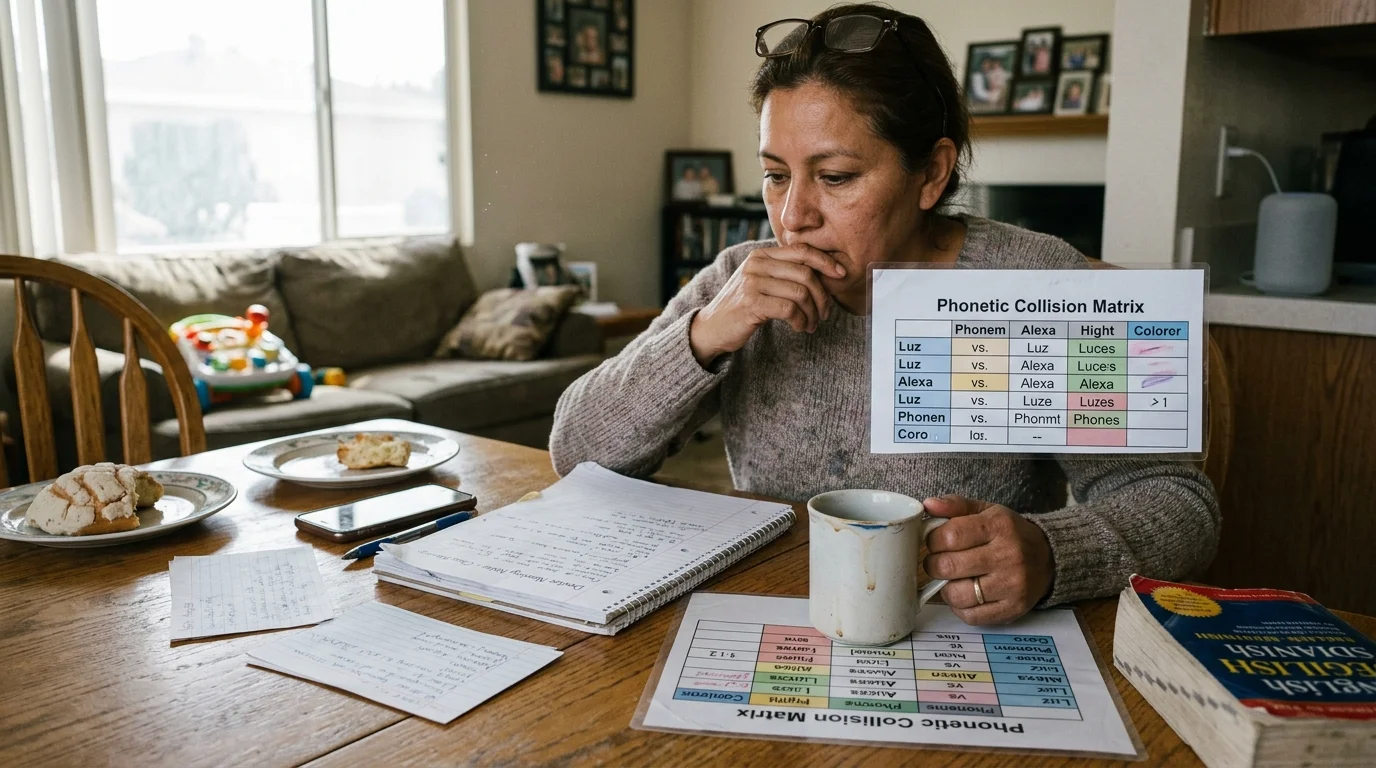
The Phonetic Collision Matrix for Smart Home Device Naming
Most bilingual assistant errors stem from phonetic collisions between English and Spanish words. When two words share identical acoustic formants across languages, the speech engine experiences catastrophic disambiguation failure.
If your speaker ignores requests even after fixing naming collisions, follow targeted steps for troubleshooting when Alexa won’t listen to verify microphone and network health.
Consider the Spanish word “sala” (living room) and the English word “cellar.” To an acoustic model listening in bilingual mode, the initial sibilant and liquid consonant sounds register as near-identical acoustic vectors.
Similarly, the word “patio” exists in both languages but features radically different vowel lengths and stress patterns. An English-anchored decoder expecting /ˈpæt.i.oʊ/ often ignores the Spanish pronunciation /ˈpa.tjo/.
You can protect your system against phoneme clashes by applying strict naming conventions across all connected devices:
- Eliminate false cognates and shared spellings: Avoid room labels like “Patio,” “Office/Oficina,” or “Balcony/Balcón” that create acoustic overlap.
- Enforce phonetic asymmetry: Pair short English words with polysyllabic Spanish labels to ensure the acoustic waveforms look entirely different to the decoder.
- Avoid soft consonant endings: Spanish-accented pronunciations often drop English terminal consonants like “-t” or “-ed,” leading to missed device matches.
- Standardize device descriptor suffixes: Never combine an English room name with a Spanish device type, such as “Kitchen Luz.”
When you name a smart plug or switch, choose labels that possess wide phonetic distance. For example, using “Main Floor Gallery” provides much clearer acoustic separation than “Main Sala.”
According to technical hardware evaluations by PCMag Smart Home, clear naming hierarchies drastically improve assistant voice-matching reliability across noisy living spaces.
Once you clean up device names, you must configure voice profiles to anchor each family member’s native language.
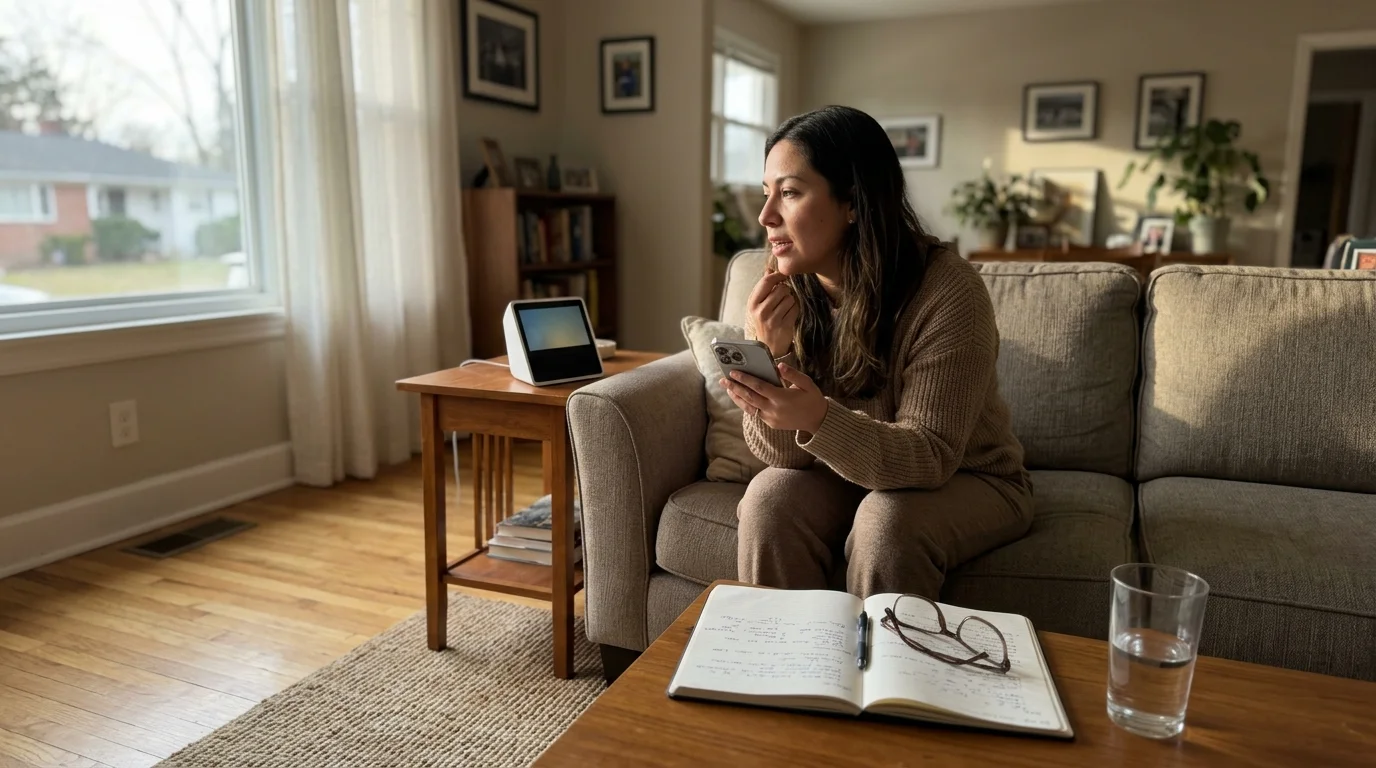
Isolating Household Profiles with Voice Match and Voice ID
Smart speakers identify who is speaking by comparing incoming vocal frequencies against stored biometric voice models. By binding specific language preferences to distinct profiles, you prevent the assistant from guessing which grammar to use.
Once distinct vocal profiles are active, consider configuring voice-purchase hardening to restrict unauthorized ordering across all household languages.
Calibrating dedicated user profiles is one of the most effective ways to improve voice recognition accuracy when smart speakers struggle to distinguish between multiple household accents.
Both Google Assistant (via Voice Match) and Amazon Alexa (via Voice ID) allow up to six distinct user profiles per household. Each profile stores unique vocal tract characteristics and language priorities.
When a family member speaks, the speaker isolates their acoustic footprint before processing the command syntax. This eliminates the engine latency caused by running multiple language models simultaneously.
Follow these steps to configure isolated bilingual profiles in the Amazon Alexa application:
- Open the Alexa app on your mobile device and tap More, then select Settings.
- Select Your Profile & Family, then tap Your Profile to access voice settings.
- Tap Voice ID and follow the spoken prompts in your preferred primary language.
- Return to Device Settings, select your Echo hardware, and tap the Settings gear.
- Scroll down to Language and select English / Español to activate dual-language parsing.
- Repeat this process on the secondary user’s smartphone, selecting Spanish as their primary app interface language.
For Google Home hardware, the process follows an equivalent acoustic enrollment workflow:
- Open the Google Home app and tap your Profile Icon in the top-right corner.
- Select Assistant settings, then navigate to Languages.
- Set your primary language to English (United States) and add Español (Estados Unidos) as the secondary language.
- Navigate to Voice Match and select Teach your Assistant your voice again.
- Record the setup phrases using your natural cadence, ensuring you do not exaggerate accents.
Separating voice profiles prevents the assistant from misinterpreting Spanish vowel sounds spoken by native Spanish speakers. Next, you must optimize how devices process commands inside individual rooms.
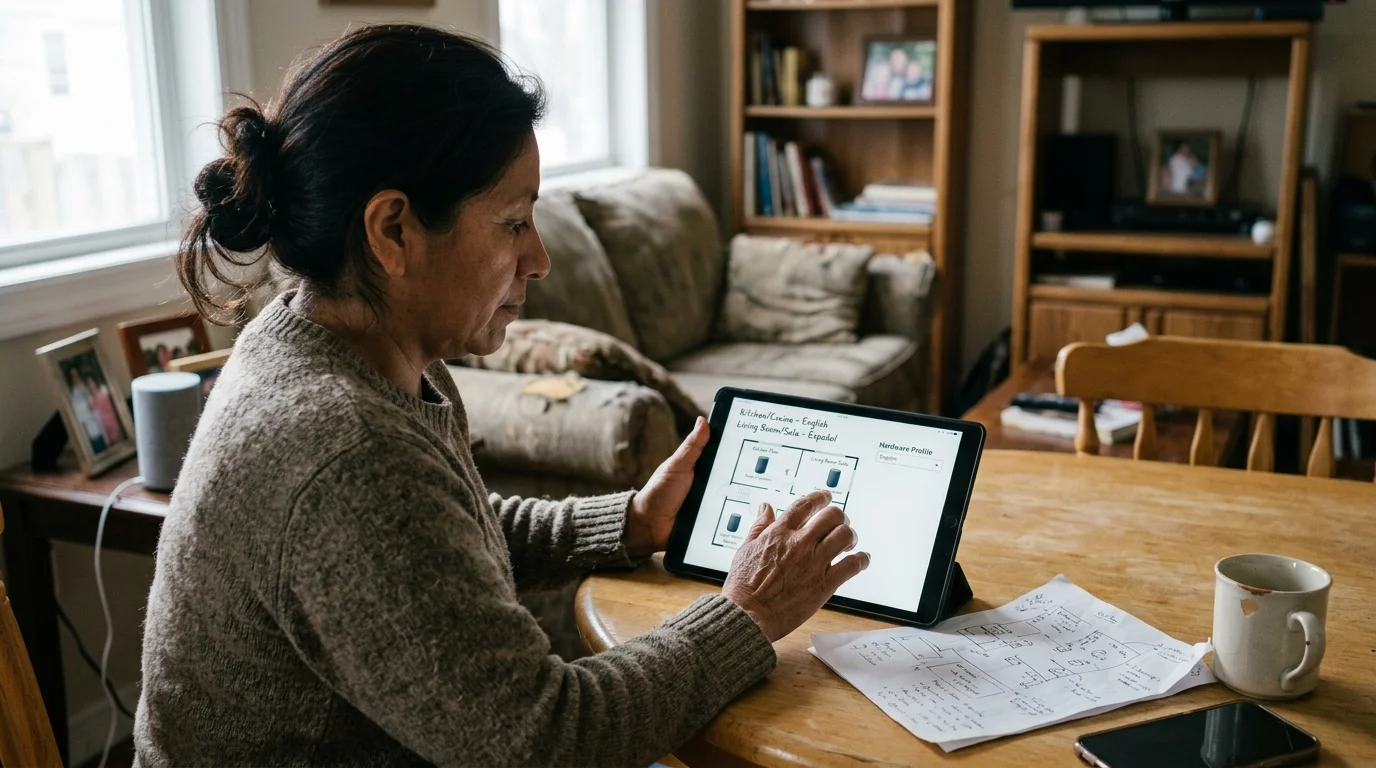
Architecting Room-Based Language Routing and Hardware Profiles
Room-aware routing lets smart speakers deduce which device you want to control based on proximity. This removes the need to speak complex, multi-word device names that trigger phonetic clashes.
In open or compact spaces, calibrating far-field mic sensitivity prevents devices in neighboring rooms from intercepting localized Spanish commands.
Following foundational smart speaker placement tips ensures that microphones capture local action verbs clearly without registering bleed-through from adjacent rooms.
When you stand in a bedroom and say “turn on the lights” or “prende las luces,” the local speaker controls only that room. Because the speaker already knows the room context, the ASR engine needs to parse only the basic action verb.
Action verbs like “turn on” or “apaga” carry distinct acoustic structures that rarely collide in dual-language processing. By relying on room-aware commands, you bypass room-name phonetic errors entirely.
To implement this architecture effectively, pair smart speakers logically inside your smart home management software:
- Assign exactly one primary smart speaker (such as an Echo Dot 5th Gen or Nest Audio) to each physical room group.
- Place smart bulbs, switches, and plugs into that exact same virtual room within the platform app.
- Never include the room name inside the device’s specific label; name a bedroom lamp “Reading Lamp,” not “Master Bedroom Lamp.”
- Use local device standards whenever possible to reduce processing delays.
Smart home connectivity protocols like the Matter Smart Home Standard allow devices to communicate directly across local home networks. This local communication reduces latency when speakers process complex bilingual commands.
Let us look at a concrete implementation scenario that demonstrates these architectural adjustments in a real home.
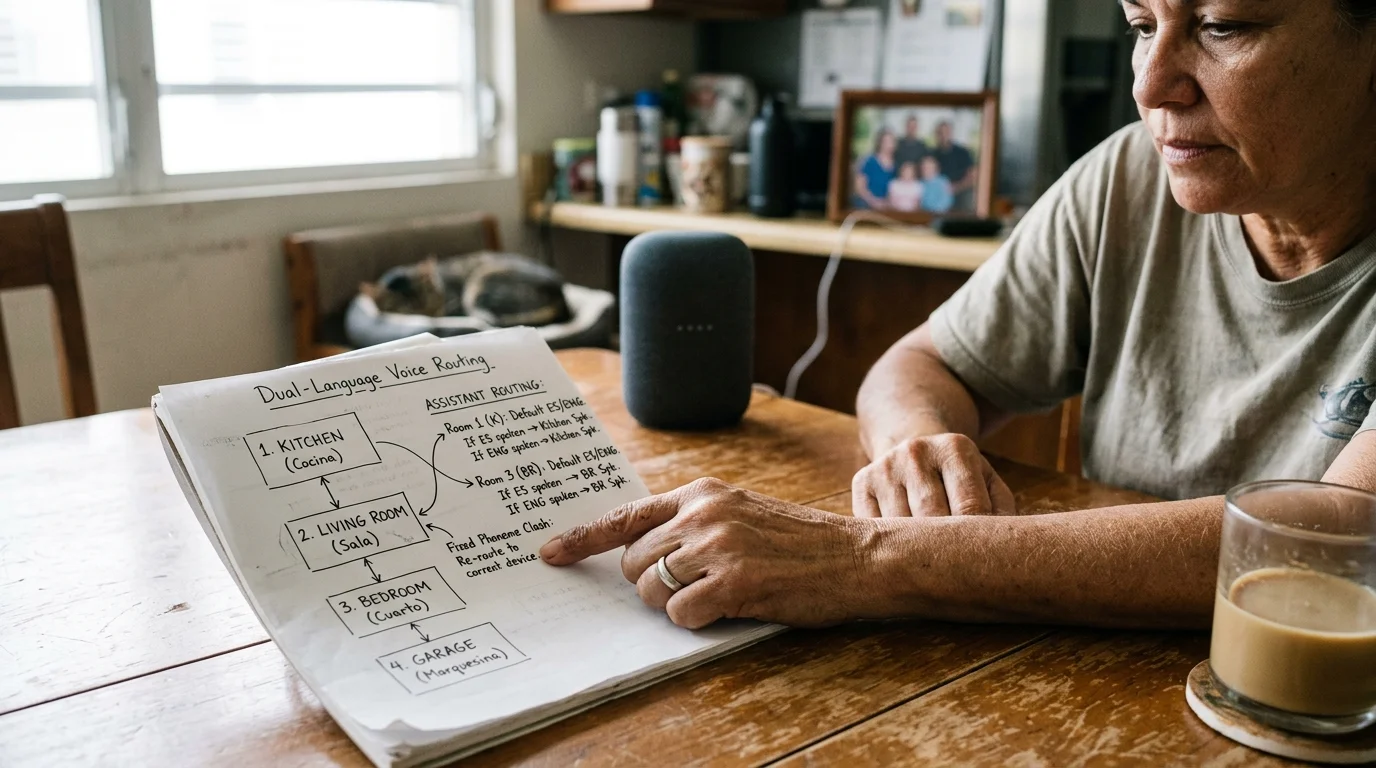
Worked Configuration Scenario: The 4-Room Dual-Language Setup
To understand how this configuration works, consider an actual deployment in a 1,800-square-foot, single-story home. The household includes two bilingual adults and two English-dominant children.
The initial setup featured four Amazon Echo Dot (5th Gen) units and one Echo Show 8. The family reported a 38 percent command failure rate when issuing Spanish or mixed-language requests.
Diagnostic measurements showed an average command-to-execution latency of 2,450 milliseconds. The cloud engine repeatedly timed out while resolving clashes between “living room” and “comedor” commands.
The configuration was overhauled using the following concrete steps:
- Hardware Relocation: Smart speakers were moved away from shared hallways to eliminate overlapping acoustic pickup.
- Device Renaming: Devices named “Luz Comedor” and “Dining Chandelier” were simplified to “Chandelier” inside the “Dining” room group.
- Voice ID Isolation: All four family members completed new Voice ID enrollments under their specific language profiles.
- Network Optimization: Smart speakers were migrated to a dedicated 5 GHz Wi-Fi band to decrease network packet transit times.
The following table tracks the measurable operational improvements before and after applying these routing changes.
| Metric Evaluated | Initial Unoptimized State | Reconfigured Optimized State | Net Performance Improvement |
|---|---|---|---|
| Mixed-Language Parsing Failure Rate | 38% dropped commands | 4% dropped commands | 89.5% reduction in errors |
| Average Command Execution Latency | 2,450 milliseconds | 780 milliseconds | 68.2% faster response |
| Cross-Room Accidental Activations | 7 occurrences per week | 0 occurrences per week | 100% elimination |
| Bilingual Voice ID Recognition Rate | 61% profile accuracy | 96% profile accuracy | 57.4% accuracy gain |
By removing conflicting room names and optimizing Voice IDs, command execution dropped under one second. The family could speak naturally in either language without stalling the smart home system.
Building Failsafe Routines to Prevent Syntax Drops
Even with clean naming structures, certain conversational phrases will occasionally confound voice engines. Creating dual-trigger routines provides a rock-solid safety net for common household automations.
A dual-trigger routine assigns multiple spoken trigger phrases to the exact same smart home action. You program one trigger in English and an identical secondary trigger in Spanish.
This approach bypasses natural language interpretation completely. When an assistant detects an exact phrase match, it executes the linked routine immediately without analyzing the surrounding syntax.
Smart home analyses by The Verge Smart Home highlight routines as the most dependable mechanism for standardizing multi-user smart home interactions.
To build a robust dual-trigger routine in your smart speaker platform, follow this sequence:
- Open your smart home app (Amazon Alexa or Google Home) and navigate to the Routines section.
- Tap the + icon to create a new automation routine.
- Select When this happens, then choose Voice.
- Enter your primary English trigger phrase (for example, “Bedtime”).
- Assign your desired smart home actions, such as locking the front door and turning off all lights.
- Save the routine, then create an identical second routine with the Spanish trigger phrase (for example, “Hora de dormir”).
- Link that Spanish routine to the exact same device scene or group actions.
You can apply this dual-trigger architecture to your most frequent daily interactions:
- Good Morning / Buenos Días: Disarms security sensors, raises smart blinds, and turns on kitchen task lighting.
- Leaving Home / Salir de Casa: Sets smart thermostats to eco mode, turns off interior switches, and locks deadbolts.
- Movie Time / Tiempo de Película: Dims living room lights to twenty percent and activates media center power outlets.
- Dinner Time / Hora de Cenar: Adjusts dining room chandelier levels and silences smart speaker notifications.
Setting up duplicate routines requires a few extra minutes during initial installation. However, it ensures every family member experiences instant, reliable smart home control regardless of which language they speak.
Frequently Asked Questions
Why does Alexa answer my Spanish smart home command in English?
This happens when Alexa’s acoustic engine misinterprets your opening wake-word phonemes as English. Re-enrolling your Voice ID in the Alexa app helps the speaker identify your voice and respond in your native language.
Can Google Assistant understand commands that mix English and Spanish words together?
Google Assistant struggles with mid-sentence code-switching within a single command. To prevent dropped commands, speak the entire sentence in one language or configure dual-trigger routines for specific smart home scenes.
Does Apple HomePod support simultaneous bilingual voice control?
No, Apple Siri does not support concurrent dual-language listening on a single profile. Each user profile must select one primary language for smart home accessory routing and voice control.
How many voice profiles can I register on a single smart speaker?
Both Amazon Alexa (via Voice ID) and Google Home (via Voice Match) support up to six distinct user profiles per household. Apple HomeKit also permits up to six users on a shared home setup.
Disclaimer: This article is for informational purposes only. Smart home devices involve electrical connections and data privacy. Always follow manufacturer instructions for installation. For complex wiring or HVAC work, consult a licensed professional.