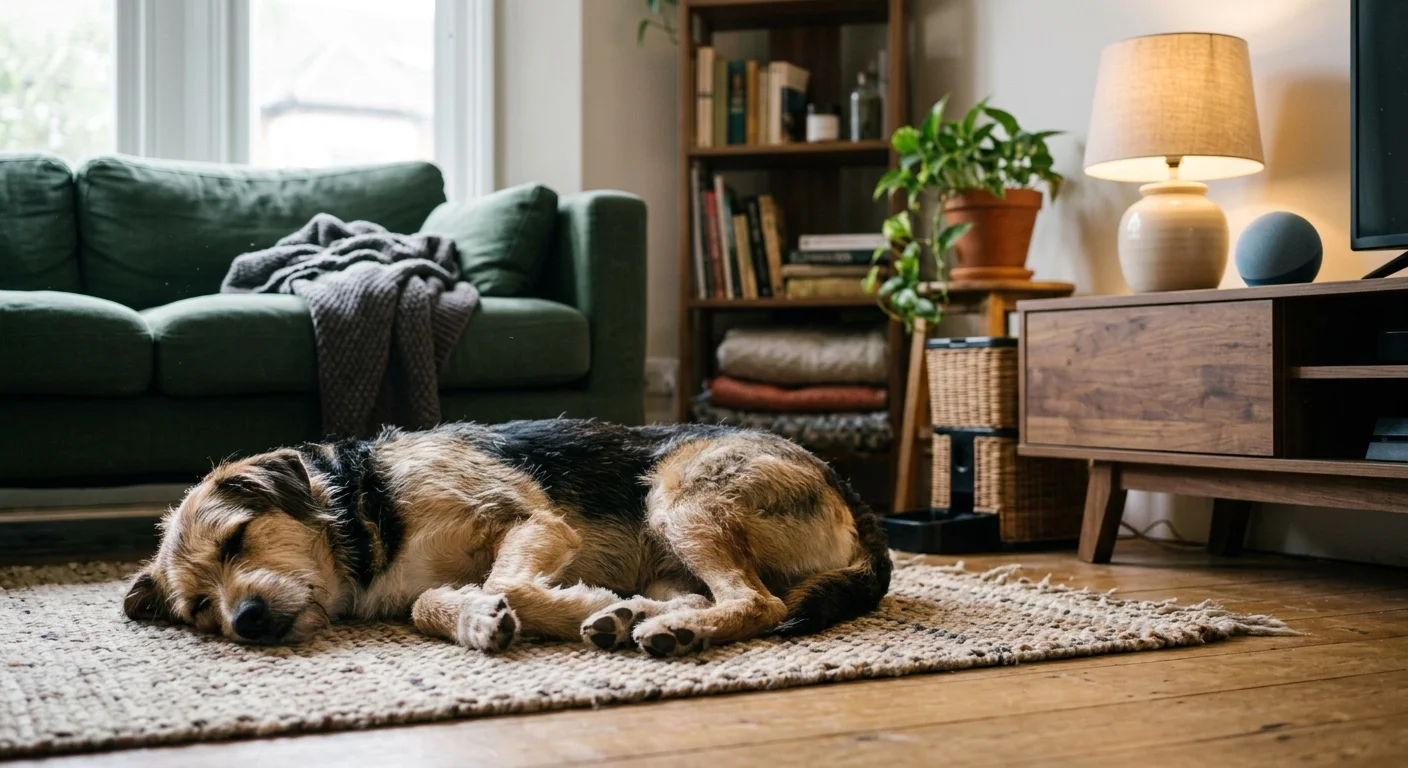
Leaving your dog alone for a four-hour work window shouldn’t trigger an escalating panic spiral of pacing and distress barking. You can silence this destructive loop by building an automated, decibel-responsive calming sequence in your living room.
Unlike static white-noise machines that dogs quickly ignore, this system chains decibel-triggered acoustic masking, television visual distraction, and smart treat dispensing when barking persists over three minutes. It breaks canine distress loops without requiring your active intervention.
By staggering responses across a calibrated escalation window, you prevent sound habituation while rewarding settled behavior rather than vocal panic.
Understanding Canine Distress Thresholds
Between 13% and 28% of companion dogs suffer from separation-related distress, according to veterinary behavioral surveys. These behavioral challenges account for 20% to 40% of cases evaluated by veterinary behavior specialists.
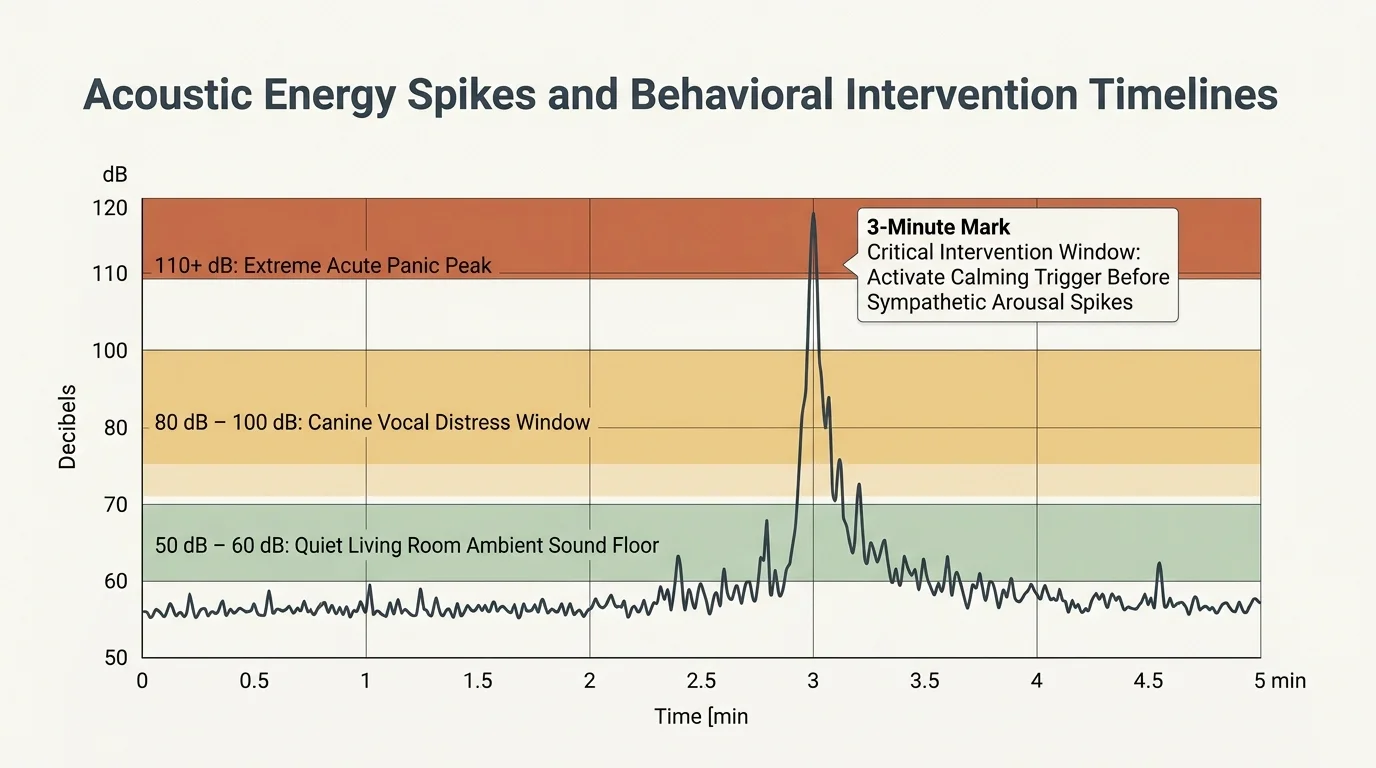
Canine vocalizations during acute panic events generate substantial acoustic energy. An average dog bark registers between 80 dB and 100 dB at close range, while extreme barks can surpass 110 dB.
In contrast, a quiet residential living room typically maintains an ambient sound floor of 50 dB to 60 dB. That 30 dB spike represents a tenfold increase in perceived loudness, signaling high sympathetic nervous system arousal.
If you intervene immediately at the very first bark, you risk accidentally reinforcing attention-seeking behavior. Waiting longer than three minutes, however, allows cortisol levels to spike into an unmanageable panic episode.
Smart home decibel monitoring detects this distress window automatically. By tracking acoustic volume and duration, your home responds dynamically before panic becomes uncontrollable.
Hardware Ecosystem and Sensor Selection
Building a responsive calming sequence requires dependable listening hardware paired with rapid-acting smart home controllers. As noted in smart platform analyses by The Verge Smart Home coverage, microphone capabilities vary widely across platforms.
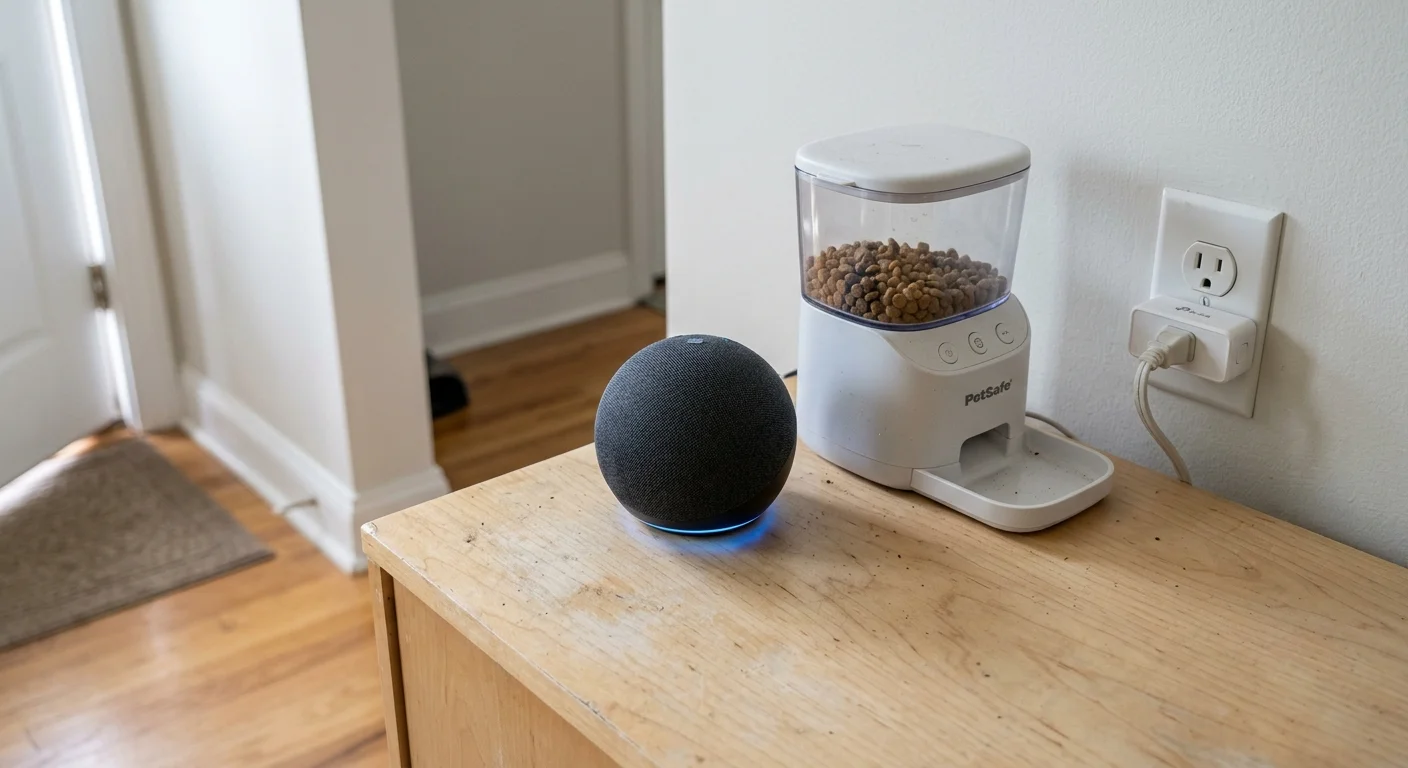
Amazon Echo devices feature native on-device Sound Detection triggers capable of identifying canine barking. Echo Dot 4th and 5th Generation speakers process these acoustic signatures locally without requiring third-party software subscriptions.
Neither Apple HomeKit nor Google Home provides native, out-of-the-box dog bark routine triggers on their smart speakers. Triggering smart routines from a dog bark without an Echo requires smart cameras or dedicated Z-Wave sound sensors.
To complete your setup, you need an automated treat dispenser and a reliable smart plug for your television. Tested device comparisons from Wirecutter Smart Home highlight hardware options that ensure dependable remote execution.
| Device Model | Sound Detection Type | Detection Latency | Native Routine Trigger | Approximate Hardware Cost |
|---|---|---|---|---|
| Amazon Echo Dot (5th Gen) | Edge Machine Learning (Acoustic Match) | 2–4 seconds | Yes (Native Alexa Routine) | $49.99 |
| Google Nest Cam Indoor (2nd Gen) | Cloud Audio Analysis (Nest Aware) | 5–8 seconds | Yes (Requires Nest Aware Plan) | $99.99 |
| Zooz Z-Wave MultiSensor (ZSE40) | Raw Decibel Threshold Sensor | Under 1 second | Custom Hub Logic (Home Assistant) | $39.95 |
| Apple HomePod Mini | Edge Classifier (Alarms Only) | Incompatible | No (Requires Homebridge Workaround) | $99.00 |
Selecting the right hardware architecture prevents missed vocalizations and false triggers. An Amazon Echo Dot remains the most cost-effective hub for sound-detection automations.
The Three-Stage Calming Escalation Routine
Static noise machines fail because dogs habituate to constant background sound within minutes. A multi-stage escalation ladder reacts proportionally to the severity and duration of distress vocalizations.
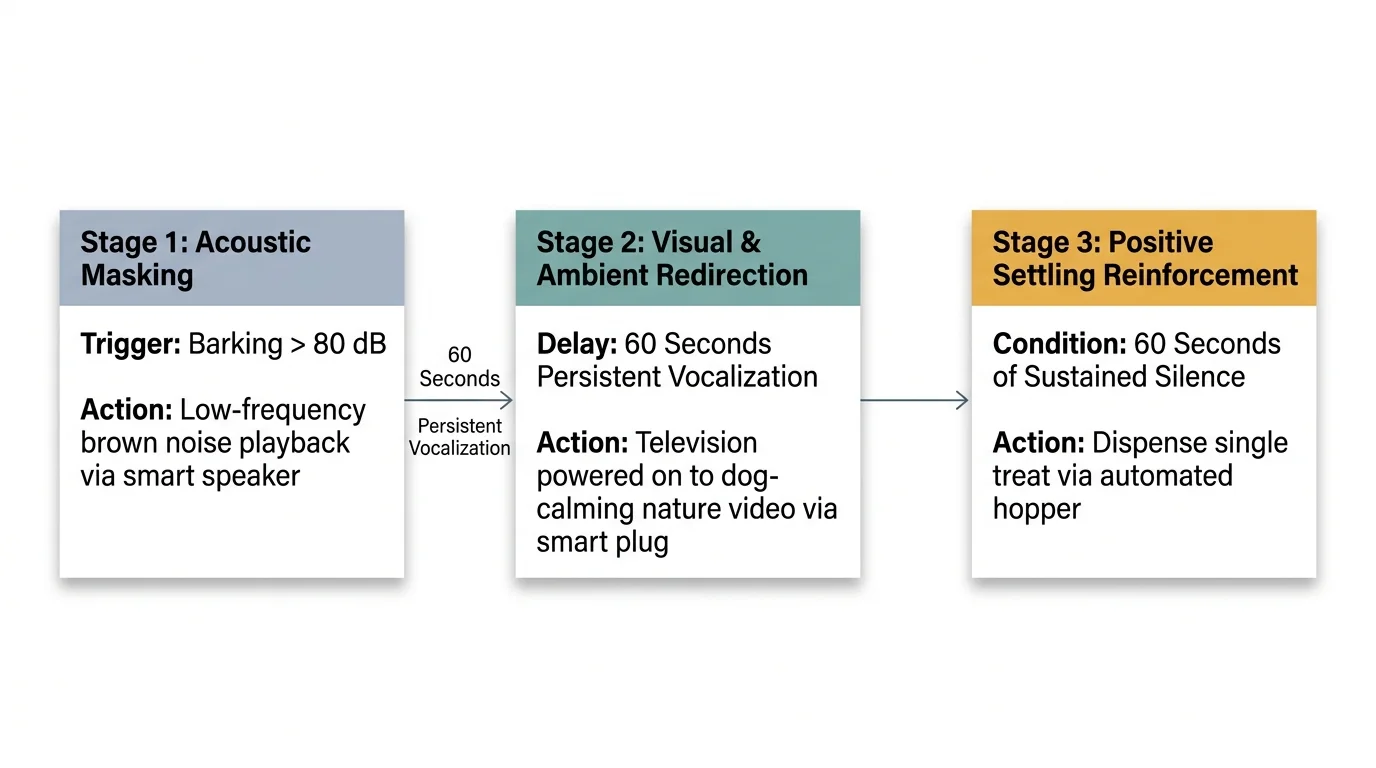
The automated ladder operates across three discrete phases:
- Stage 1: Immediate acoustic masking initiated when sound registers above 65 dB for five consecutive seconds.
- Stage 2: Visual and cognitive redirection activated if vocalization continues past ninety seconds.
- Stage 3: Positive reinforcement dispensed only after three minutes of agitation followed by verified silence.
Staggering these interventions prevents sensory overload. It also ensures that equipment engages only when your pet cannot calm down independently.
Stage 1 targets auditory triggers from apartment hallways, such as footsteps or elevator dings. Masking these external sounds eliminates the environmental cues that spark initial barking.
Stage 2 changes the visual and auditory atmosphere of the room. Powering on the television creates the illusion of human presence and breaks hyper-focused pacing behavior.
Stage 3 acts as the calming resolution. Delivering a food puzzle or treat reward once barking ceases reinforces the quiet, settled state you want to encourage.
Acoustic Science for Canine Anxiety
Choosing the right audio track determines whether acoustic enrichment soothes your dog or fuels higher agitation. Playing indiscriminate noise often backfires in high-stress apartment environments.
A landmark 2017 study by Bowman et al. at the University of Glasgow evaluated canine physiological reactions to auditory stimuli. The researchers discovered that dogs habituate to classical music very rapidly, losing interest within days.
“Auditory enrichment must provide dynamic acoustic variance; unvarying background noise quickly loses its calming efficacy as animals habituate.”
In contrast, Reggae and Soft Rock produced significantly higher Heart Rate Variability (HRV) metrics in kenneled dogs. Higher HRV indicates increased parasympathetic activity, meaning the dogs experienced less physiological stress and spent more time resting.
Veterinary behaviorists recommend tracks operating at 50 to 60 beats per minute (BPM), matching a calm dog’s resting heart rate. Low-frequency rhythms at 50 to 60 BPM entrain respiratory cycles, slowing rapid panting.
Avoid high-frequency brass or sharp percussion. These harsh frequencies mimic distress whines and elevate canine anxiety.
Step-by-Step Alexa Routine Setup
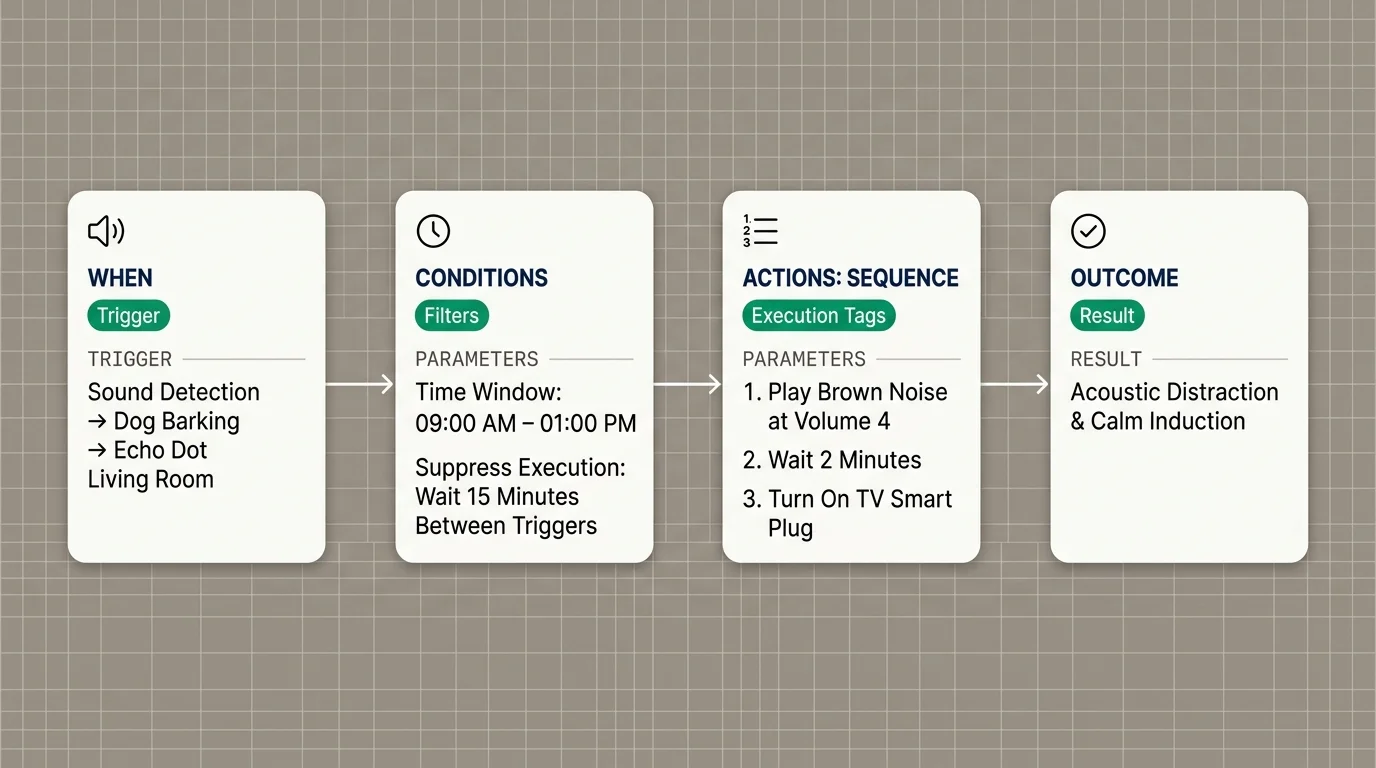
You can build this entire escalation sequence inside the Amazon Alexa application using native routine tools. Ensure your Echo Dot sits within eight feet of your dog’s designated rest zone for optimal microphone accuracy.
Follow these steps to configure your primary bark-triggered response routine:
- Open the Alexa app, navigate to More, select Routines, and tap the plus icon to create a new routine.
- Tap When this happens, select Sound Detection, choose Dog Barking, and assign your living room Echo device.
- Tap Change next to Active Times to constrain routine execution strictly to your four-hour absence window.
- Tap Add action, select Music & Podcasts, and input a dedicated 55 BPM Reggae or Soft Rock playlist.
- Set the audio playback volume to level 4 (approximately 60 dB to 65 dB in your room).
- Add a Wait command set to 90 seconds, followed by a smart plug action that switches on your television.
Configure the routine suppression timer to at least fifteen minutes before repeating. This buffer prevents the Echo speaker from continuously restarting playlists while background music plays.
You can automate calming music for dogs seamlessly using this method. The native Alexa sound detection engine eliminates the need for expensive dedicated acoustic sensors.
Worked Example: Four-Hour Solitary Window
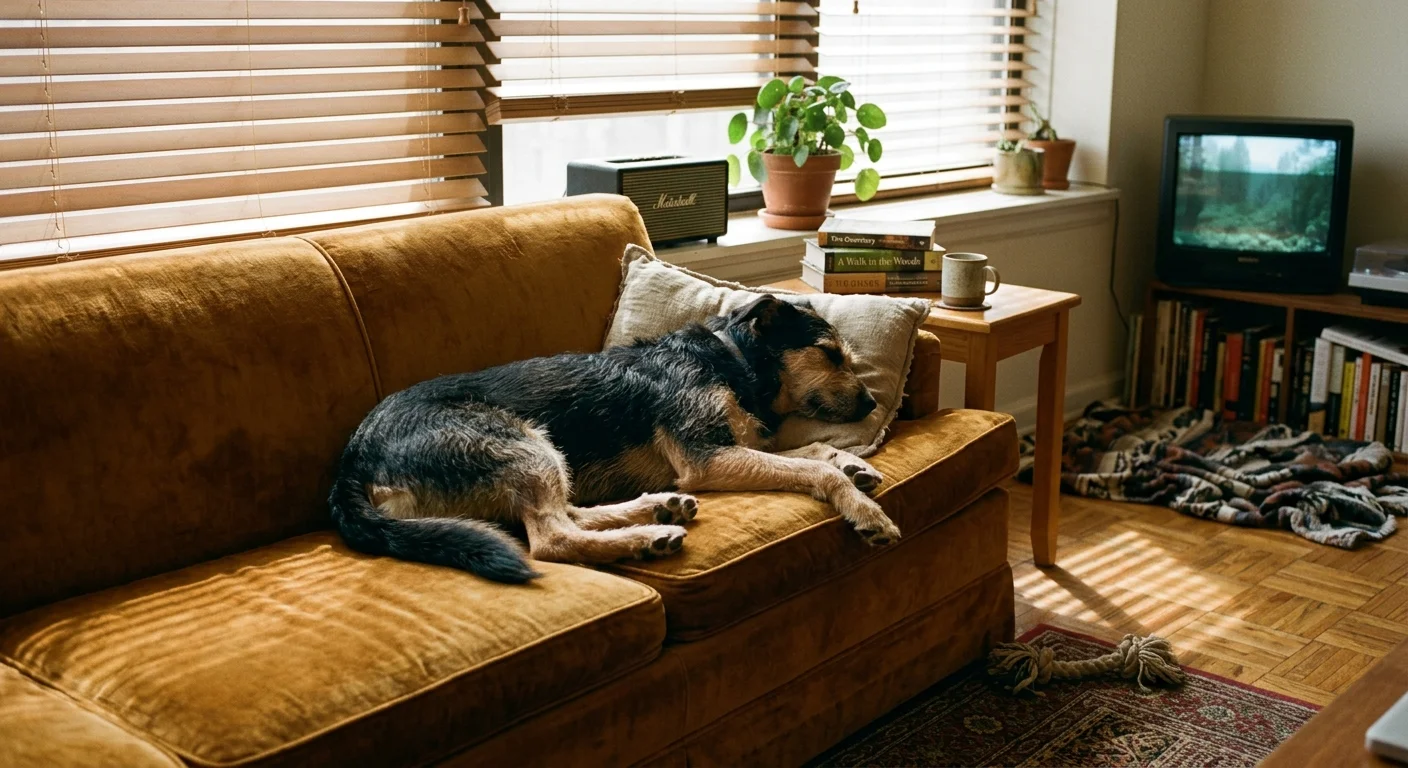
Consider a concrete deployment in an 850-square-foot urban apartment with an open 18-by-14-foot living area. The owner leaves daily from 1:00 PM to 5:00 PM for an office commute.
The setup utilizes an Amazon Echo Dot 5th Gen ($49.99), a Kasa KP115 smart plug ($14.99), and a Petcube Bites 2 Lite dispenser ($99.99). Total equipment investment equals $164.97.
The dog vocalization response sequence unfolds according to real-world timestamps:
- 1:00 PM: The homeowner departs, activating the Alexa time-gated surveillance window.
- 1:15 PM: Hallway footsteps prompt an initial 85 dB barking outburst.
- 1:15:04 PM: The Echo Dot detects the barking signature and triggers a 55 BPM Soft Rock playlist at volume 4.
- 1:16:34 PM: Sustained pacing and vocalization cross the 90-second mark, causing the smart plug to power on the television.
- 1:18:00 PM: The combination of familiar voices and masking music breaks the distress loop, leading the dog to lie down.
- 1:18:30 PM: After 30 seconds of quiet, the dispenser drops two treats, rewarding calm self-regulation.
This multi-device chain successfully redirected escalating panic into resting behavior without human intervention. The entire intervention ran within a three-minute envelope, saving your neighbors from prolonged disruption.
Deploying this decibel trigger routine alexa configuration protects your home environment during predictable solitary work blocks. It provides measurable behavioral relief while you remain offsite.
Troubleshooting Routine Misfires and Failures
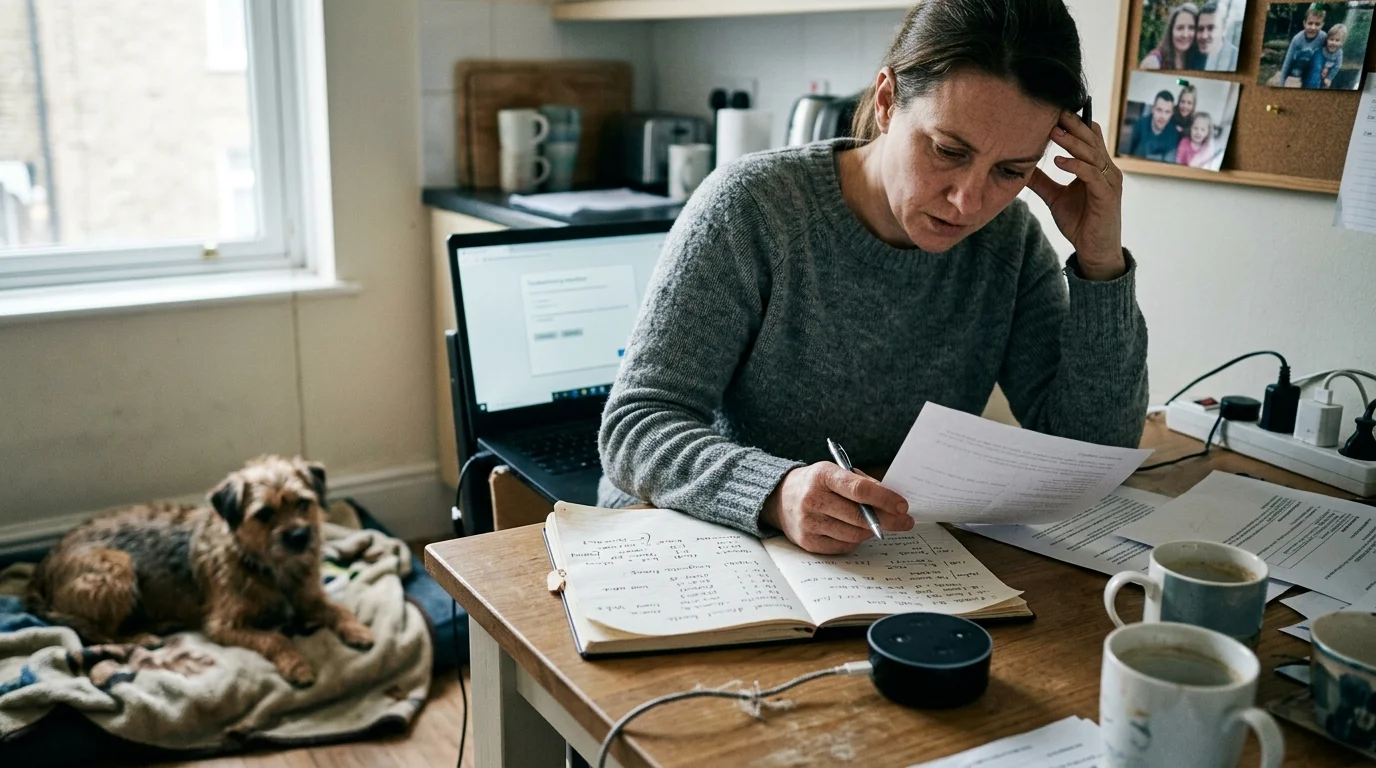
Smart home routines can misfire if external sirens, hallway neighbors, or television audio mimic canine vocal patterns. Positioning your listening speaker away from shared walls drastically reduces false-positive triggers.
Smart device communication protocols impact trigger latency across complex multi-device routines. Adopting connected hardware verified by the Matter Smart Home Standard minimizes network delay between sensors and actuators.
Beware of accidental operant conditioning when dispensing food rewards. If your smart dispenser ejects treats during active barking, your dog will quickly learn to bark on purpose.
To prevent training errors and equipment desensitization, implement these essential maintenance rules:
- Set an explicit silence delay of at least 30 seconds before releasing food rewards.
- Adjust smart speaker microphone sensitivity if ambient street noise causes false triggers.
- Rotate your automated playlists every two weeks to prevent auditory habituation.
- Test routine execution weekly using recorded bark samples while monitoring system latency.
Regularly verify that all connected devices remain powered and connected to your local Wi-Fi network. An offline smart plug breaks the escalation chain, leaving your dog without visual distraction.
Refining these parameters ensures reliable dog bark automation smart home performance over extended solitary periods. Consistent execution provides structural stability for anxious pets.
Frequently Asked Questions
Can I create a bark-triggered routine using Apple HomeKit?
HomeKit does not support native dog bark recognition triggers on HomePod speakers. You must deploy third-party software like Homebridge or install dedicated Z-Wave sound sensors to bridge barking triggers into HomeKit.
What decibel level should calming music play at during a distress episode?
Calming music should play at approximately 60 dB to 65 dB in the dog’s resting zone. This provides adequate sound masking without overwhelming sensitive canine ears.
How do I prevent my smart speaker from detecting television dialogue as dog barking?
Point television speakers away from your smart microphone and enforce a minimum ten-foot separation between devices. You can also lower microphone sensitivity in your smart speaker settings.
Why are reggae and soft rock better than classical music for anxious dogs?
Research demonstrates that dogs habituate to classical music within days, losing behavioral benefits. Reggae and soft rock maintain higher heart rate variability and encourage longer resting periods.
Disclaimer: This article is for informational purposes only. Smart home devices involve electrical connections and data privacy. Always follow manufacturer instructions for installation. For complex wiring or HVAC work, consult a licensed professional.