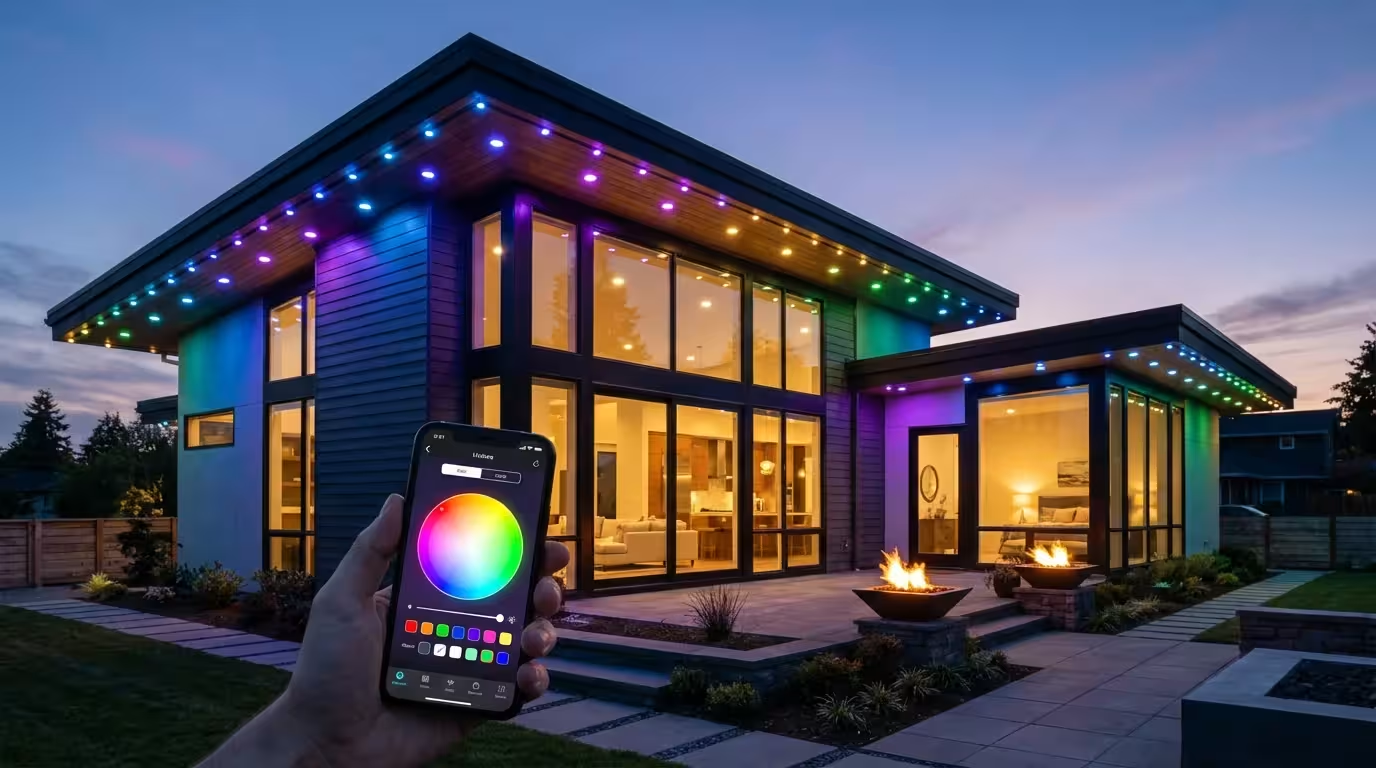
Decorating for the holidays used to mean wrestling with tangled wires, replacing burnt-out fuses, and venturing out into the freezing cold to plug everything in. Smart home technology has fundamentally changed this tradition. By integrating smart lighting into your holiday setup, you gain control over color, timing, and energy usage directly from your smartphone or via voice commands.
Whether you are preparing for a spooky Halloween display or a festive winter wonderland, modern smart lighting offers versatility that old-school incandescent strands simply cannot match. You can now leave your lights up year-round, blending them into your home’s architecture, or use your existing smart bulbs to create instant atmosphere without buying a single new decoration. This guide explores the best hardware, ecosystem integrations, and automation strategies to elevate your holiday decor.
Why Choose Smart Holiday Lighting?
Transitioning to smart lighting requires a higher upfront investment compared to traditional LEDs found at big-box stores. However, the benefits extend far beyond the initial “wow” factor. You are paying for convenience, longevity, and creative control.
Unmatched Customization
Traditional lights lock you into a single color palette. If you buy warm white, you have warm white. Smart LEDs, typically RGB or RGBIC (Red, Green, Blue, Independent Control), allow you to select from over 16 million colors. You can program the same strand of lights to glow orange and purple for Halloween, red and green for Christmas, and soft white for general architectural lighting during the rest of the year.
Energy Efficiency and Cost Savings
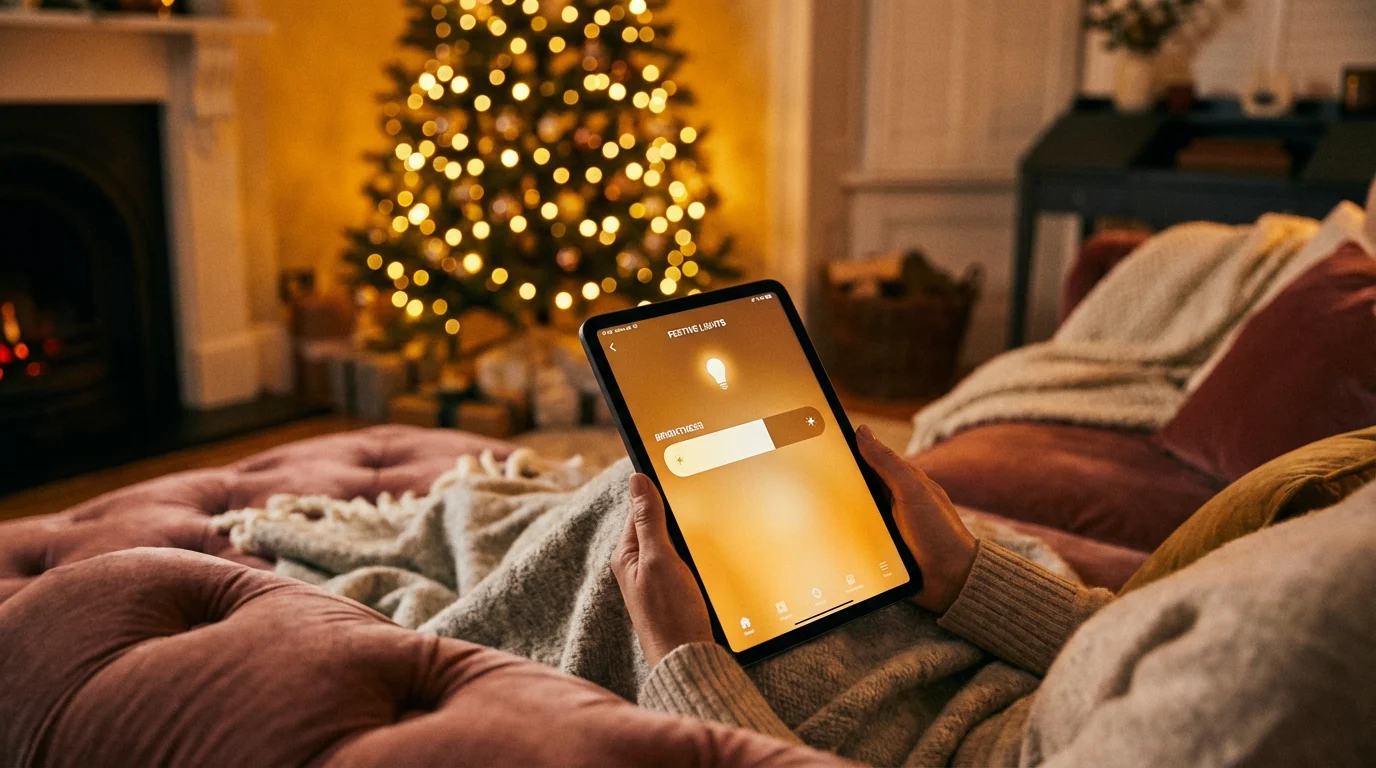
LED technology is inherently efficient, consuming up to 75% less energy than incandescent bulbs. Smart lighting takes this further through precision scheduling. Instead of relying on a simple dusk-to-dawn photocell which keeps lights on all night, you can schedule your display to turn off at 11:00 PM to save electricity, or dim to 30% brightness after a certain hour.
Safety and Durability
Smart lights generally operate at lower voltages and emit less heat, reducing fire risk on dry Christmas trees or near exterior siding. Furthermore, app-based control means you never have to climb a ladder in icy conditions just to reset a timer or change a blink pattern.
Exterior Solutions: Permanent vs. Temporary
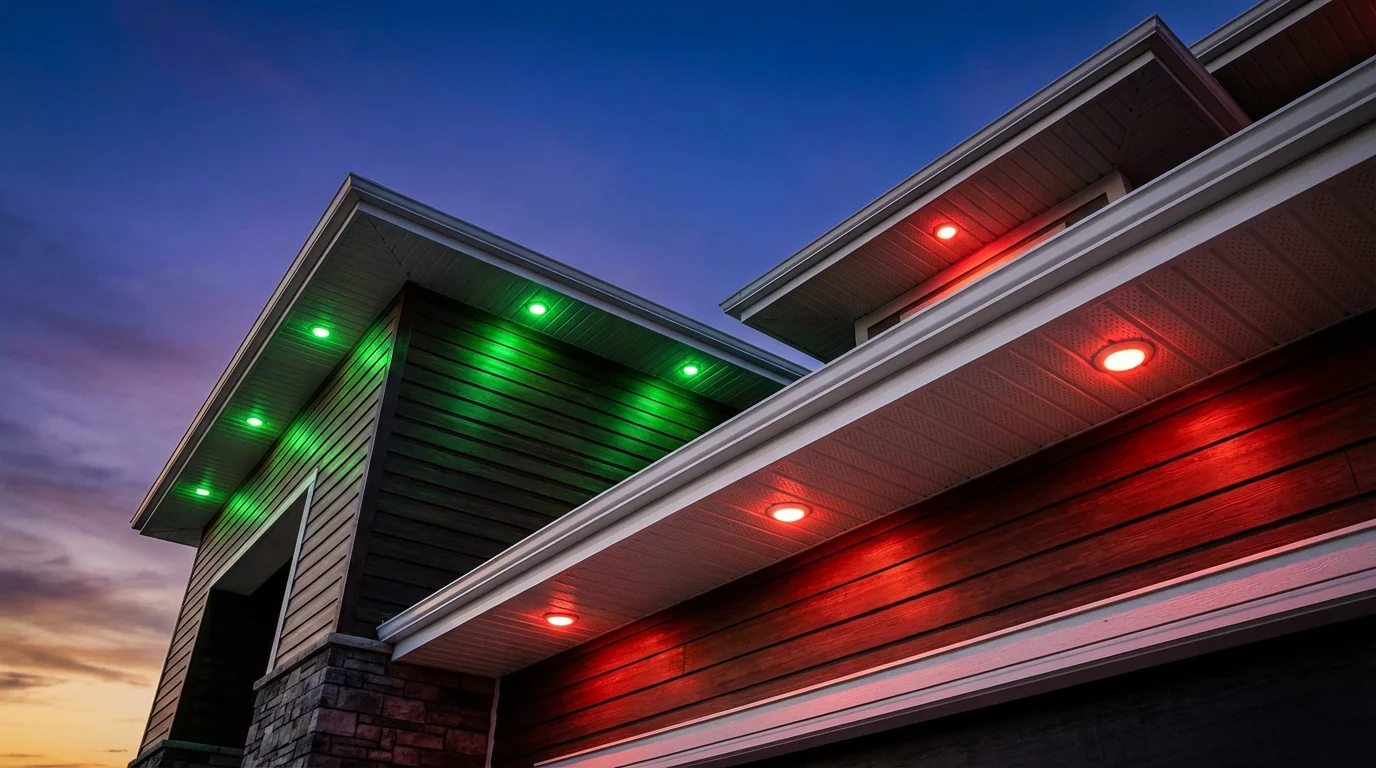
The biggest trend in home automation for holidays is permanent exterior lighting. These systems install under your eaves or soffits and remain there year-round, virtually invisible during the day but capable of spectacular effects at night.
Permanent Outdoor Lights
Products like the Govee Permanent Outdoor Lights or professionally installed systems like JellyFish Lighting have surged in popularity. These puck-style lights adhere or screw into your soffits. Because they connect to Wi-Fi, you can change the theme instantly.
- Stealth factor: During the day, they look like standard molding or are tucked away so they don’t spoil your home’s curb appeal.
- Zoning: You can turn on specific sections for security lighting throughout the year (cool white) and switch to candy-cane patterns for December.
- Durability: Look for IP67 water and dust resistance ratings to ensure they survive heavy snow and rain.
Smart String Lights (Icicles and Strands)
If you prefer the traditional look of hanging lights on gutters or wrapping trees, smart string lights offer a major upgrade. Brands like Twinkly have pioneered “mapping” technology. using your smartphone camera, the app scans the position of every single LED bulb on your house or tree. Once mapped, you can run complex animations that flow seamlessly across the array, regardless of how messily you hung the lights.
When selecting exterior strings, prioritize the following specs:
- IP Rating: Ensure at least IP44 for splash resistance, though IP65 is preferred for direct exposure to elements.
- Lead Length: Ensure there is enough non-lit wire between the plug and the first bulb to reach your outdoor outlet.
- Expandability: Check if you can connect multiple strands (daisy-chaining) while maintaining smart control.
Smart Christmas Trees and Indoor Strings
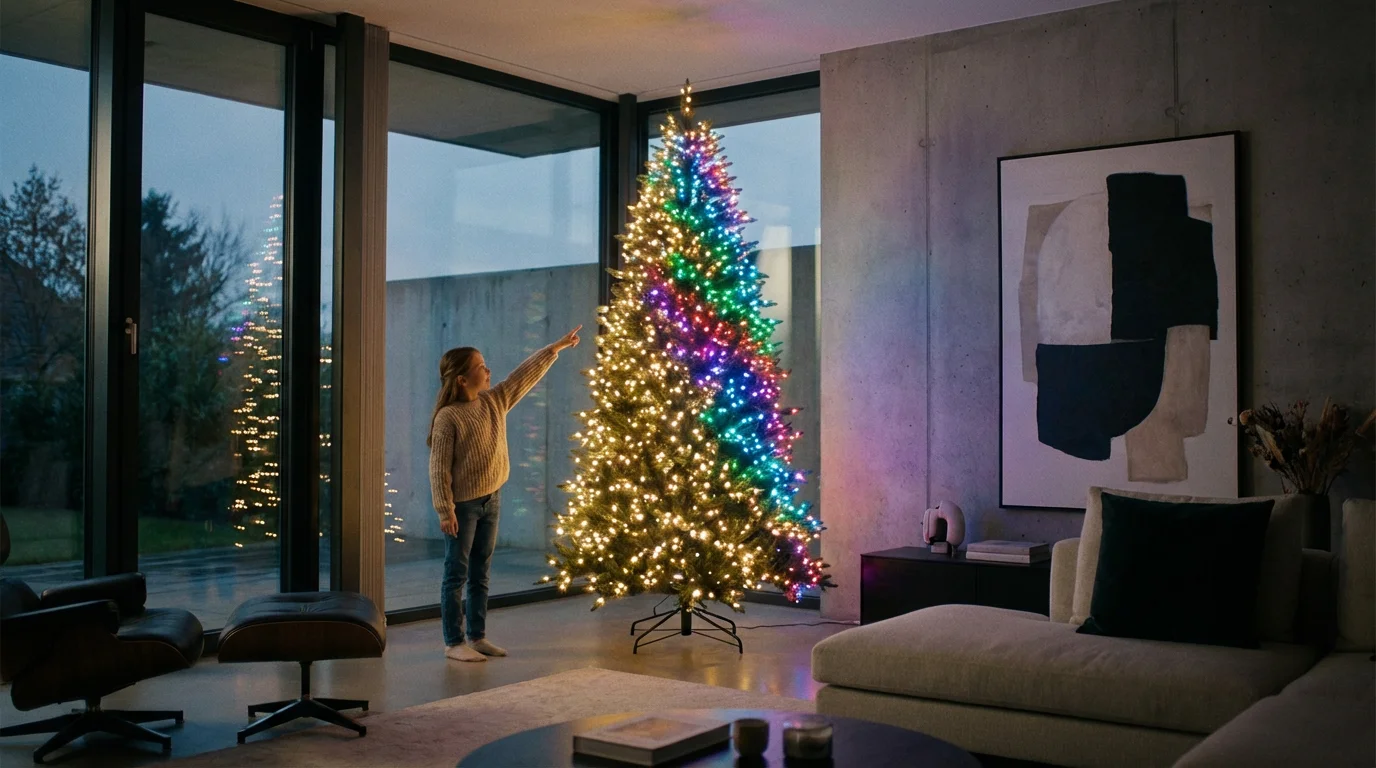
The centerpiece of holiday decor is often the tree. Smart lighting transforms a static tree into a dynamic light show. You have two primary paths here: buying a pre-lit smart tree or retrofitting your current tree with smart strings.
Pre-Lit Smart Trees
High-end artificial trees now come with integrated smart LEDs. The wiring runs through the center pole, eliminating the mess of cords. Setup is as simple as snapping the tree sections together and plugging it in. While convenient, this is the most expensive option, and if the controller fails, you may be stuck with a “dumb” tree.
Retrofit Smart Strings
For most homeowners, buying smart strings is the better value. Twinkly and Nanoleaf offer string lights specifically designed for trees. Because these lights use RGBIC technology, a single string can display multiple colors simultaneously. You can create a “barber pole” effect that spirals up the tree or a “sparkle” effect where random bulbs flash white against a steady red background.
“The best smart home is the one you don’t have to manage. Your holiday lights should turn on when the sun sets and off when you go to bed, without you lifting a finger.”
Repurposing Everyday Smart Bulbs
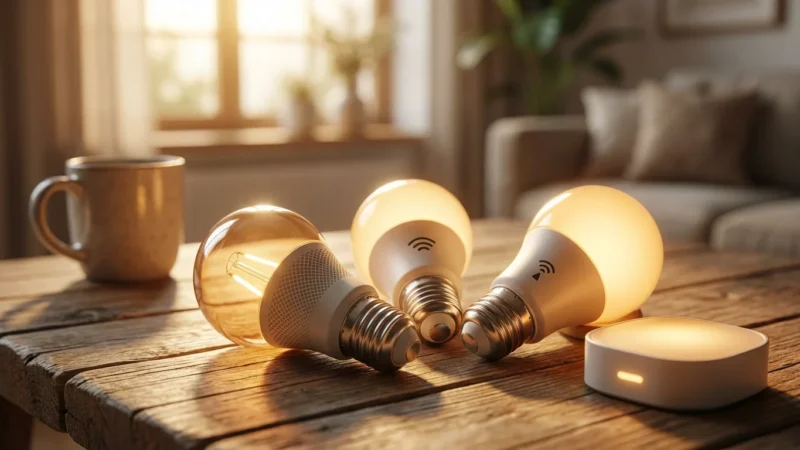
You do not always need to buy specific “holiday” products. If you have already invested in a smart lighting ecosystem like Philips Hue, LIFX, or Wyze, you have a holiday lighting system ready to go.
Outdoor Fixtures
Replace your standard porch and garage light bulbs with smart color bulbs. During October, turn them an eerie green or pumpkin orange. For the winter holidays, alternate red and green between the porch and the garage. This creates a festive look with zero installation effort.
Indoor Lamps and Fixtures
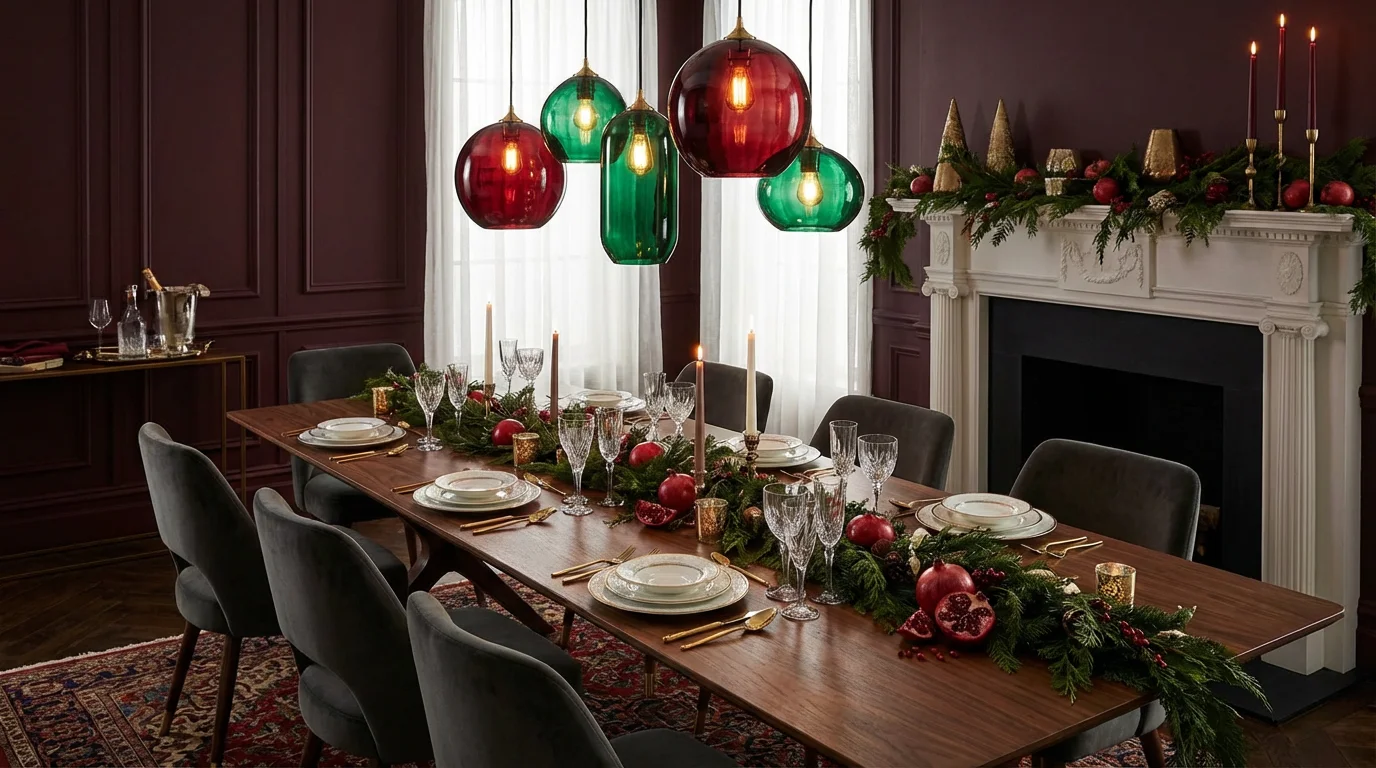
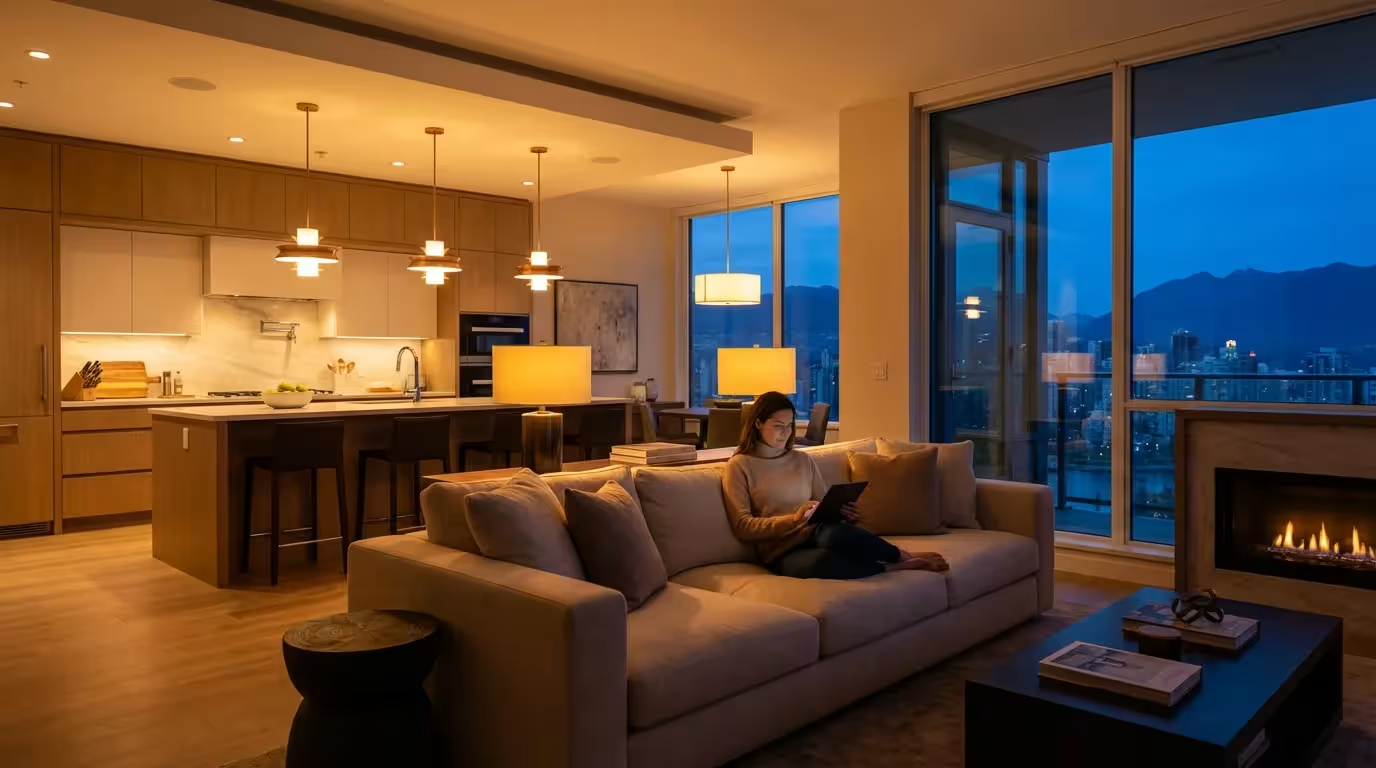
Inside the house, use your existing smart bulbs to wash walls in color. This is far more effective than hanging cheap plastic decorations. Group your living room lights into a “Holiday Scene.”
- Thanksgiving: Set lights to warm amber, deep orange, and gold temperatures (around 2000K–2700K).
- Christmas: Use a mix of cool white (6500K) for an icy look, accented with red or green lamps.
- New Year’s Eve: Set lights to dynamic “color loop” modes that cycle through vibrant colors to keep the energy high.
According to Wirecutter, color accuracy varies significantly between brands. For the richest reds and deepest greens, higher-end bulbs like Philips Hue generally outperform budget Wi-Fi bulbs, which can struggle to produce saturated colors without losing brightness.
Accent Lighting and Light Strips
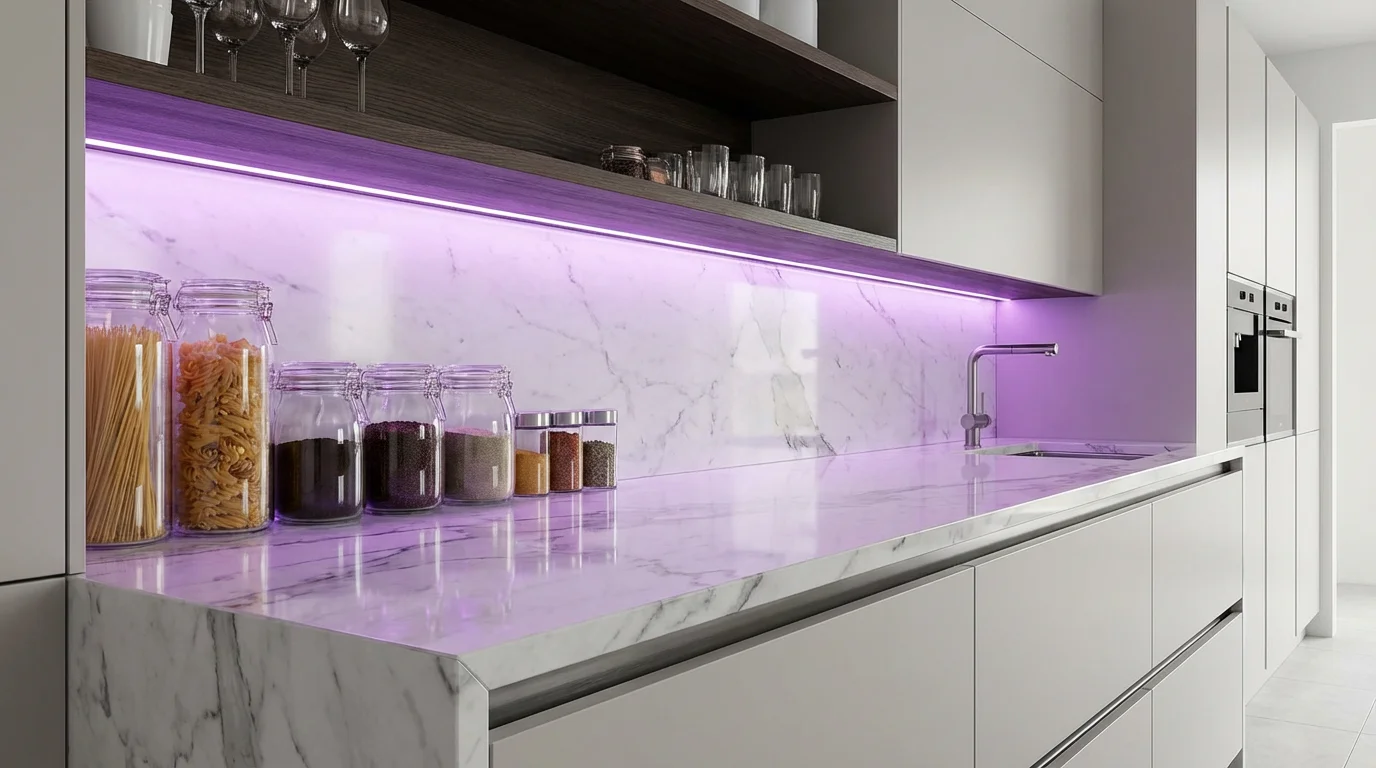
Light strips are the secret weapon of holiday decor. Their flexible, adhesive form factor allows you to place light where traditional bulbs cannot go.
TV Backlighting
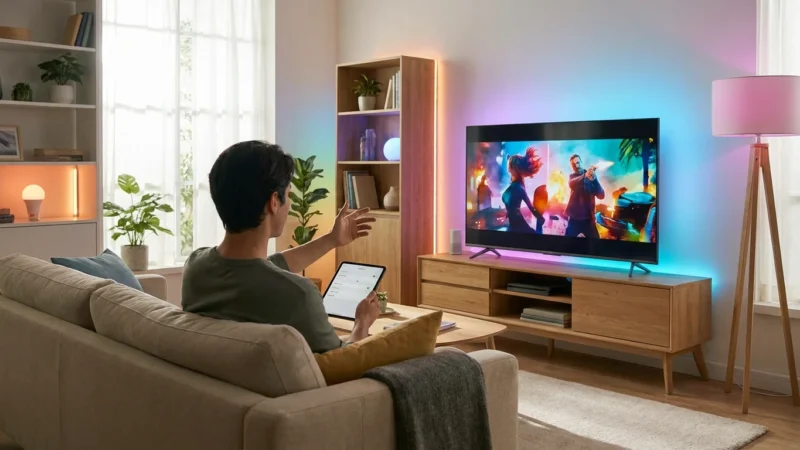
Syncing your lighting to your holiday movies creates an immersive experience. Systems like the Philips Hue Play HDMI Sync Box or Govee Envisual TV Backlight use cameras or HDMI pass-throughs to analyze what is on your TV screen and project matching colors onto the wall behind it. Watching The Grinch? Your room floods with green. Watching A Christmas Story? The room glows with warm, nostalgic tones.
Architectural Highlighting
Place light strips above kitchen cabinets, under the mantle, or along stair railings. These indirect light sources add depth to your decor. Because they are smart, you can synchronize them with your tree or exterior lights for a unified home theme.
Automation and Scheduling Strategies
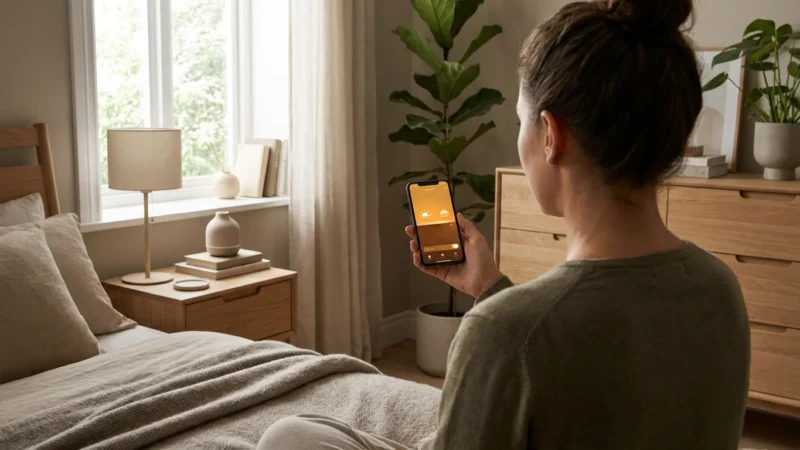
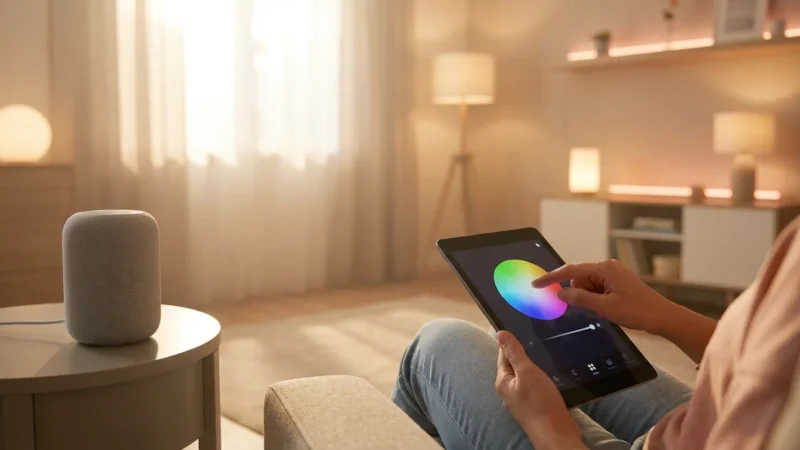
The true power of smart lighting lies in automation. You should not be opening an app every night to turn your lights on. Use the native apps (Google Home, Apple Home, Amazon Alexa) or the manufacturer’s app to set “set it and forget it” routines.
Sunrise and Sunset Routines
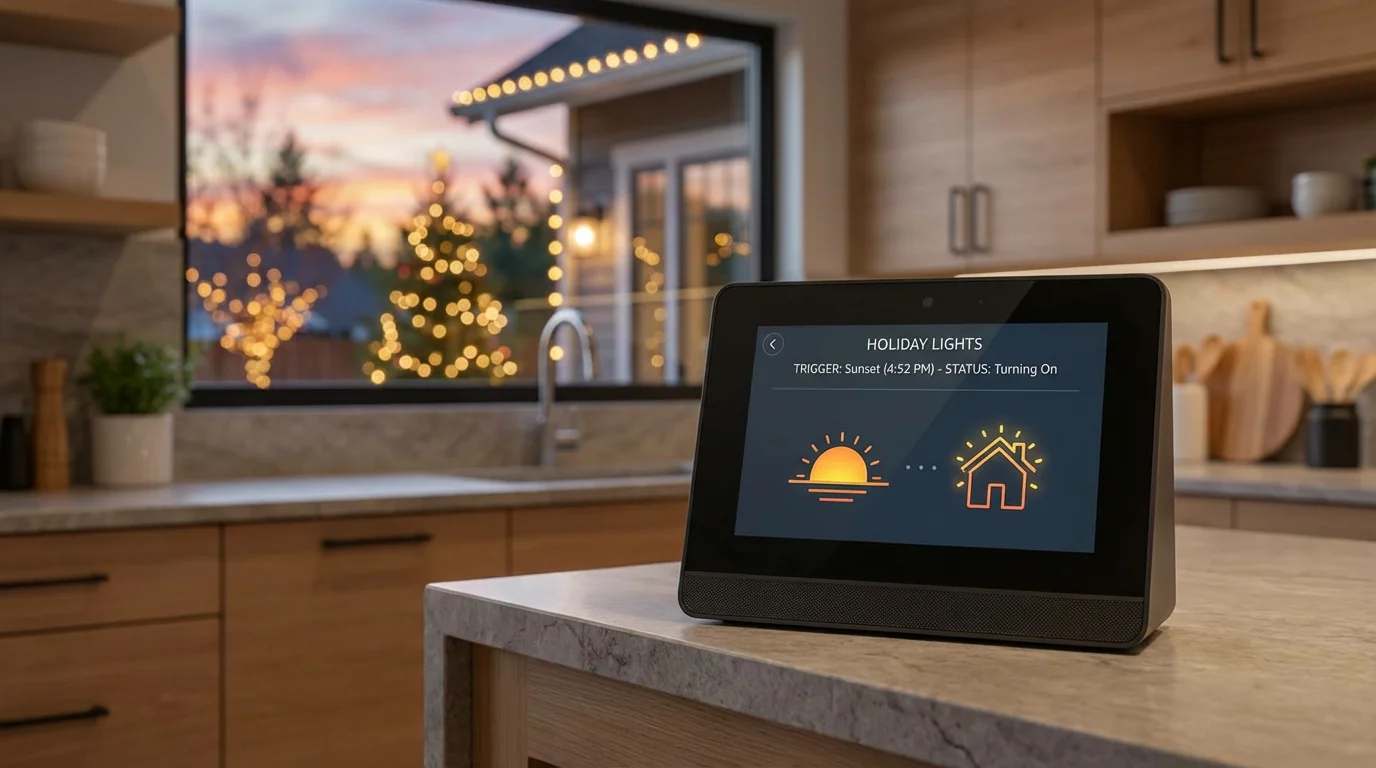
Avoid using static times (e.g., “Turn on at 5:00 PM”). As winter approaches, sunset gets earlier. Use the “Sunset” trigger available in most smart home platforms.
Example Routine:
- Trigger: 15 minutes before Sunset.
- Action: Turn on Exterior Permanent Lights (Scene: Candy Cane).
- Action: Turn on Christmas Tree (Brightness: 100%).
- Action: Turn on Smart Plugs (Window Candles).
Motion and Presence
If you have motion sensors, use them to trigger holiday magic. You can set a rule that when motion is detected in the living room between 6:00 AM and 8:00 AM, the Christmas tree turns on gently. This provides a magical start to the morning without wasting energy when the room is empty.
Voice Control
Create a “Master Scene” for entertaining. When guests arrive, you can simply say, “Hey Siri, it’s party time.” This single command can:
- Dim the main overhead lights.
- Turn on the tree and accent strips.
- Start a holiday playlist on your smart speakers.
- Change the exterior lights to a dynamic, flashing pattern.
Using Smart Plugs for Legacy Lights
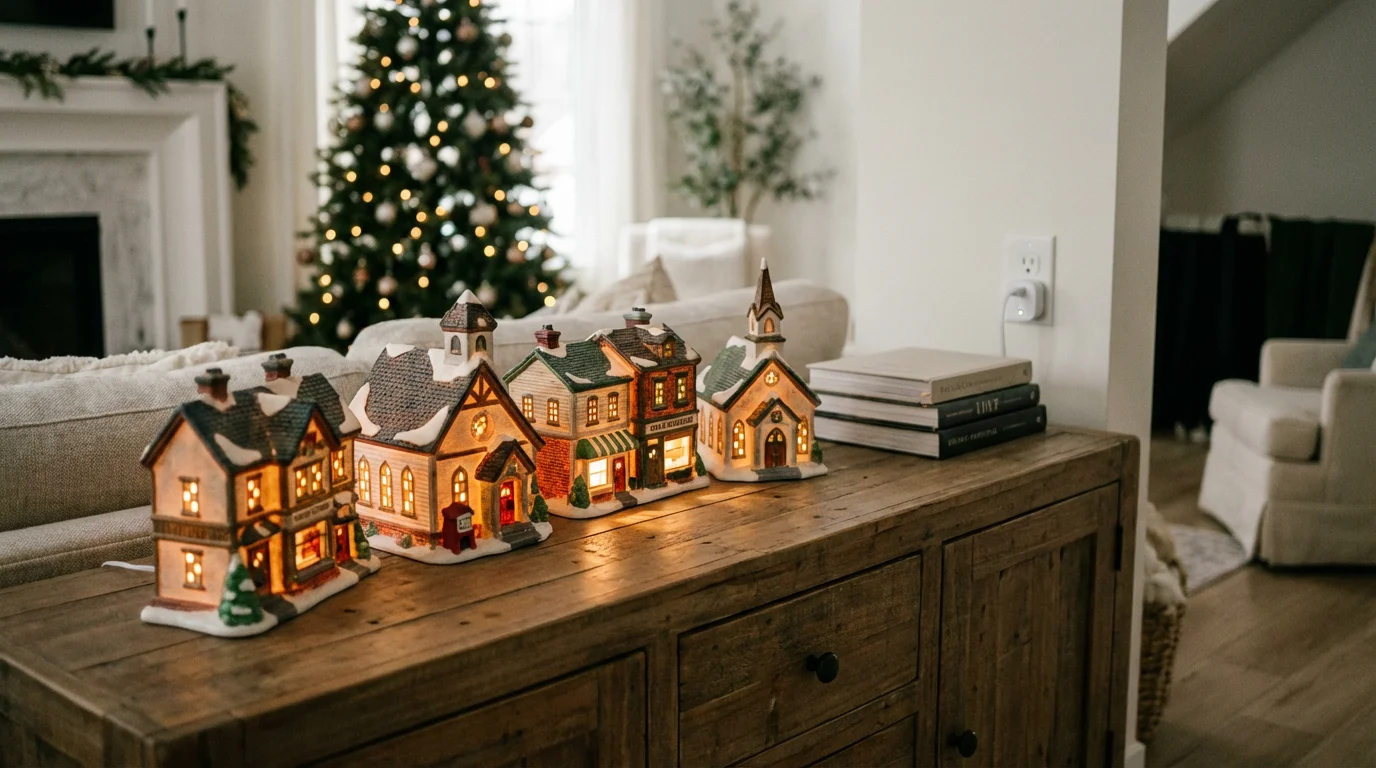
You likely have bins full of traditional incandescent strands, inflatable lawn decorations, or illuminated ceramic villages. You do not need to throw these away. Smart plugs bridge the gap between “dumb” devices and your smart home.
Outdoor smart plugs (look for heavy-duty, weather-resistant models) are perfect for inflatables and laser projectors. Indoor smart plugs handle the illuminated village on the mantle or the garland on the stairs.
Pro Tip: When naming your smart plugs in the app, be descriptive but simple (e.g., “Front Yard Inflatable” or “Stair Garland”). Group them all into a “Holiday Lights” group so a single voice command turns off every decoration in the house.
Connectivity and Compatibility
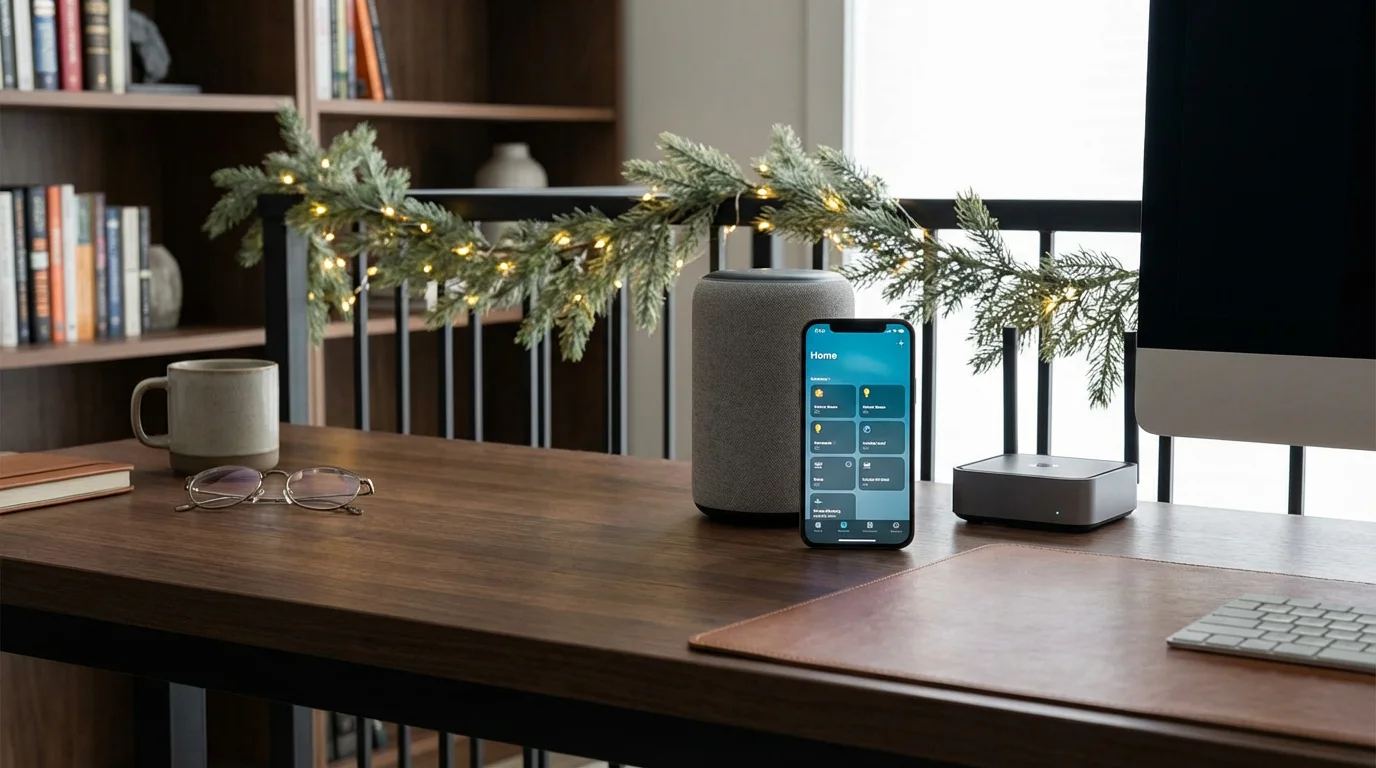
Before buying, check how the lights connect to your network. This impacts reliability and range.
Wi-Fi
Most budget-friendly smart holiday lights use Wi-Fi (2.4 GHz). They connect directly to your router without a hub.
Pros: No extra hardware needed; inexpensive.
Cons: Adding 50 smart bulbs to your Wi-Fi router can congest your network, causing internet slowdowns. Exterior lights may struggle to connect if your Wi-Fi signal is weak in the yard.
Zigbee and Thread (Hub-based)
Systems like Philips Hue use Zigbee. The bulbs talk to a hub, and the hub talks to your router.
Pros: extremely reliable; does not clog your Wi-Fi; devices act as repeaters to extend range.
Cons: Requires a hub purchase; usually more expensive.
Matter
The new smart home standard, Matter, ensures devices work across all platforms (Apple, Google, Amazon) locally and reliably. While fewer holiday-specific lights currently support Matter out of the box, Nanoleaf and Govee are rolling out compatible products. Buying Matter-certified devices future-proofs your setup.
Frequently Asked Questions
Can I cut smart LED light strips to fit my windows?
Yes, most smart LED strips have designated cut points marked with a scissor icon, usually every few inches. However, once you cut a strip, the removed piece typically cannot be used again unless the manufacturer sells specific connectors. Always cut only when the power is disconnected.
Do smart holiday lights use a lot of electricity?
No. Smart holiday lights use LED technology, which consumes significantly less power than traditional incandescent mini-lights. Additionally, the ability to schedule them to turn off automatically overnight further reduces energy consumption compared to “dumb” lights left on 24/7.
Will my outdoor smart lights work if my Wi-Fi doesn’t reach the yard?
If the controller (the box on the wire near the plug) cannot reach your Wi-Fi, you cannot control the lights remotely. To fix this, you can install a Wi-Fi range extender near an exterior wall or choose lights that use Bluetooth for local control, though Bluetooth requires you to be within ~30 feet of the device to change settings.
Can I leave smart holiday lights up all year?
Yes, especially if you use permanent outdoor lights or standard smart bulbs. Because you can change the color temperature to a warm white (2700K) or daylight (5000K), they serve as standard security or architectural lighting when it isn’t a holiday. Just ensure any exposed strings are UV-rated to withstand summer sun.
Disclaimer: This article is for informational purposes only. Smart home devices involve electrical connections and data privacy. Always follow manufacturer instructions for installation. For complex wiring or HVAC work, consult a licensed professional.
Leave a Reply